























Geopolitical events reshape commodity markets in seconds. A regional conflict, trade restriction, or policy shift can send prices soaring or crashing, creating both risks and opportunities for investors.
At Natural Resource Stocks, we’ve seen how geopolitical spillover affects commodity prices across energy, metals, and agriculture. This guide shows you how to identify vulnerable markets and turn uncertainty into returns.
How Geopolitical Events Reshape Commodity Markets
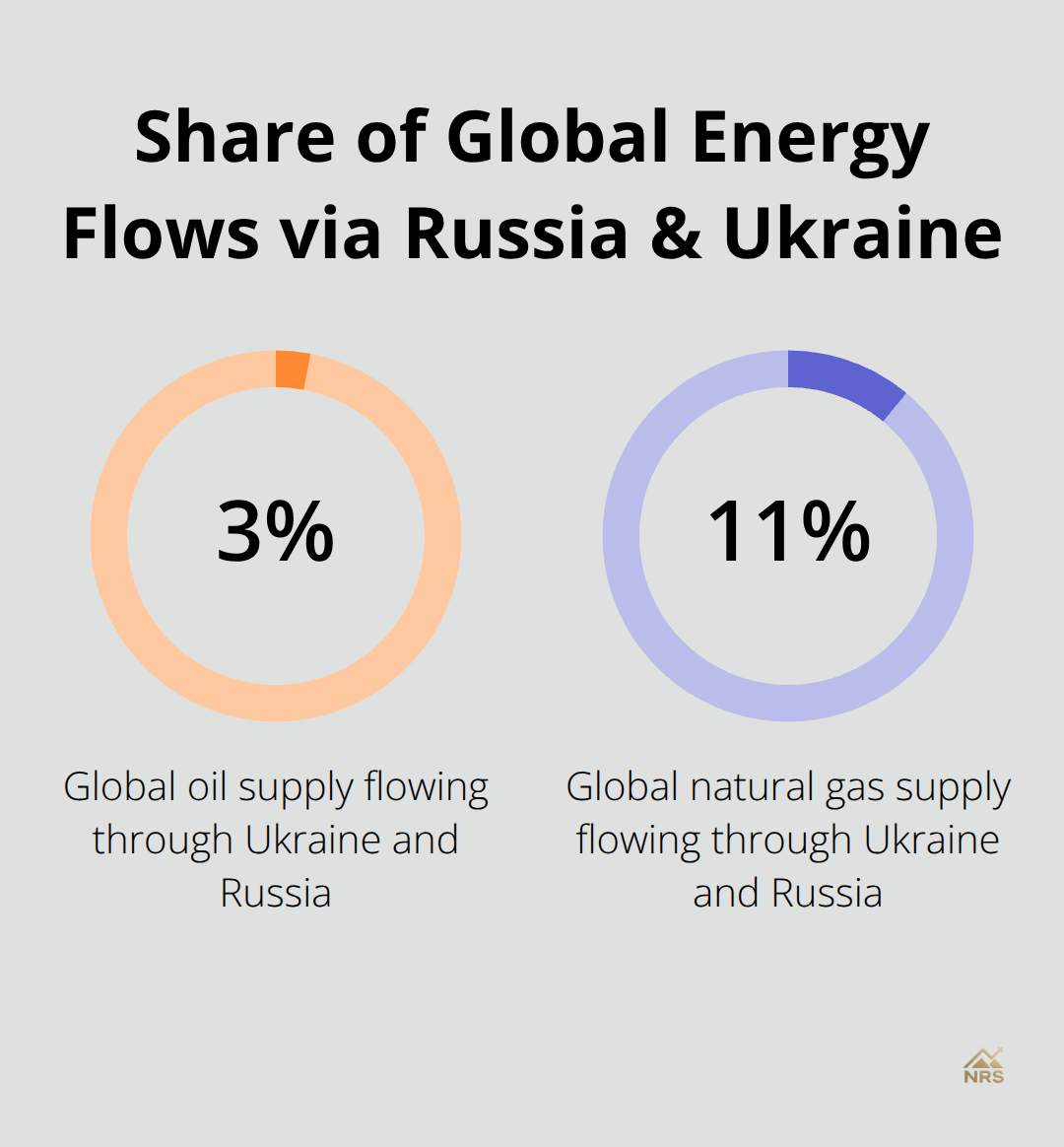
Geopolitical shocks hit commodity prices faster than most investors can react. When the Russia-Ukraine conflict erupted in February 2022, crude oil prices jumped from $91 to $130 per barrel within weeks, and natural gas spiked even more violently. These weren’t gradual shifts-they were immediate repricing events driven by real supply fears and policy uncertainty. Energy markets responded because roughly 3% of global oil and 11% of global natural gas flowed through Ukraine and Russia.
A single geopolitical event cascades through multiple commodity classes simultaneously. How Geopolitical Events Reshape Commodity Markets found that geopolitical risk affects natural gas, coal, and crude oil differently, meaning each energy commodity carries distinct vulnerability profiles. This commodity-specific response matters enormously for your portfolio construction because a hedge that works for oil may fail for natural gas.
Energy Commodities Face the Sharpest Geopolitical Exposure
Energy commodities absorb geopolitical shocks most aggressively because supply concentration creates structural vulnerability. The Middle East produces roughly 30% of global crude oil, and any escalation in regional tensions immediately triggers supply-disruption premiums in prices. China’s economic health amplifies this exposure-when US-China political relations deteriorate, measured through the Political Relationship Index, oil prices tend to rise as markets price in both demand uncertainty and potential supply-chain disruptions. Tariffs represent an underestimated geopolitical tool that reshapes commodity flows. Tariffs emerge as the biggest economic threat to commodity traders, reshaping trade flows and increasing working capital pressure on traders. Currency movements compound energy volatility because oil prices in USD mean that geopolitical events triggering capital flight simultaneously weaken emerging-market currencies, raising local energy costs in countries already facing supply stress.
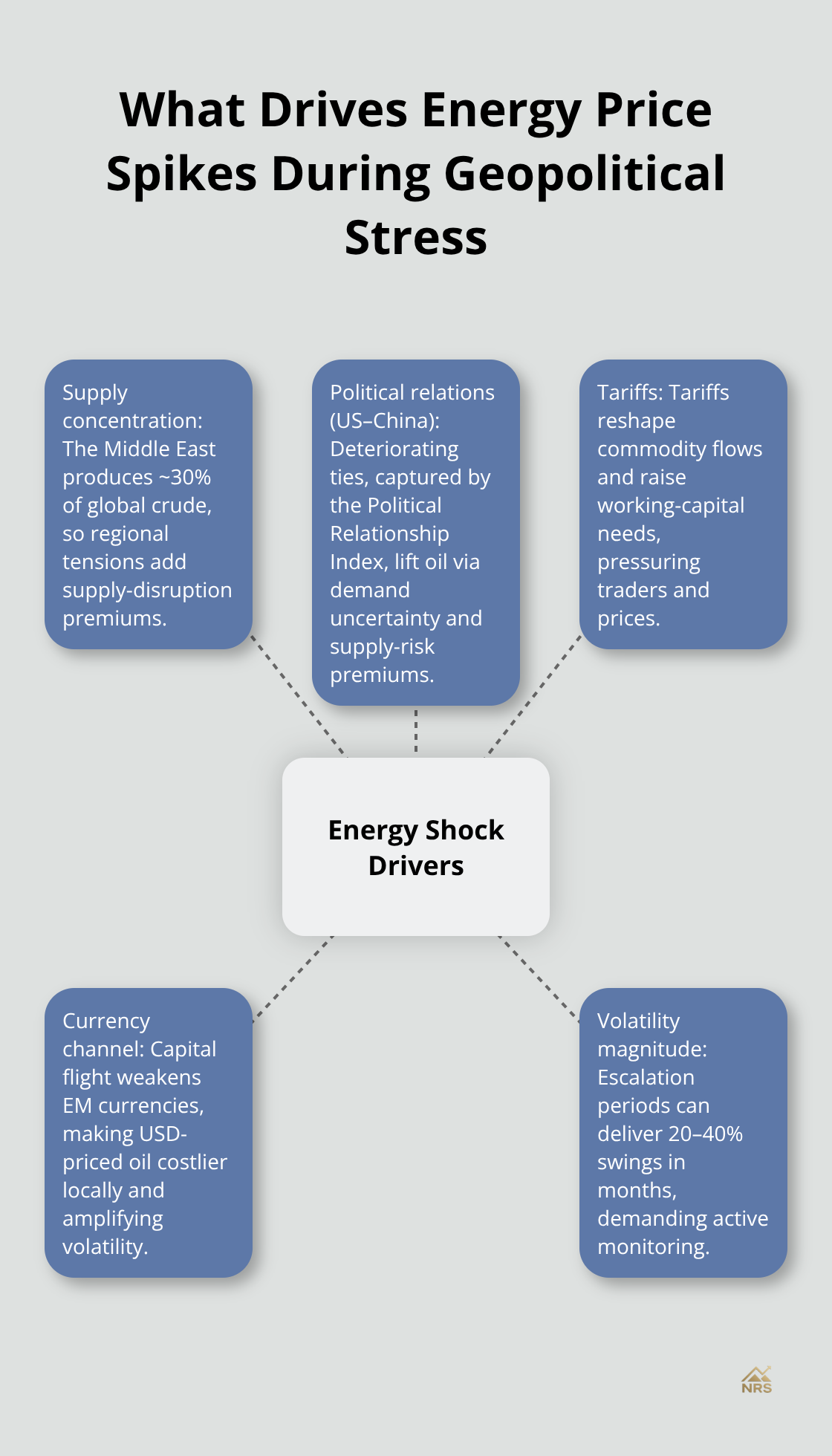
Your energy exposure requires active geopolitical monitoring because passive positions during escalation periods can mean 20-40% price swings within months.
Precious Metals Behave Differently During Crises
Gold and silver exhibit opposite behavior compared to energy during geopolitical turmoil. When the Russia-Ukraine conflict erupted, gold prices climbed 8% and silver 12% over the following weeks while energy collapsed initially then spiked. Precious metals function as safe-haven assets because they hold intrinsic value independent of supply chains or production capacity. A geopolitical act-actual warfare rather than mere threats-drives stronger precious metals demand than geopolitical threats alone. This distinction matters because you can monitor news flow to anticipate which type of geopolitical risk is building.
Agricultural Commodities Face Dual Pressure
Agricultural commodities face dual pressure from geopolitical events: supply disruption and trade restrictions. Russia and Ukraine together controlled roughly 30% of global wheat exports and 20% of corn exports before 2022. Trade wars introduce policy-driven price floors that persist long after geopolitical tensions ease. China’s economic trajectory matters disproportionately here because China accounts for 16.4% of global oil consumption and drives massive demand for agricultural inputs and metals. Monitoring bilateral geopolitical risk indices between major powers gives you lead indicators before prices move sharply. These commodity-specific vulnerabilities mean your next step involves identifying which markets offer the most attractive risk-adjusted opportunities when geopolitical tensions rise.
Which Commodity Markets React Most Sharply to Geopolitical Shocks
Energy Markets Demand Immediate Attention
Energy markets move faster than any other commodity class when geopolitical tensions spike. The Middle East supplies roughly 30% of global crude oil, and regional conflict escalation instantly triggers supply-disruption premiums that add $20-40 per barrel within days. Natural gas proves even more volatile than oil during geopolitical events because pipeline infrastructure concentrates supply routes-the Russia-Ukraine conflict demonstrated this brutally when European natural gas prices quintupled in early 2022 as traders scrambled to replace Russian supply.
Research analyzing data from January 2008 through February 2024 found that geopolitical risk affects natural gas, coal, and crude oil with commodity-specific intensity. A single geopolitical event does not move all energy commodities equally, which matters enormously because your hedging strategy for oil exposure will not automatically protect your natural gas positions. Monitor the Political Relationship Index between major powers, particularly US-China relations, because deteriorating political ties correlate with higher oil prices through two channels simultaneously-demand uncertainty from reduced global activity expectations and supply-risk premiums from potential conflict escalation.
Precious Metals Respond Through Fear, Not Supply
Gold and silver climb during crisis periods because investors flee to safety, and these metals carry no counterparty risk or supply-chain dependency. During the Russia-Ukraine conflict, gold rose 8% while crude oil initially fell before spiking, revealing the fundamental divergence-energy prices reflect supply disruption while precious metals reflect fear itself. Geopolitical acts like actual warfare trigger stronger precious metals demand than mere geopolitical threats, so you should distinguish between military action and political posturing when building your allocation strategy.
Agricultural Commodities Face Dual Pressure
Agricultural commodities face the harshest squeeze from geopolitical disruption because they combine supply concentration with trade-policy vulnerability simultaneously. Russia and Ukraine controlled roughly 30% of global wheat exports before 2022, yet trade wars impose policy-driven price floors that persist long after military tensions ease. China’s economic health amplifies agricultural pressure since China accounts for 16.4% of global oil consumption and drives outsized demand for crop inputs and livestock feed.
Tariffs emerge as the dominant geopolitical tool reshaping commodity flows and working capital requirements for traders. You should monitor bilateral trade tensions as aggressively as military conflict risk because trade restrictions reshape how commodities flow globally and how prices form. These commodity-specific vulnerabilities create distinct opportunities for investors who understand which markets react most sharply to different types of geopolitical shocks-knowledge that separates successful traders from those caught flat-footed when tensions escalate.
Turning Geopolitical Volatility Into Profitable Positions
Act Fast When Markets Misprice Risk
Geopolitical events create price dislocations that reward investors willing to act decisively. The challenge lies not in predicting which conflict will erupt, but in positioning before markets fully price the risk. Energy markets move fastest during escalation, with crude oil prices shifting 20-40% within weeks of major geopolitical shocks, while precious metals climb more gradually as fear sentiment builds. The Russia-Ukraine conflict demonstrated this pattern clearly-crude oil jumped to $130 per barrel within weeks while gold rose 8% over the same period, revealing that different commodity classes move at different speeds.
This timing differential creates a critical advantage if you monitor geopolitical risk indices actively. The Political Relationship Index between the US and China offers a quantifiable signal because deteriorating relations trigger both demand uncertainty and supply-risk premiums simultaneously in energy markets, giving you lead time before prices accelerate. Track monthly data releases on bilateral geopolitical risk rather than waiting for headlines to break, since markets price in expected conflict weeks before military action begins.
Energy Demands the Tightest Entry Discipline
Energy commodities require the most disciplined entry strategy because natural gas volatility during supply disruptions exceeds oil volatility. European natural gas prices quintupled in early 2022 when Russian supply vanished, rewarding traders who positioned before the spike but punishing those who chased prices afterward. This volatility intensity means you cannot afford hesitation once geopolitical tensions escalate-the window for favorable entry closes within days, not weeks.
Build Diversification Across All Commodity Classes
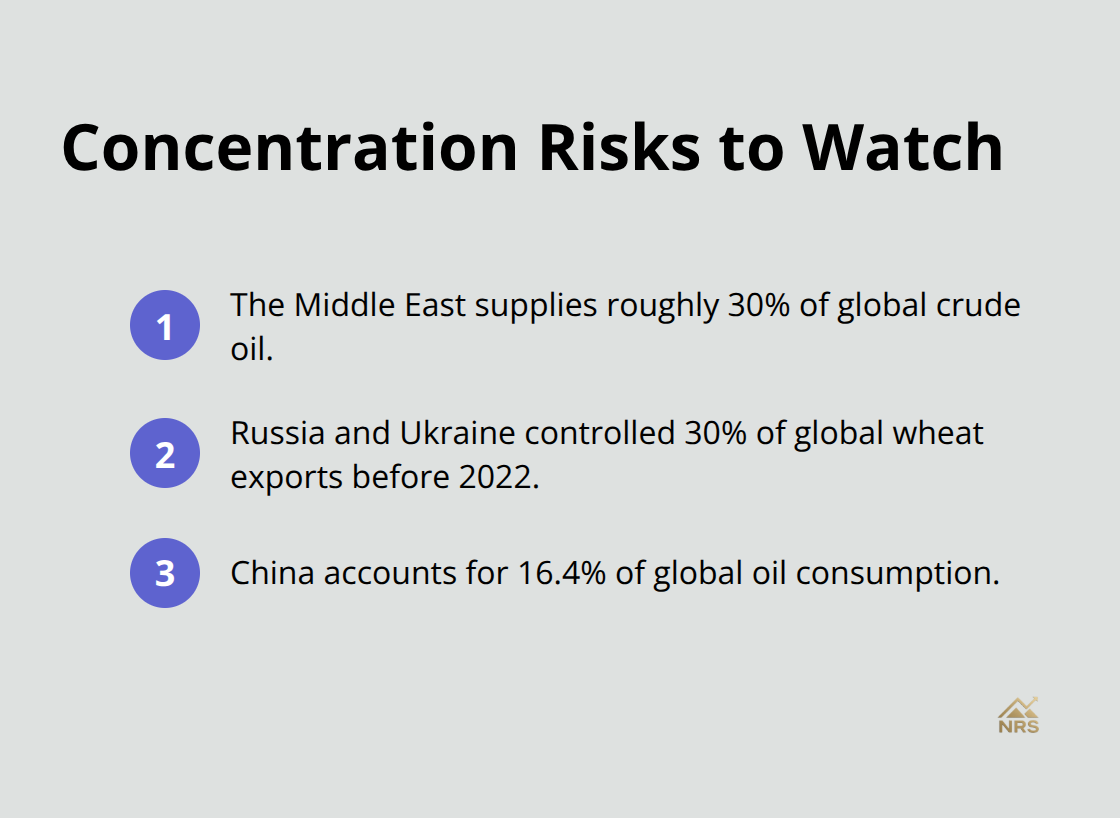
Concentration risk destroys returns during geopolitical shocks, yet most investors overweight single commodities or regions. The Middle East supplies roughly 30% of global crude oil, Russia and Ukraine controlled 30% of wheat exports before 2022, and China accounts for 16.4% of global oil consumption, meaning your portfolio faces catastrophic losses if you hold concentrated positions when these regions experience escalation.
Build positions across energy, precious metals, and agriculture simultaneously because geopolitical risk increases overall connectedness among commodity markets, yet each commodity responds through different mechanisms-energy through supply disruption, precious metals through safe-haven demand, agriculture through trade restrictions. This diversification framework outperforms single-commodity bets because a portfolio holding crude oil, natural gas, wheat, and gold cushions losses in any single market.
Use Technical Analysis to Confirm Trend Shifts
Technical analysis amplifies geopolitical timing by confirming when fear sentiment has genuinely shifted market structure versus when headlines create temporary noise. Price breakouts above major resistance levels during geopolitical events signal sustained trend shifts rather than panic selling that reverses quickly, while volume spikes below resistance indicate false breakdowns that trap traders shorting into strength.
Monitor Trade Policy as Aggressively as Military Conflict
Tariffs emerge as the most underestimated geopolitical tool because trade restrictions reshape commodity flows permanently, creating price floors that persist long after military tensions ease. You should monitor trade policy announcements as aggressively as conflict escalation when constructing longer-term positions. Trade restrictions impose structural changes to how commodities flow globally and how prices form, meaning positions built around trade tensions require different exit strategies than positions built around military risk (which can reverse suddenly if conflicts end).
Final Thoughts
Geopolitical spillover in commodity prices creates measurable opportunities for investors willing to act decisively. Energy markets move 20-40% within weeks of major geopolitical shocks, precious metals climb 8-12% as fear sentiment builds, and agricultural commodities face dual pressure from supply disruption and trade restrictions simultaneously. These patterns repeat across markets because real supply concentration and policy uncertainty drive them consistently.
The data reveals that geopolitical risk affects each commodity class differently, which means your strategy must account for commodity-specific responses rather than treating all commodities identically. Natural gas volatility exceeds oil volatility during supply disruptions, gold and silver respond to fear itself rather than supply constraints, and wheat and corn face permanent price floors when trade restrictions reshape global flows. Monitor bilateral political relationships between major powers, track tariff announcements as aggressively as military escalation, and distinguish between geopolitical threats and actual geopolitical acts because markets price them differently.
We at Natural Resource Stocks help investors navigate geopolitical spillover commodity prices through expert video and podcast content, in-depth market analysis, and direct commentary on how geopolitical events reshape commodity prices. Our platform provides the macroeconomic insights and real-time geopolitical monitoring you need to identify vulnerable markets before prices move sharply, and our community of investors explores emerging opportunities across metals and energy sectors at Natural Resource Stocks.