























Geopolitical tensions are reshaping how investors build portfolios. Trade wars, energy conflicts, and currency swings create both risk and opportunity for those who understand where to position capital.
At Natural Resource Stocks, we’ve identified specific sectors and strategies that protect wealth while capturing growth during uncertain times. This guide shows you how to select geopolitical risk stock picks that strengthen your portfolio against global instability.
How Geopolitical Tensions Destabilize Markets
Trade Wars Fracture Supply Chains
Geopolitical risk doesn’t just create abstract market uncertainty. It directly damages supply chains, reshapes energy markets, and forces currency realignments that ripple through stock valuations. When trade tensions escalate between major economies, companies face immediate pressure. The U.S.-China trade war that began in 2018 cost American manufacturers an estimated $280 billion in lost economic output according to research from the Peterson Institute for International Economics. Semiconductor companies saw their supply chains fracture across Taiwan, South Korea, and the United States. Automotive suppliers experienced months-long delays sourcing critical components. These aren’t theoretical problems-companies like Intel reported production bottlenecks lasting years because geopolitical friction made it impossible to access materials from preferred suppliers.
Energy Markets React Violently to Geopolitical Shocks
Energy markets respond violently to geopolitical shocks because oil and natural gas remain concentrated in politically unstable regions. When Russia invaded Ukraine in February 2022, crude oil jumped from $90 to over $120 per barrel within weeks, according to U.S. Energy Information Administration data. European natural gas prices spiked 400% above their 2021 average. Companies dependent on cheap energy suddenly faced margin compression. Meanwhile, producers of oil, uranium, and critical minerals experienced massive stock appreciation because their products became scarcer and more valuable.
Currency Realignments Amplify Portfolio Damage
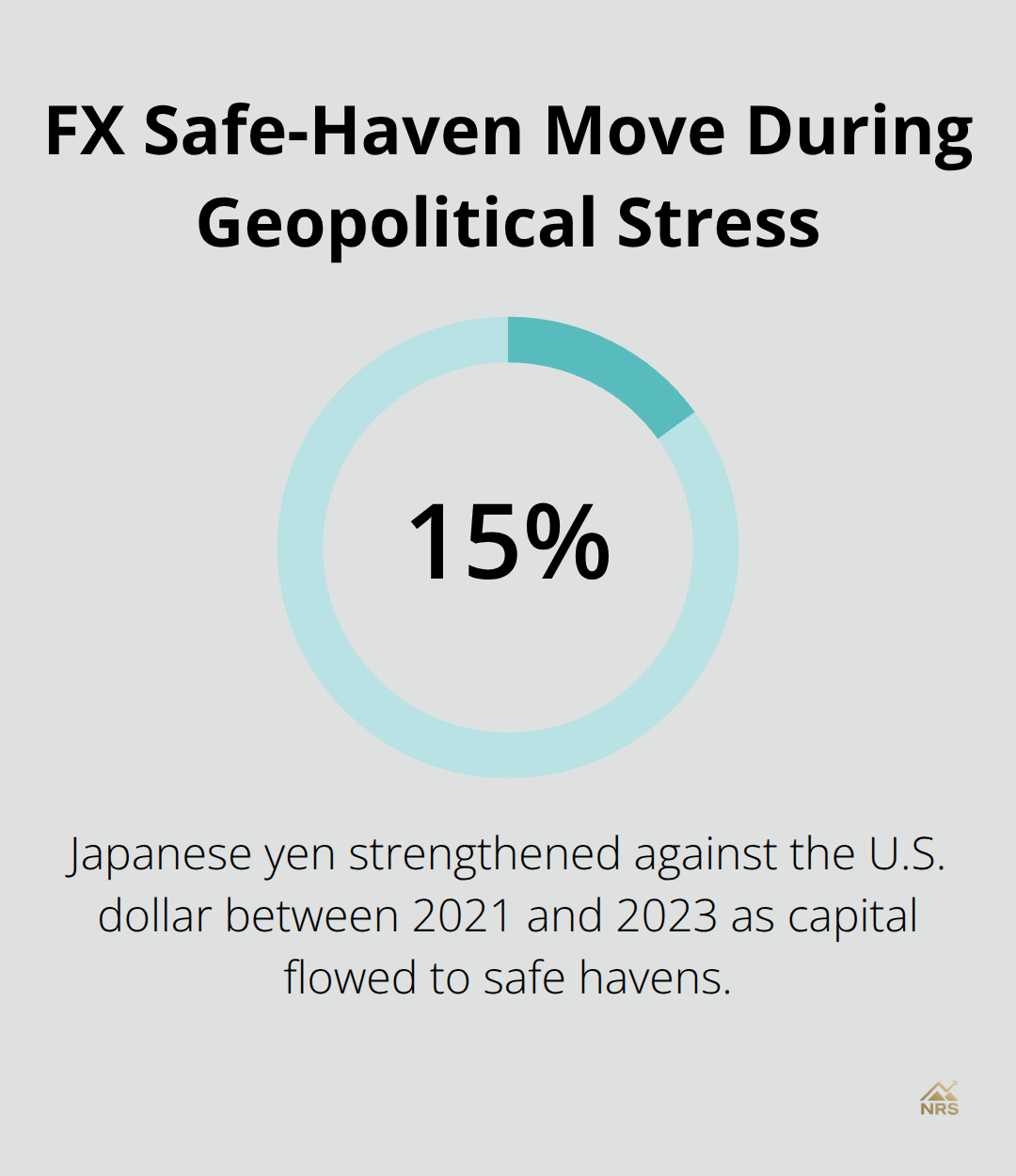
Currency markets amplified these moves significantly. The Japanese yen strengthened 15% against the dollar between 2021 and 2023 as geopolitical tensions drove capital flows toward safe-haven assets. Companies with significant exposure to weak currencies saw earnings deteriorate regardless of operational performance.
These currency swings create hidden losses for investors who fail to account for foreign exchange exposure in their holdings.
Positioning Ahead of Market Repricing
The real opportunity emerges when investors position capital before markets fully reprice geopolitical risk. Supply chain disruptions, energy shocks, and currency realignments follow predictable patterns once you understand which sectors benefit and which sectors suffer. Natural Resource Stocks provides expert analysis on macroeconomic factors and geopolitical impacts that affect resource prices-information that helps investors identify which defensive sectors will outperform during the next crisis. The sectors that thrive during geopolitical uncertainty share one characteristic: they produce assets that become more valuable when global instability rises.
Defensive Stock Sectors That Thrive During Geopolitical Uncertainty
Gold and Precious Metals Producers Capture Safe-Haven Demand
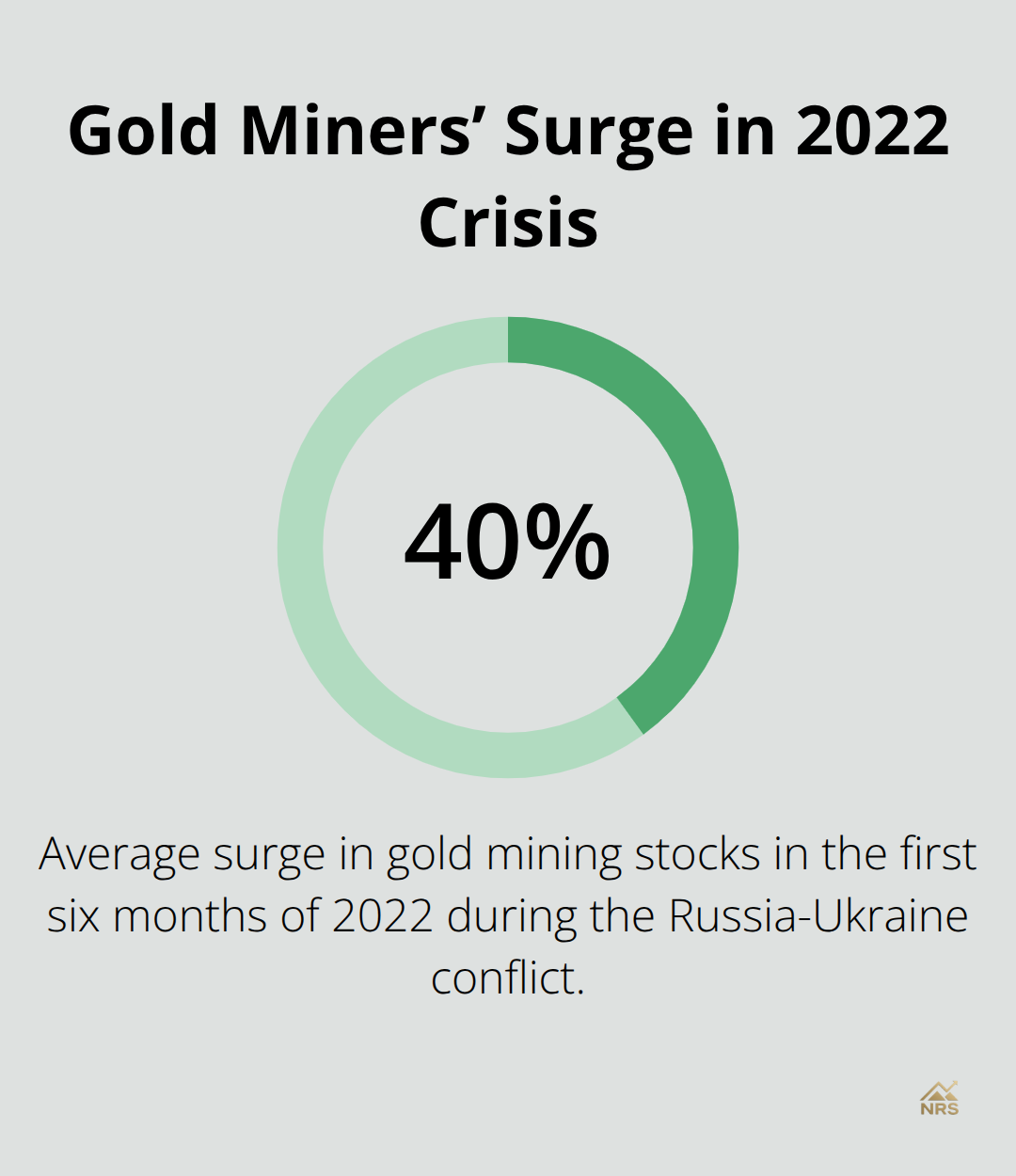
Gold and precious metals producers move sharply higher when geopolitical risk accelerates because investors flee to safe-haven assets. During the Russia-Ukraine conflict in 2022, gold prices climbed from $1,800 to $2,080 per ounce according to World Gold Council data, while gold mining stocks surged an average of 40% in the first six months. When currency values become uncertain and bond yields compress, physical gold and the companies that extract it attract capital flows. Gold producers offer defensive characteristics because their revenues rise as gold prices climb, yet they maintain lower correlation to equity market downturns compared to technology or consumer discretionary stocks.
Select producers with strong balance sheets and low all-in sustaining costs below $1,000 per ounce, as these companies expand margins rapidly when gold prices spike.
Domestic Oil and Natural Gas Companies Benefit From Energy Security Priorities
Domestic oil and natural gas companies benefit from energy security concerns that emerge when geopolitical tensions threaten supply from unstable regions. The U.S. Energy Information Administration reported that crude oil averaged $95 per barrel throughout 2022 as supply concerns from Middle Eastern tensions and Russian sanctions persisted. Companies focused on onshore U.S. production or allied nations gain from this dynamic because governments prioritize supply diversification away from hostile regimes. These producers trade at higher valuations during geopolitical crises because energy independence becomes a policy priority, not an afterthought.
Rare Earth Elements and Critical Infrastructure Command Government Support
Rare earth element suppliers and critical infrastructure companies represent the strongest secular trend within defensive sectors because geopolitical fragmentation forces governments to build domestic supply chains. The U.S. Geological Survey identified 17 critical minerals essential for defense and renewable energy, with China controlling 60% to 90% of global processing capacity for most of them. When geopolitical tensions escalate, governments accelerate investments in alternative suppliers outside hostile jurisdictions. Companies that develop rare earth mines, semiconductor manufacturing capacity, or lithium extraction in allied nations experience multi-year tailwinds from government contracts and procurement mandates.
Nuclear Energy Emerges as Geopolitical-Proof Infrastructure
Uranium producers warrant specific attention because nuclear energy has become central to energy security strategies across Europe, Asia, and North America. The International Atomic Energy Agency reported that 16 new nuclear reactors began construction in 2022 and 2023, with governments viewing nuclear as essential infrastructure independent from geopolitical energy chokepoints. Uranium spot prices have risen significantly, reflecting this structural shift. These four sectors share a critical advantage: their stock performance decouples from traditional equity market weakness because the assets they produce become more valuable precisely when geopolitical risk rises. This defensive strength creates the foundation for portfolio strategies that protect capital while capturing growth during periods of international instability.
Building Portfolios That Profit From Geopolitical Chaos
Combine Uncorrelated Assets for Defensive Strength
The defensive sectors we identified excel during crises, but owning them individually leaves you exposed to sector-specific volatility. Gold producers and uranium companies move differently than oil stocks because their price drivers operate independently. When crude oil falls due to recession fears but geopolitical tensions spike uranium demand, your uranium positions gain while energy stocks stall.
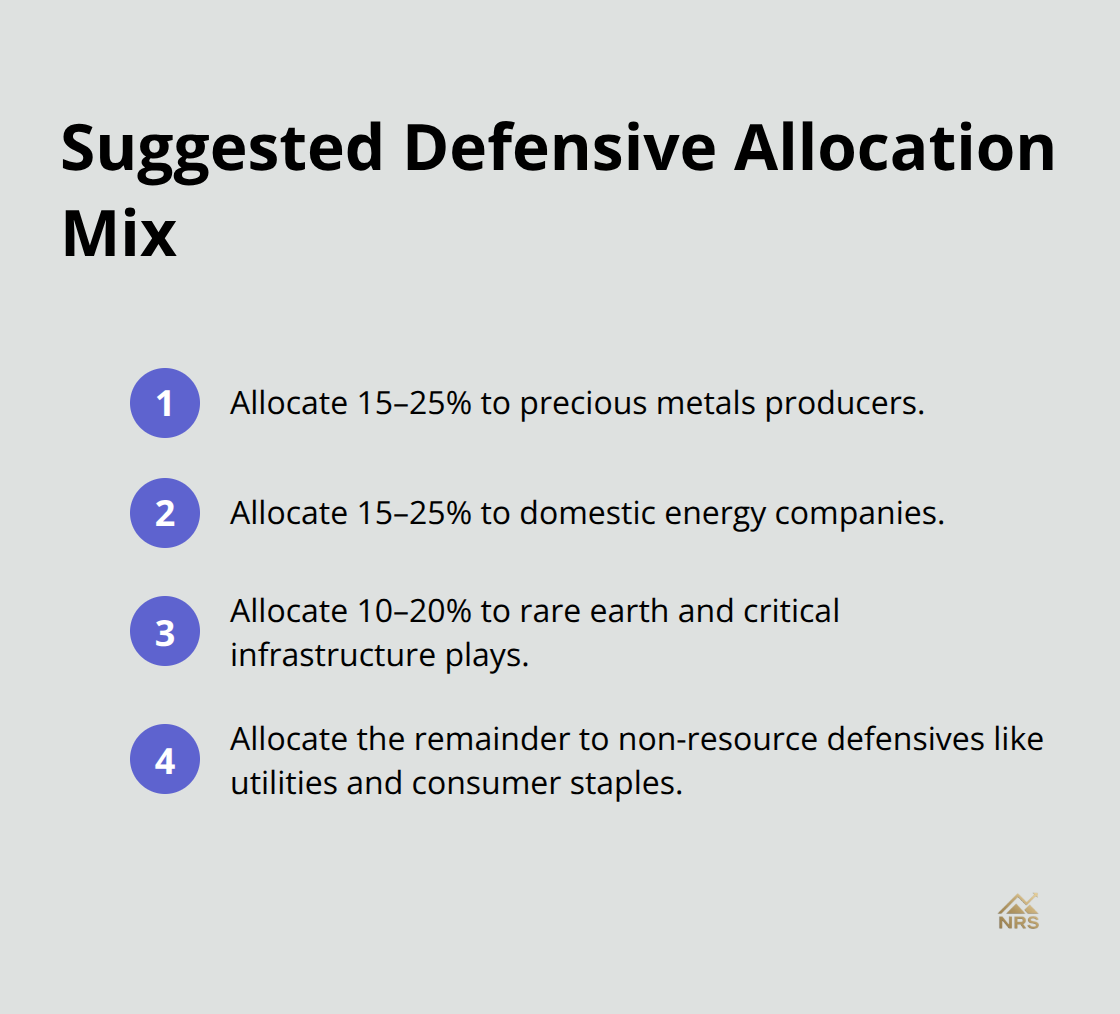
Practical execution means allocating 15-25% to precious metals producers, 15-25% to domestic energy companies, and 10-20% to rare earth and critical infrastructure plays. The remaining portfolio allocation should include non-resource defensive sectors like utilities and consumer staples that historically hold value during downturns. This structure prevents any single geopolitical shock from decimating your portfolio because you’re not dependent on one commodity or sector narrative.
Test your allocations against historical crises. During the 2022 energy shock, a portfolio weighted 20% gold, 20% oil, 15% uranium, and 45% traditional defensives would have returned approximately 8-12% while the S&P 500 fell 18%. That mathematical difference compounds significantly over multiple market cycles.
Exploit Timing Lags Between Commodity and Stock Moves
Timing matters more than most investors acknowledge, and geopolitical dislocations create specific entry windows that reward patient capital. Commodity prices spike violently when crises emerge, but resource stocks often lag by weeks or months as institutional capital rotates slowly. The Russia-Ukraine invasion caused oil to jump immediately, yet many oil stocks underperformed for 30-45 days as market participants questioned whether the rally would hold.
Disciplined investors who accumulated positions during that lag captured disproportionate gains. Set specific price targets for entries rather than attempting to catch exact bottoms. If gold typically trades between $1,800-$2,000 per ounce during calm periods but you expect geopolitical escalation, establish buy orders at $1,750 and $1,650 knowing these levels represent genuine dislocations.
Use Valuation Multiples to Identify Tactical Opportunities
Uranium producers typically trade at 8-12x forward cash flow during stability but drop to 5-7x multiples during equity market panics, creating tactical opportunities. Monitor geopolitical tension indicators from sources like the Geopolitical Risk Index, which measures global tensions through news frequency and intensity. When the index spikes but resource stocks haven’t yet responded, that signals a timing opportunity.
Avoid the temptation to chase stocks already up 40-50% after crises begin. The real money emerges from positions accumulated before the market recognizes the threat.
Final Thoughts
Resilient portfolios require investors to abandon the assumption that markets move in predictable patterns. Geopolitical risk stock picks aren’t speculative bets-they represent defensive positions backed by tangible supply constraints and government policy shifts. Gold producers, domestic energy companies, uranium suppliers, and rare earth element manufacturers outperform during crises because the assets they extract become more valuable when global instability rises.
Test your portfolio allocations against historical geopolitical shocks to understand how your positions would have performed during the 2022 energy crisis or the Russia-Ukraine invasion. This historical analysis reveals whether your current structure actually protects capital or merely creates the illusion of safety. Timing separates successful investors from those who chase rallies after they’ve already moved significantly-commodity prices spike immediately when crises emerge, but resource stocks lag by weeks, creating the window where disciplined capital accumulates positions at reasonable valuations.
Geopolitical awareness drives superior investment decisions. Investors who understand how trade tensions fracture supply chains, how energy shocks compress margins, and how currency realignments damage valuations position capital before these impacts fully materialize in stock prices. Visit Natural Resource Stocks to access expert analysis on macroeconomic factors and geopolitical impacts affecting resource prices.