
























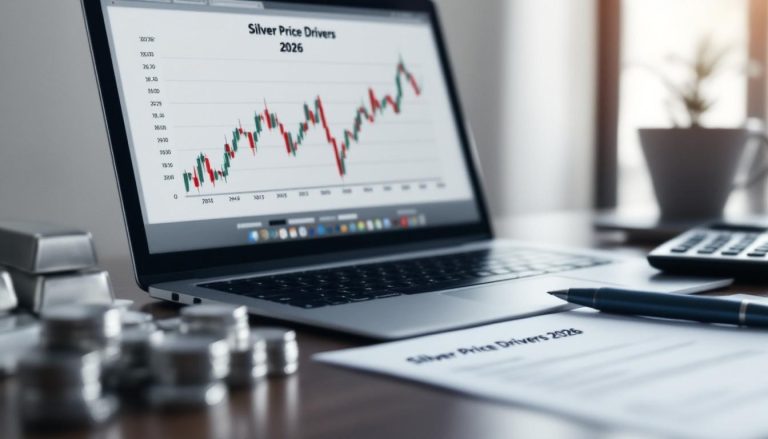
Silver prices don’t move randomly. Industrial demand, macroeconomic shifts, and investor behavior all play measurable roles in determining where silver trades.
At Natural Resource Stocks, we’ve identified the key silver price drivers for 2026 that matter most to investors and producers. Understanding these forces helps you anticipate market moves before they happen.
Industrial Demand Pushes Silver Prices Higher
Solar Energy Drives Massive Silver Consumption
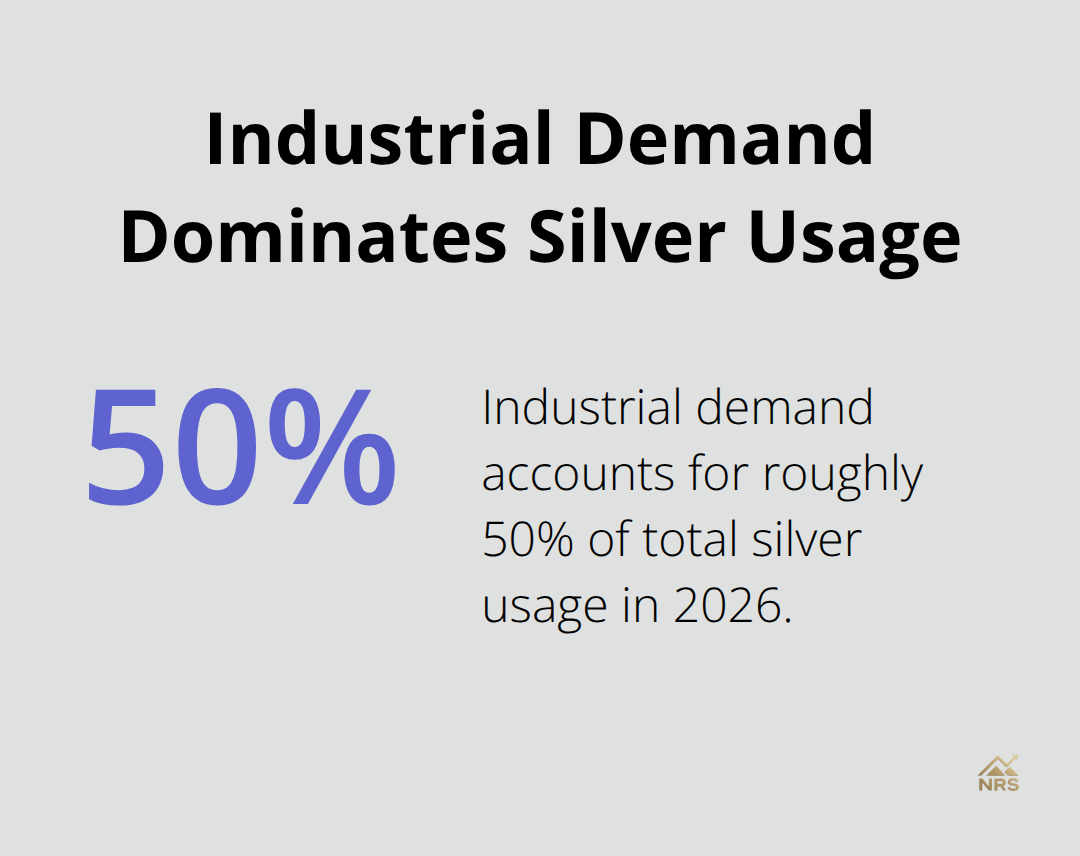
Industrial demand accounts for roughly 50% of total silver usage, making it the dominant force shaping prices in 2026. Solar energy alone consumes enormous quantities-each photovoltaic panel requires 15 to 20 grams of silver, and global solar installations continue expanding rapidly. Governments push renewable energy targets while costs decline, which accelerates panel installations and directly translates into higher silver demand. This trend shows no signs of reversing in 2026.
Electronics and Semiconductors Demand Silver as an Irreplaceable Conductor
Electronics manufacturing compounds industrial pressure on silver supplies. Silver is the finest electrical conductor among all metals, making it irreplaceable in semiconductors, 5G infrastructure, and AI data center components. The semiconductor industry remains aggressive-demand for chips used in artificial intelligence applications, data processing, and advanced computing systems stays elevated. This means silver consumption from electronics will remain strong throughout 2026 and beyond.
Medical Applications Provide Stable Consumption
Medical and healthcare devices consume silver at smaller volumes than solar and electronics. Surgical instruments, diagnostic equipment, and wound-care products all rely on silver’s antimicrobial properties. While this segment represents a smaller slice of total demand, it provides stable, predictable consumption that does not fluctuate with economic cycles the way other sectors do.
Supply Cannot Match Industrial Demand
Industrial demand creates a floor under silver prices that investment speculation alone cannot break through. Fresnillo, the world’s largest primary silver producer, reduced 2026 production guidance to 42 to 46.5 million ounces from an earlier 45 to 51 million ounces, signaling that supply cannot keep pace with industrial needs. The Silver Institute projects total silver demand at 1.16 billion ounces in 2024, with supply constraints expected to persist in 2026.
This deficit persists because most silver comes as a byproduct of copper and zinc mining-production cannot ramp up quickly even when prices rise. Mine development timelines stretch 7 to 15 years, making supply inelastic. Industrial users cannot simply switch to alternatives when silver prices spike; they need the metal to function. This creates sustained buying pressure regardless of whether investors operate in risk-on or risk-off mode.
What This Means for Your Investment Strategy
Industrial demand provides genuine support for silver prices in 2026, not speculation. Track solar installation capacity, semiconductor production reports, and industrial purchasing data to gauge real demand strength beneath the noise of daily price movements. These metrics reveal whether silver prices reflect actual industrial consumption or temporary market sentiment. Understanding this distinction helps you separate noise from signal when evaluating silver’s 2026 trajectory and the macroeconomic factors that will shape investment flows next.
Macroeconomic Factors and Geopolitical Events
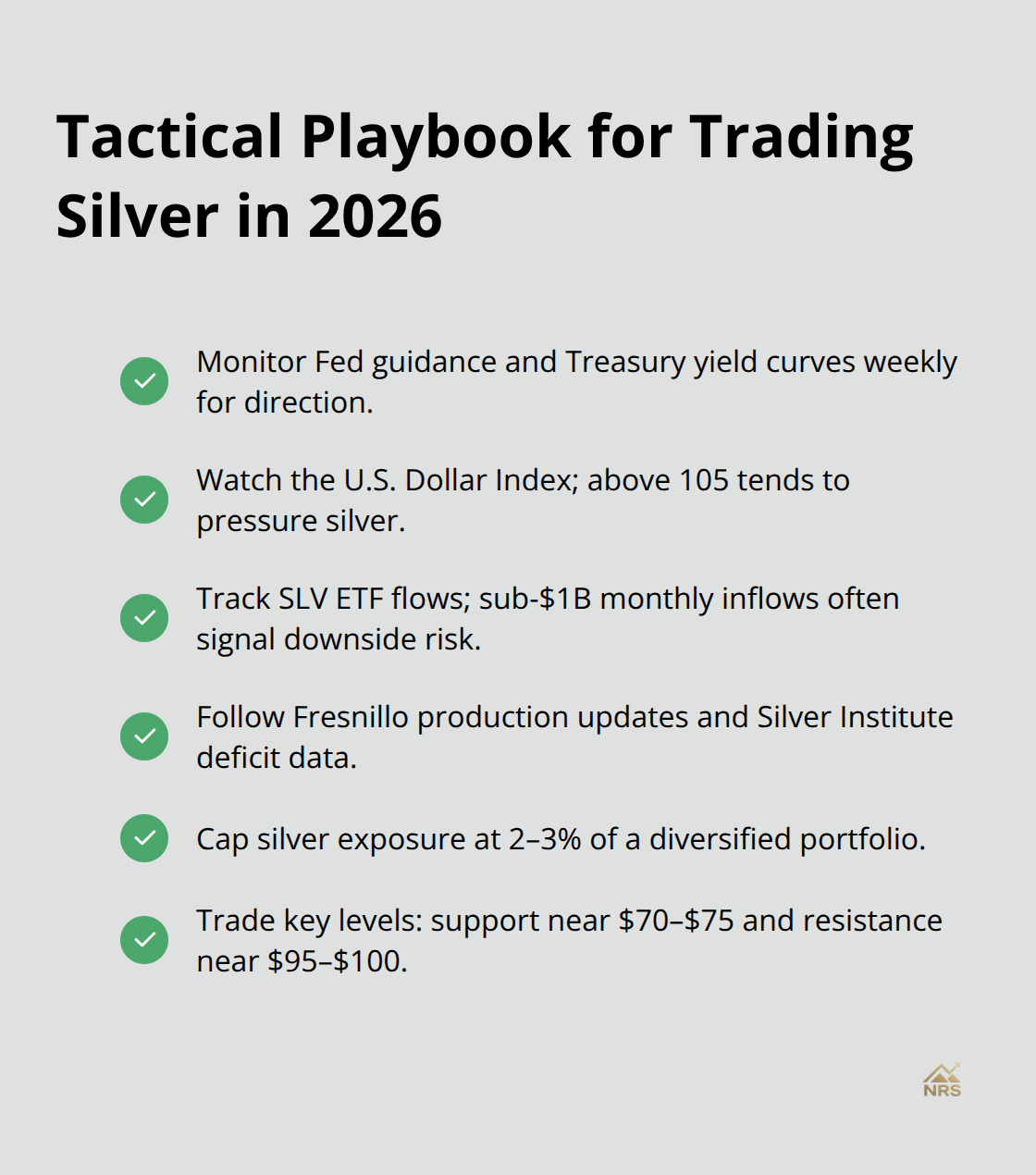
Interest rates and currency strength create the second layer of silver price mechanics that operates independently from industrial consumption. When the Federal Reserve signals rate cuts, the opportunity cost of holding non-yielding silver drops immediately, triggering investment inflows that can push prices higher within weeks. Conversely, a hawkish Fed stance combined with higher Treasury yields makes silver less attractive versus bonds, pressuring prices downward regardless of solar panel production or semiconductor demand. In early 2026, expectations shifted toward a more hawkish Fed posture under potential new leadership, which contributed to silver’s sharp selloff from February highs near $94 per ounce down to the $79–$80 range.
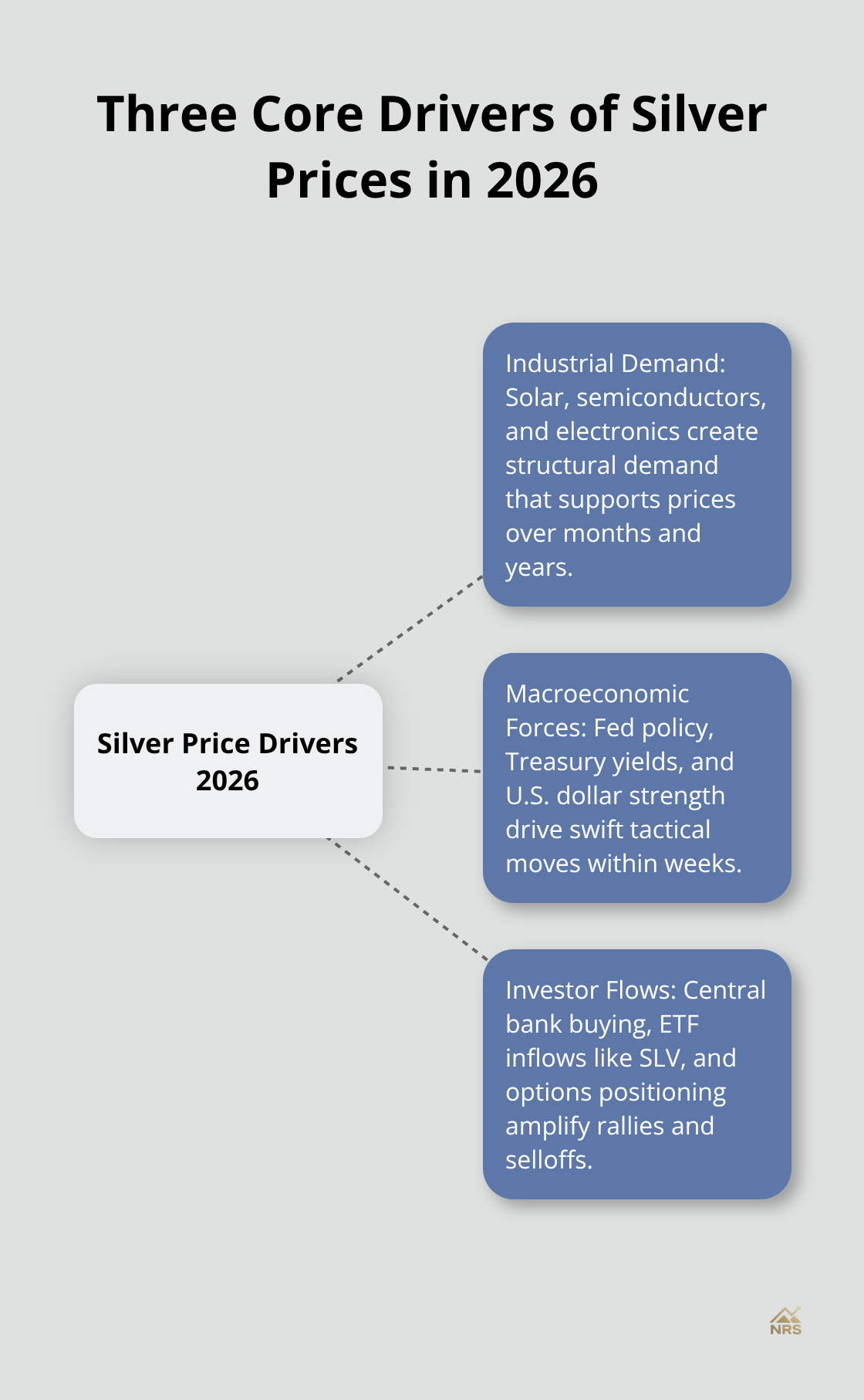
This tells you that monetary policy moves faster than industrial demand cycles. Track the Fed’s forward guidance and Treasury yield movements weekly because they drive short-term silver volatility that can overwhelm fundamental supply-demand stories.
Inflation and Interest Rate Movements Shape Investment Flows
The Fed’s policy stance determines whether investors view silver as an attractive hedge or an opportunity cost. Rate cuts reduce the yield advantage of bonds, making non-yielding silver more competitive for portfolio allocation. Higher rates do the opposite-they pull capital away from silver into fixed-income instruments. This dynamic played out in early 2026 when rate-cut expectations reversed, causing silver to fall sharply despite tight physical supplies. Monitor Fed communications and Treasury yield curves closely; they signal directional moves weeks before industrial demand data becomes available.
Currency Fluctuations and Dollar Strength
A stronger US dollar makes silver more expensive for international buyers holding other currencies, reducing demand from overseas markets where much of the industrial consumption occurs. When the dollar strengthened in early 2026 alongside rising Treasury yields, silver prices fell despite persistent supply deficits and robust solar installation growth. This dynamic matters because silver trades in dollars globally, so currency dynamics can mask or amplify the underlying industrial demand picture. Track the US Dollar Index closely; when it rises above 105, expect headwinds on silver prices even if fundamentals remain solid. Conversely, periods of dollar weakness historically coincide with silver rallies because foreign buyers gain purchasing power and central banks diversify away from dollar reserves into precious metals.
Supply Chain Disruptions and Mining Output
Mining output disruptions cause immediate price reactions that dwarf the gradual impact of industrial demand growth. Fresnillo’s production cut in 2026 tightened expectations around global silver supply, yet this news alone did not sustain prices at $94 per ounce because macroeconomic factors overwhelmed the supply story. China’s tightening of silver export licenses starting January 2026 further constrained physical supply flows, yet prices still corrected because monetary policy concerns dominated investor sentiment. This reveals that while supply constraints provide a price floor, geopolitical shocks can push silver below that floor temporarily. Watch mining company earnings reports and production guidance updates for early signals of supply tightness, but understand that geopolitical supply disruptions only support prices when combined with accommodative monetary conditions or risk-off investor flows seeking safe havens. These interconnected forces-Fed policy, currency strength, and mining disruptions-set the stage for how investors actually position themselves in silver markets.
How Investor Money Flows Shape Silver Prices
Central Bank Purchases and Retail Inflows Drive Price Swings
Central bank purchases and retail investor inflows create measurable price pressure that operates independently from industrial demand fundamentals. The Silver Institute data shows silver demand reached 1.117 billion ounces in 2025 against supply of 1.022 billion ounces, producing a 95-million-ounce deficit. Yet this structural shortage alone did not prevent silver from falling from $94 per ounce in early February 2026 to the $79–$80 range within weeks. The reason: investor sentiment shifted dramatically when Federal Reserve policy expectations turned hawkish. Central banks globally accumulated precious metals as reserve diversification, signaling sustained appetite for precious metals, but this institutional buying cannot offset rapid shifts in retail investor positioning.
SLV Flows Reveal Real Investor Demand
SLV, the dominant silver ETF, saw assets under management grow throughout 2025, with significant inflows during the period. This explosive growth means that when retail flows reverse, the price impact happens in days rather than months. Track SLV’s daily inflows and outflows through Bloomberg or your brokerage platform; when monthly inflows drop below $1 billion, expect downward price pressure regardless of supply tightness. Conversely, when inflows exceed $2.5 billion monthly, silver tends to hold support levels even during macro headwinds. The March 2026 silver futures put-call ratio sitting near 0.92 indicates hedging costs are rising as institutional traders position for continued volatility, meaning options premiums will remain elevated through mid-2026. This environment favors covered-call strategies for investors holding physical silver or SLV positions, as selling call premiums can produce 2–3% monthly returns in high-volatility conditions.
Gold and Silver Diverge Despite Identical Headwinds
Gold and silver correlations matter less than most investors assume because industrial demand decouples silver from pure safe-haven behavior. Gold settled near $4,926.9 per ounce in early 2026 while silver fell to $79–$80, meaning the gold-to-silver ratio expanded dramatically despite both metals facing identical macroeconomic headwinds. This divergence occurred because gold benefits purely from safe-haven flows and central bank purchases, while silver faces competing pressure from industrial users who reduce consumption when prices spike. Goldman Sachs projects gold reaching $5,400 per ounce by December 2026 with upside risk to higher levels, yet silver’s path remains more uncertain because it must balance investment demand against industrial cost pressures.
Industrial Users Cap Silver’s Upside
When industrial users see silver above $85–$90 per ounce, they begin optimizing consumption and exploring substitutes, which caps the upside even as investment flows push prices higher. Bank of America warned that silver’s 60–120% annualized volatility means positions require 30–60% expected returns to compensate for drawdown risk, making silver unsuitable for passive portfolio allocation. Instead, treat silver as a tactical trade rather than a buy-and-hold asset in 2026. Position sizing matters more than timing: allocate no more than 2–3% of a diversified portfolio to silver, then use SLV or physical holdings to trade around support levels near $70–$75 and resistance near $95–$100.
Monitor Real Yields for Rally Signals
Monitor central bank communications weekly and cross-reference them against Treasury yield movements; when real yields (nominal yields minus inflation expectations) turn negative, silver rallies regardless of industrial demand weakness, but these rallies rarely sustain beyond 4–6 weeks without underlying supply constraints tightening further. This pattern repeats throughout 2026 as macro conditions shift between risk-on and risk-off environments, creating tactical opportunities for investors who track both the fundamental supply-demand picture and the sentiment indicators that move short-term prices.
Final Thoughts
Silver prices in 2026 respond to three interconnected forces that operate on different timescales. Industrial demand from solar panels, semiconductors, and electronics provides the structural foundation, creating a persistent 95-million-ounce annual deficit that supports prices over months and years. Macroeconomic conditions-Fed policy, Treasury yields, and dollar strength-drive tactical moves within weeks, while investor flows through ETFs and options markets amplify both trends and create volatility that temporarily overwhelms fundamentals.
The silver price drivers for 2026 reveal a market where timing matters as much as direction. A structural supply deficit exists, yet prices fell from $94 to $79 per ounce in February because monetary policy shifted hawkish. Industrial demand alone cannot sustain rallies when real yields turn positive and the dollar strengthens, but accommodative Fed policy combined with dollar weakness can push silver higher even during periods of industrial demand weakness.
Track three specific indicators to anticipate silver moves: Federal Reserve communications and Treasury yield curves signal directional pressure faster than any other metric, SLV inflows and the put-call ratio reveal options positioning and investor sentiment shifts, and Fresnillo’s production reports plus Silver Institute deficit data confirm whether supply tightness persists. Position silver tactically rather than strategically in 2026 by allocating 2–3% of a diversified portfolio maximum, then trade around support near $70–$75 and resistance near $95–$100.
We at Natural Resource Stocks help investors navigate precious metal volatility through expert analysis on how macroeconomic shifts shape silver and other resource stocks-visit Natural Resource Stocks to access the insights needed to trade silver’s volatile 2026 landscape with confidence.