
























Uranium is experiencing a genuine supply crunch. Global nuclear capacity is expanding, and major economies are committing billions to new reactor projects.
At Natural Resource Stocks, we’ve built this uranium mining investment guide to help you navigate the sector with real data and practical strategies. Whether you’re new to uranium or looking to refine your approach, this guide covers the fundamentals you need.
The Uranium Market Today
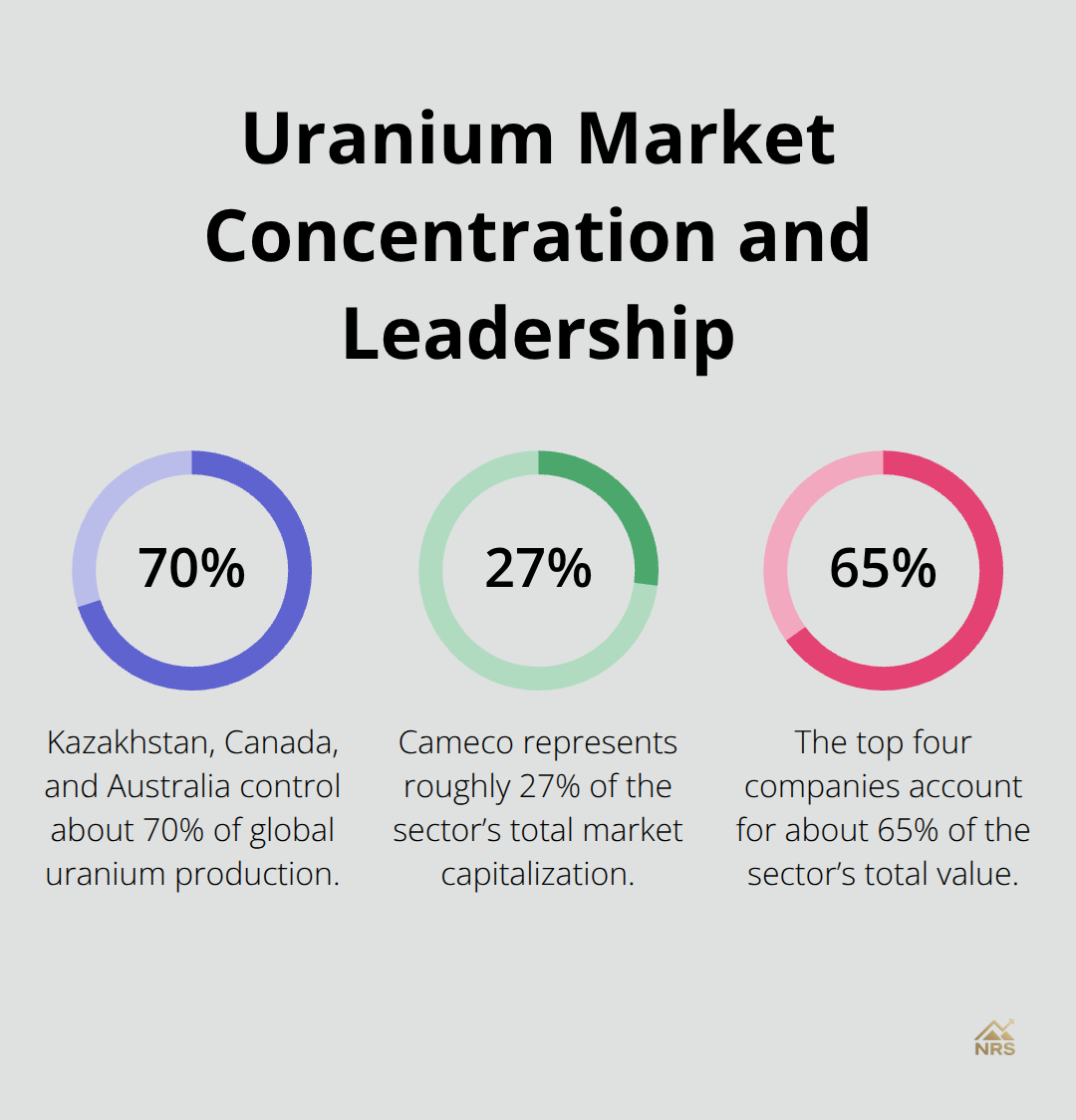
Uranium trades at 263.21 USD per pound as of mid-February 2026. Year-over-year, prices have climbed significantly, which tells you demand expectations remain strong despite short-term pullbacks. This matters because uranium doesn’t trade like stocks. Utilities and miners sign contracts two to three years in advance, so long-term pricing signals genuine, sustained demand rather than speculation. Spot price volatility can mislead investors. What actually moves uranium markets is whether power companies lock in supplies for future reactor operations. Kazakhstan, Canada, and Australia control roughly 70% of global uranium production, and any disruption in these regions directly impacts prices. Uzbekistan raised annual production to 7,000 tonnes last year and boosted reserve estimates, signaling potential supply growth.
However, prices remain elevated because nuclear capacity expansion outpaces new mining investment. Forecasts project continued strength in uranium markets, according to Trading Economics models.
How Policy Reshapes Supply Chains
Russia’s nuclear fuel historically supplied Western utilities, but the Biden administration’s ban on Russian low-enriched uranium takes full effect by 2028. This forces utilities to secure alternatives from Western producers, tightening supply chains. The US awarded roughly 2.7 billion dollars in contracts to Centrus and other domestic enrichers to offset this gap. Meanwhile, Putin has floated restrictions on uranium exports in response to sanctions, creating geopolitical uncertainty that props up prices. This isn’t theoretical risk-it reshapes investment decisions right now.
Institutional Demand Signals Real Tightness
Sprott’s Physical Uranium Trust increased yellowcake holdings by approximately 100,000 pounds recently, signaling institutional investors position for supply tightness. Nuclear plants operate with capacity factors above 90%, making them extraordinarily reliable baseload power. China builds 33 reactors that will add more than 35 GW of capacity. Tech giants like Microsoft, Alphabet, and Meta signed long-term power purchase agreements with nuclear facilities to feed data centers. These represent concrete demand drivers, not projections.
Historical Context and Upside Potential
The all-time high for uranium reached 148 USD per pound in May 2007, so current prices remain well below previous peaks. This suggests upside potential if supply tightens further. The combination of policy-driven supply constraints, institutional accumulation, and expanding nuclear capacity creates a backdrop where uranium investors must understand both the fundamentals and the risks. Understanding which companies can actually deliver production becomes your next priority.
Key Uranium Mining Companies and Investment Options
Cameco stands as the clear leader among uranium miners, controlling roughly 27% of the sector’s total market capitalization at 49.25 billion dollars according to current market data. The company operates the world’s largest high-grade uranium reserves and maintains a diversified footprint across the nuclear fuel cycle, from mining to conversion services. This matters because Cameco benefits from operating leverage-when uranium prices rise, their profit margins expand faster than the commodity price itself because their extraction costs remain relatively fixed.
Tier-Two Producers and Diversified Exposure
NexGen Energy and Uranium Energy represent the next tier, each valued around 7.5 billion dollars. NexGen holds exceptional reserves in Canada’s Athabasca Basin with projects that could produce significant volumes once operational, while Uranium Energy operates producing assets and exploration properties across the United States and Africa. For investors seeking exposure without committing to a single producer, the Global X Uranium ETF holds approximately 2.9 billion dollars in assets under management with an expense ratio of just 0.69%, making it an efficient entry point. The Sprott Uranium Miners ETF offers similar diversification at 1.4 billion dollars in assets with a 0.75% fee. These funds hold the major producers plus mid-tier operators, spreading your capital across multiple companies and geographies.
Alternative Exposure Routes
Physical uranium vehicles like Sprott Physical Uranium Trust provide direct commodity exposure-the fund recently accumulated roughly 100,000 additional pounds of yellowcake, demonstrating institutional confidence in supply tightness. Uranium Royalty Corp offers a different angle entirely, providing leverage to mining upside without direct operational risk, though with lower absolute returns than mining stocks during bull markets. Kazakhstan’s Kazatomprom, now partially publicly listed with 15% of shares trading, produces roughly 20% of global uranium and operates with government backing, reducing sovereign risk relative to smaller operators in politically unstable regions.
Execution Risk and Junior Miners
Junior miners and exploration-stage companies promise spectacular returns but carry execution risk that separates winners from failures. NexGen’s Rook I project in Canada could eventually produce 30 million pounds annually, but commercial production remains years away. Denison Mines and Energy Fuels both operate existing capacity or near-term development projects, making them less speculative than pure explorers. The critical question is whether a company controls reserves, has secured off-take agreements with utilities, and possesses the capital to reach production. Many exploration-stage firms control excellent geology but lack committed buyers or funding, leaving investors exposed to dilution and project abandonment.
Building Your Position Strategically
Start with Cameco or diversified ETFs if you want stability and liquidity-these provide genuine exposure to uranium demand without single-company risk. Add NexGen Energy or Uranium Energy if you have conviction on near-term production ramps and can tolerate higher volatility. Avoid exploration-stage companies unless you possess specialized knowledge of geology and permitting processes, or unless you allocate only capital you can afford to lose entirely. Physical uranium through Sprott’s trust makes sense as a portfolio complement, particularly if you believe supply tightness will intensify. Uranium royalty companies like Uranium Royalty Corp offer middle ground between mining stocks and passive commodity exposure, though they underperform when prices surge dramatically. Monitor which utilities sign long-term supply contracts-these announcements often precede stock moves among producers holding corresponding reserves. The top four companies by market capitalization account for roughly 65% of the sector’s total value, meaning concentration risk is real. Diversification across geography matters too; Canadian producers face different regulatory and political environments than Australian operators or Kazakhstan’s state enterprise. Build your position gradually rather than deploying capital in one move, because uranium markets reward patience and punish emotional decisions during volatility swings. Your next priority involves understanding the specific risks that can derail even well-positioned uranium investments and how to structure your portfolio to weather market cycles.
Protecting Your Capital Through Market Cycles
Position Sizing Prevents Catastrophic Losses
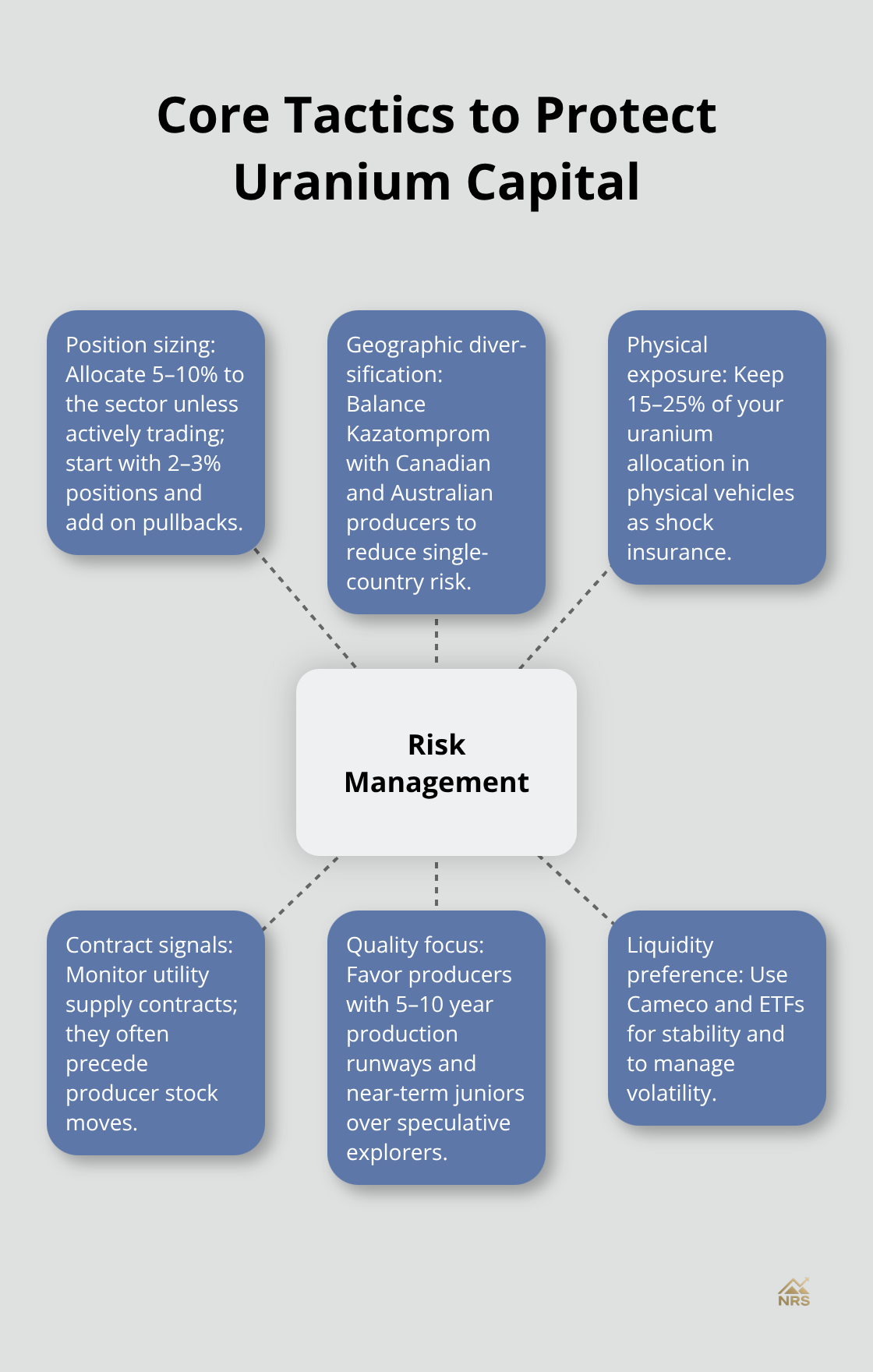
Uranium volatility demands a ruthless approach to position sizing. The sector swings 20 to 30 percent in weeks based on geopolitical headlines or production announcements, which means overleveraging destroys portfolios regardless of long-term fundamentals. Allocate no more than 5 to 10 percent of your total investable assets to uranium unless you actively trade the sector and monitor positions daily. Cameco trades with lower volatility than junior miners because institutional ownership provides liquidity, but even Cameco dropped 28 percent in a single trading session when market conditions shifted in February 2026. Smaller producers experience 40 to 50 percent swings regularly.
Your entry price matters less than your ability to hold through downturns without forced selling. Uranium markets reward patience because supply constraints and long-term contracts favor producers over time, but only if you survive the volatility. Start positions at 2 to 3 percent of portfolio value, then add incrementally as your conviction strengthens and prices pull back.
Geographic Diversification Reduces Single-Country Risk
Diversification across geography shields you from single-country risk. Kazakhstan controls roughly 20 percent of global production, making Kazatomprom a core holding, but pairing it with Canadian producers like Cameco or NexGen Energy spreads your exposure. Australian operators like Paladin Energy provide a third geographic anchor, reducing your dependence on any single nation’s political stability.
ETFs like Global X Uranium or Sprott Uranium Miners automatically provide this geographic spread without requiring you to research individual jurisdictions, though they sacrifice upside concentration that focused portfolios capture. Physical uranium through Sprott Physical Uranium Trust serves as portfolio insurance-when mining stocks crash on geopolitical shocks, physical commodity positions often hold value or appreciate because end-users panic-buy supplies. Allocate 15 to 25 percent of your uranium exposure to physical uranium vehicles, with the remainder split between major producers and diversified funds.
Due Diligence Separates Winners From Value Traps
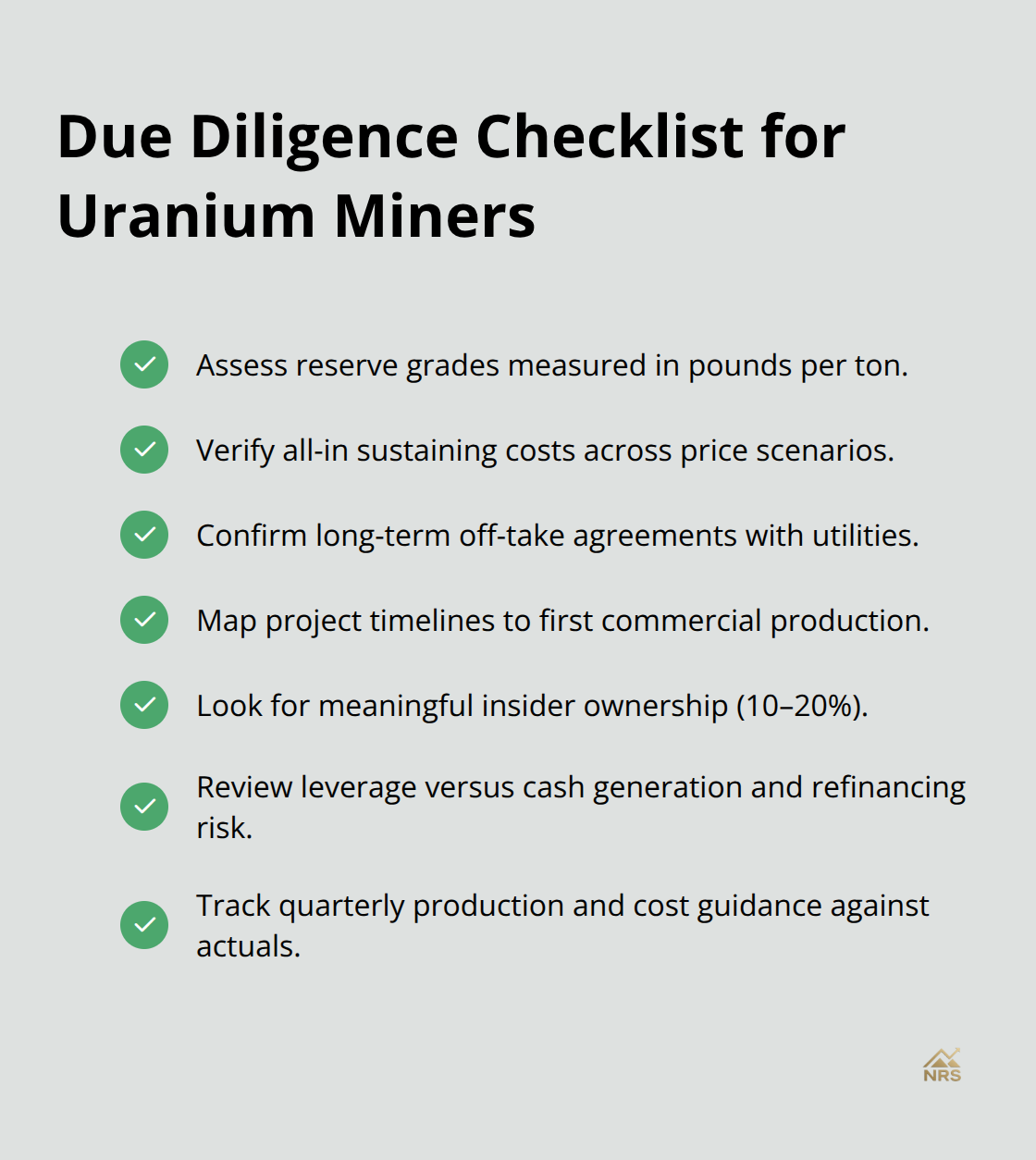
Examine mining companies on four specific criteria: reserve grades measured in pounds per ton, all-in sustaining costs that determine profitability at various uranium prices, off-take agreements with utilities that guarantee offtake volumes and prices, and project timelines to commercial production. NexGen Energy’s Rook I project holds exceptional grades but won’t produce until 2028 at earliest, meaning capital remains at risk for years.
Denison Mines operates existing capacity at Elliot Lake in Canada, reducing execution risk relative to pure explorers. Cameco already generates cash flow, allowing the company to fund expansion without diluting shareholders.
Check whether management owns meaningful equity stakes personally-founders and executives holding 10 to 20 percent of shares signals alignment with minority shareholders. Examine debt levels relative to cash generation; highly leveraged junior miners face refinancing risk if uranium prices collapse. Track quarterly production reports and cost guidance from public filings, comparing actual results against guidance. Companies that consistently miss targets or raise costs signal operational problems.
Supply Contracts Signal Real Demand
Utilities announce long-term supply contracts publicly through SEC filings or stock exchange announcements, creating a real-time demand signal you can track. When Microsoft, Alphabet, or Meta sign nuclear power agreements, check which uranium producers control reserves in those regions-these announcements often precede stock moves among suppliers. Avoid exploration-stage companies unless you possess expertise in evaluating geological reports and permitting timelines, because most never reach production and shareholders face massive dilution. Try focusing instead on producers with 5 to 10 year production runways and junior miners within 2 to 3 years of commercial production.
Final Thoughts
Uranium investing requires matching your strategy to your risk tolerance and time horizon. Conservative investors should start with Cameco or diversified ETFs like Global X Uranium, which provide genuine exposure to rising nuclear demand without single-company risk. Moderate investors can add NexGen Energy or Uranium Energy once they understand project timelines and reserve quality, accepting higher volatility for potential outperformance during bull markets. Aggressive investors with specialized knowledge might allocate smaller positions to exploration-stage companies, but only capital they can afford to lose entirely.
Your entry point matters far less than your ability to hold through volatility. Start positions at 2 to 3 percent of portfolio value, then add incrementally as prices pull back and your conviction strengthens. Track utility supply contract announcements publicly through SEC filings, as these signal real demand and often precede stock moves among corresponding producers. Physical uranium through Sprott Physical Uranium Trust works across all investor types as portfolio insurance against supply shocks.
Begin your uranium mining investment guide by examining reserve grades, all-in sustaining costs, off-take agreements, and management equity stakes. Avoid companies that consistently miss production targets or raise costs. Visit Natural Resource Stocks for expert analysis and market insights that help you navigate resource sectors with confidence, including geopolitical impacts, macroeconomic factors, and emerging opportunities that shape uranium markets.