
























Copper and nickel are moving in opposite directions today. Copper is higher as traders continue to price in tight supply, strong U.S. demand, AI/data-center infrastructure growth, and ongoing copper tariff speculation. Nickel is slightly lower as the market weighs Indonesia supply policy, softer downstream demand signals, and mixed sentiment across stainless steel and EV battery markets.
Today’s pricing snapshot
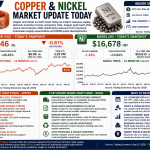
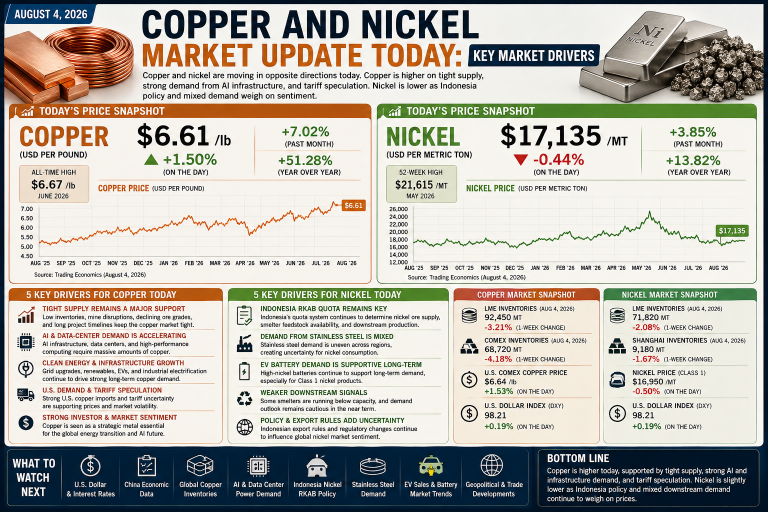
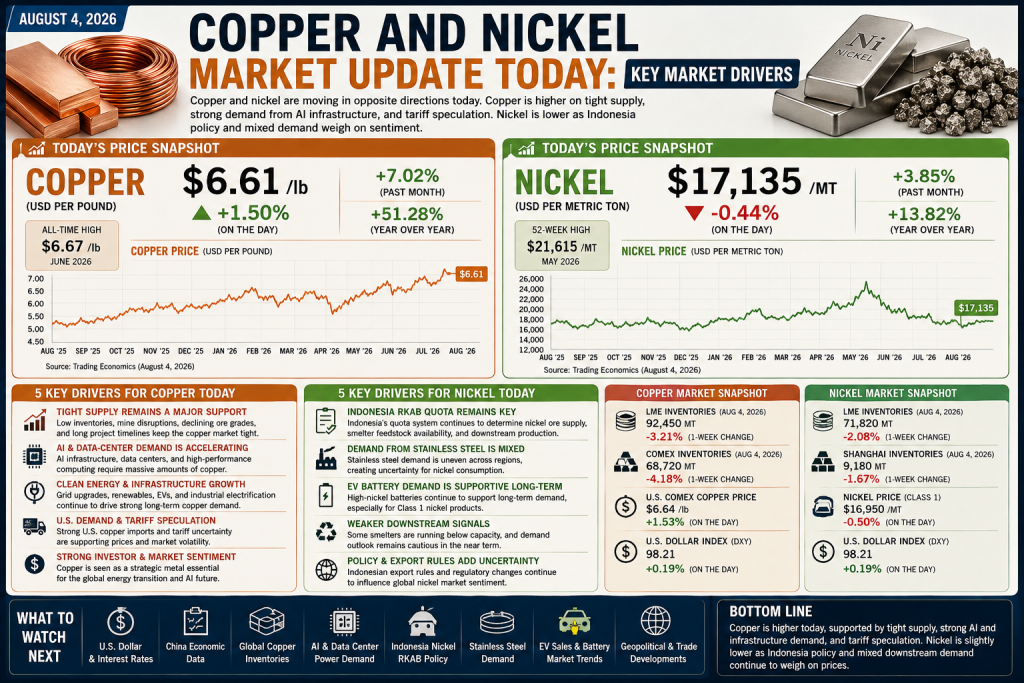
According to Trading Economics CFD benchmarks, copper rose to about $6.61/lb on August 4, 2026, up roughly 1.50% on the day. Copper is also up about 7.02% over the past month and roughly 51.28% year over year, keeping the metal near historically elevated levels. Trading Economics also notes that copper reached an all-time high of $6.67/lb in June 2026.
Nickel fell to about $17,135/metric ton on August 4, 2026, down roughly 0.44% on the day. Nickel is still up about 3.85% over the past month and roughly 13.82% year over year, showing that the longer-term trend remains positive despite today’s small decline.
5 key drivers behind today’s move
1) Copper is pushing back toward record territory
Copper is higher today as buyers continue to support the metal near record levels. The rally reflects a tight physical market, strong industrial demand, and investor interest in metals tied to electrification and infrastructure.
Copper remains one of the strongest base metals in 2026 because the market is still focused on long-term demand growth and limited supply flexibility.
2) AI and data-center demand remain major copper catalysts
AI infrastructure is one of the biggest demand themes for copper. Data centers require large amounts of electrical equipment, wiring, grid connections, cooling systems, and power distribution infrastructure.
That means copper is increasingly being treated as a strategic infrastructure metal, not just a construction or manufacturing commodity. As AI spending grows, copper demand from power systems and grid expansion remains a major bullish driver.
3) U.S. copper demand and tariff speculation are supporting prices
Copper is also being supported by strong U.S. demand and continued tariff speculation. Traders are watching U.S. copper import flows, refined copper policy, and possible changes to trade rules that could affect regional supply chains.
Tariff uncertainty can keep copper volatile because it may influence imports, domestic supply availability, downstream manufacturers, and regional pricing spreads.
4) Nickel is softer as Indonesia remains the key wildcard
Nickel is slightly lower today, but Indonesia remains the biggest driver of the market. The country’s RKAB quota policy continues to shape expectations for nickel ore supply, smelter feedstock, and downstream production.
If Indonesia keeps quota discipline in place, nickel could remain supported. If quota approvals expand or downstream demand weakens, nickel could face renewed pressure.
5) Nickel demand remains mixed
Nickel’s demand picture is still more complicated than copper’s. Stainless steel remains the largest demand source, while EV batteries support the longer-term outlook for higher-grade nickel products.
However, weaker downstream demand signals and uncertainty around smelter consumption are still weighing on sentiment. That makes nickel more policy-sensitive and demand-sensitive than copper right now.
What to watch next
Copper traders will be watching LME and COMEX inventories, U.S. copper import demand, tariff developments, China industrial data, mine-supply updates from Chile, Peru, Indonesia, and the Democratic Republic of Congo, AI/data-center power demand, grid investment, EV sales, U.S. dollar moves, Treasury yields, and broader risk sentiment.
Nickel traders will be watching Indonesia’s RKAB quota process, stainless steel demand, EV battery demand, Class 1 nickel premiums, LME inventories, Indonesian export rules, ore shipments, and whether supply discipline continues through the second half of 2026.
Bottom line
On August 4, 2026, copper is higher while nickel is slightly lower. Copper is being supported by tight supply, strong AI/data-center demand, U.S. infrastructure growth, electrification, and tariff speculation. Nickel remains positive over the past month and year over year, but today’s move is softer as traders focus on Indonesia policy, downstream demand, and quota uncertainty.
Copper remains the cleaner long-term structural-demand story, while nickel remains the more supply-policy-sensitive trade today.