


























Most people don’t realize the value sitting in their junk drawers and old electronics. At Natural Resource Stocks, we’ve seen firsthand how precious metal recovery at home can turn waste into real income.
The process is simpler than you think, and you don’t need expensive equipment to get started. This guide walks you through everything from safety setup to your first batch of refined metals.
Essential Equipment and Safety Setup
Personal Protective Equipment You Cannot Skip
Safety equipment is non-negotiable for precious metal recovery at home, and cutting corners here leads to serious injury or worse. A P100 respirator ranks as your first essential purchase because you will work with corrosive acids and oxidizers that release toxic fumes, including hydrogen chloride and sulfur dioxide. Standard dust masks fail to protect you; the P100 is NIOSH approved and provides protection against a wide range of dusts, mists and other particulates. Heavy-duty nitrile gloves rated for chemical resistance are mandatory, not optional, since muriatic acid and hydrogen peroxide will burn through regular gloves in seconds. Solvent-rated safety glasses protect your eyes from splashing acid, and many people underestimate how quickly a small splash causes permanent damage.
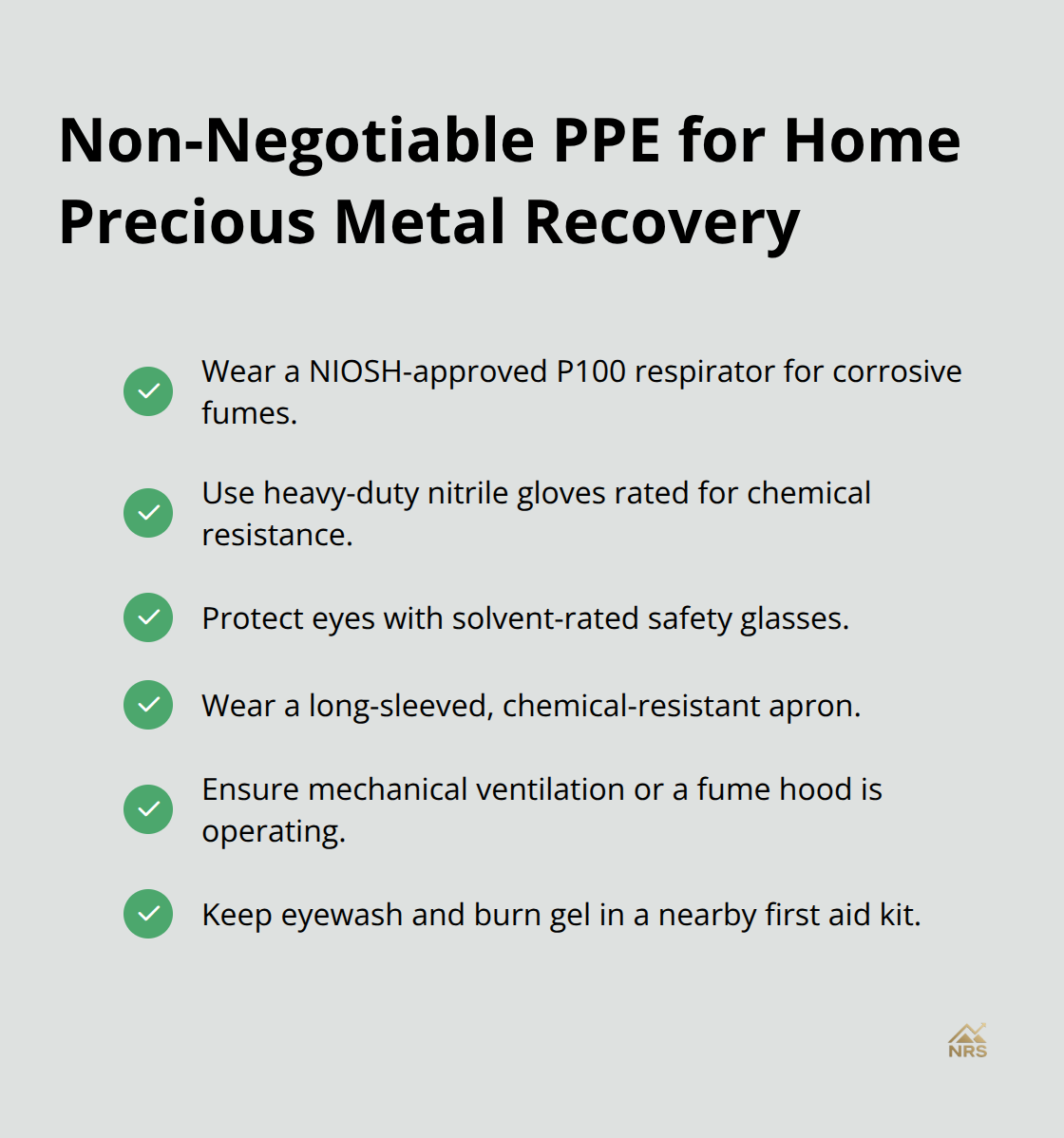
You also need a long-sleeved apron made from chemical-resistant material because one drop of acid on exposed skin causes immediate chemical burns.
Tools and Materials for Your First Batches
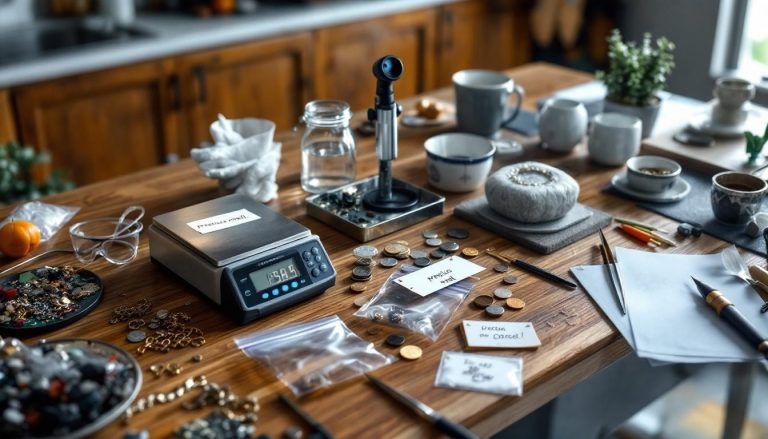
Your workspace must have borosilicate glass labware, not regular glass, since borosilicate withstands temperature shock and chemical exposure without cracking. A typical starter setup includes glass beakers, buckets, coffee filters, a digital scale accurate to 0.01 grams, pipettes, and test tubes for stannous chloride testing. The initial chemical bath combines muriatic acid and hydrogen peroxide in a 2:1 ratio, and this mixture is extremely hazardous, producing fumes that require real ventilation, not just a window open. Never work indoors without a dedicated, well-ventilated workspace or fume hood because the fumes from dissolving base metals alone cause respiratory damage with repeated exposure.
Creating a Workspace That Protects You
Your workspace setup determines whether this becomes a hobby or a health hazard. Outdoor work is significantly safer than indoor work, and if you must work indoors, you need mechanical ventilation that pulls fumes away from your breathing zone and exhausts them outside. Concrete floors with a slight slope toward a drain work best for accidental spills. Keep labeled containers for acids and residues because mixing incompatible chemicals creates explosive reactions or releases deadly gases like hydrogen cyanide. Have absorbent material like activated charcoal or sand nearby for quick spill response, and never pour anything down the drain without neutralizing it first. A fire extinguisher rated for chemical fires should hang within arm’s reach, and you need a first aid kit stocked with eyewash solution and burn gel specifically for chemical burns.
Understanding Your Legal Obligations
The EPA and RCRA regulations require that you store hazardous materials properly and dispose of waste through licensed hazardous waste facilities, not your regular trash or local dump. Start with small batches using old computer components or gold-plated circuit boards because they contain measurable gold without the complexity of processing mixed ore. A typical desktop computer contains about 0.2 grams of gold, and older electronics often have higher precious metal content than newer devices, making them better starter material. Document everything you recover and keep records of your waste disposal because regulatory agencies take this seriously, and improper disposal results in fines or legal action.
With your equipment and workspace ready, you can now identify which materials actually contain the precious metals worth your time and effort.
What Precious Metals Actually Pay Off at Home
Gold from Electronics and Jewelry
Gold from electronics deserves your attention because a single desktop computer contains approximately 0.2 grams of gold worth roughly $12 USD at current market rates, while older machines often yield significantly more. Laptops typically contain about 0.1 grams of gold, and the real opportunity emerges when you process multiple devices at scale. Computer components like motherboards, CPUs, and RAM chips concentrate gold in small areas, making them far more efficient targets than processing random e-waste. Gold content in computer circuit boards can contain 40 to 800 times more gold than an equivalent weight of mined ore, which explains why serious hobbyists focus exclusively on computer components rather than mixed electronics.
Jewelry offers different advantages because you already know the gold content and purity, eliminating guesswork about whether a piece contains 10K, 14K, or 24K gold. Old gold jewelry from estate sales or family collections provides predictable yields without the chemical complexity of extracting gold from base metals embedded in circuit boards. Gold’s excellent conductivity and corrosion resistance is precisely why manufacturers embed it in electronics, and this same property makes it valuable enough to recover even in tiny quantities.
Silver from Coins and Silverware
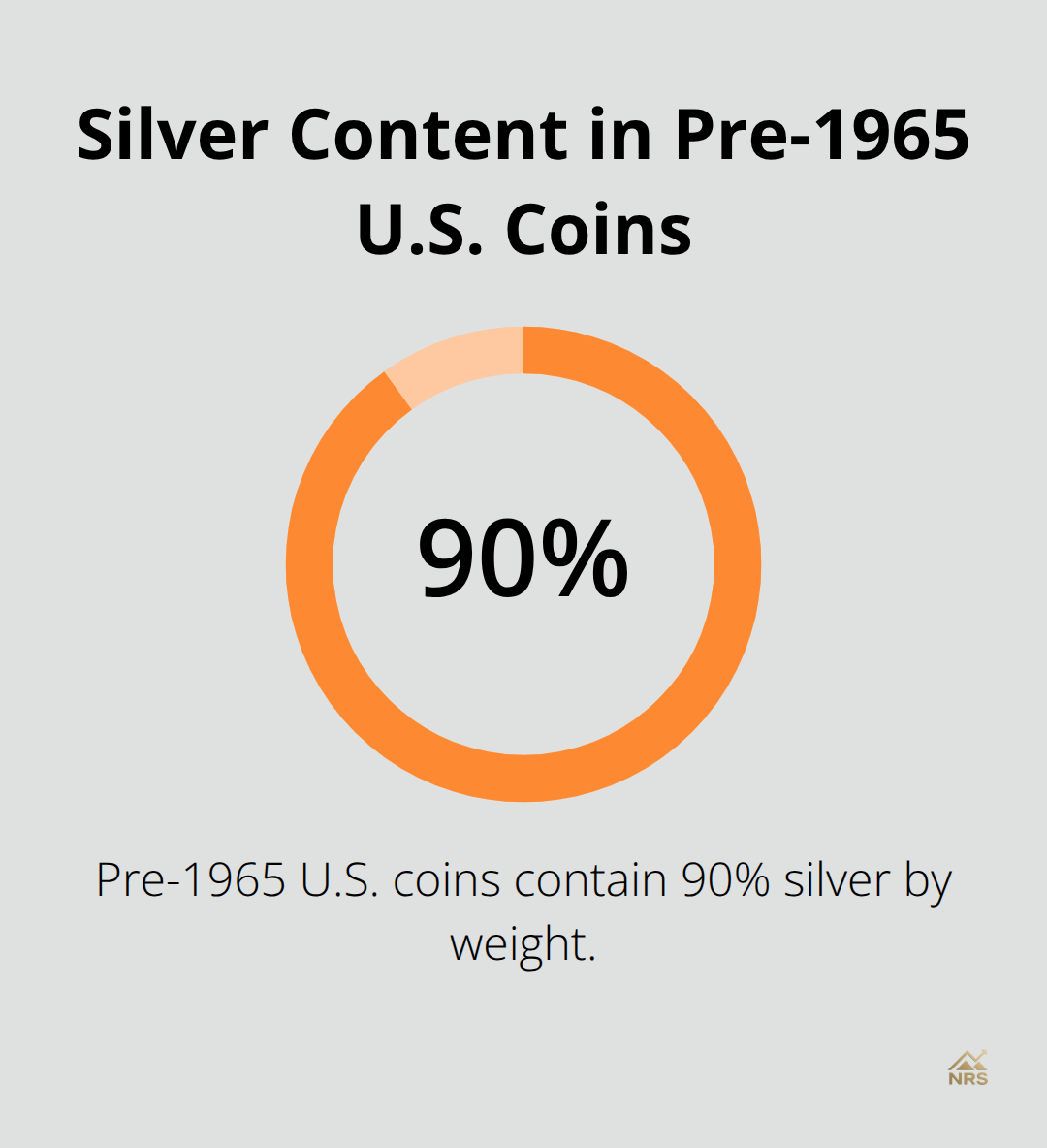
Silver recovery from coins and silverware presents a straightforward path because pre-1965 US coins contain 90 percent silver by weight, meaning a single dime or quarter contains roughly 2.25 grams of pure silver. Silverware marked as sterling silver contains 92.5 percent silver, and older pieces often exceed this standard.
Unlike gold extraction from electronics (which demands corrosive acids and hazardous chemicals), silver recovery through simpler methods reduces your safety risks considerably.
Copper and Lower-Value Metals
Copper recovery makes sense only when you process materials in volume because copper’s lower value per gram means small batches don’t justify your time and chemical costs. Industrial equipment and specialized machinery sometimes yield extraordinary precious metal quantities, with some video equipment capable of producing up to 56 grams of gold per machine, but these opportunities require specific connections and knowledge.
Sourcing Your Starting Materials
Older electronics consistently outperform newer devices because manufacturers have systematically reduced precious metal content over the past two decades, making vintage computer equipment from the 1990s and early 2000s your best source material. Try sourcing computer components affordably from local recyclers or online marketplaces, then process them methodically and track your actual yields against your chemical and time costs before scaling up to larger batches. This data-driven approach reveals whether your recovery operation actually generates profit or simply consumes time and resources.
With your target materials identified and sourced, the next step involves preparing them for chemical extraction.
From Raw Materials to Recovered Metals
Sorting and Preparing Your Materials
Start by separating your electronics into categories before touching any chemicals. Desktop computers, laptops, and old circuit boards need different handling approaches, and mixing them wastes time because you process gold-rich components like CPUs and RAM separately from lower-value materials. Photograph each batch and record the device type and approximate age because older equipment consistently yields more precious metals than newer devices. Use a magnet to pull ferrous metals away from non-ferrous materials, then physically disassemble components with basic hand tools-a screwdriver and wire cutters handle most jobs. Sorting and preparing your electronics involves removing hazardous components before proceeding because batteries contain hazardous materials that contaminate your gold solution and create safety risks. Weigh your prepared materials on a digital scale accurate to 0.01 grams so you can calculate actual recovery rates later and determine whether your effort generates profit.
The Initial Chemical Bath
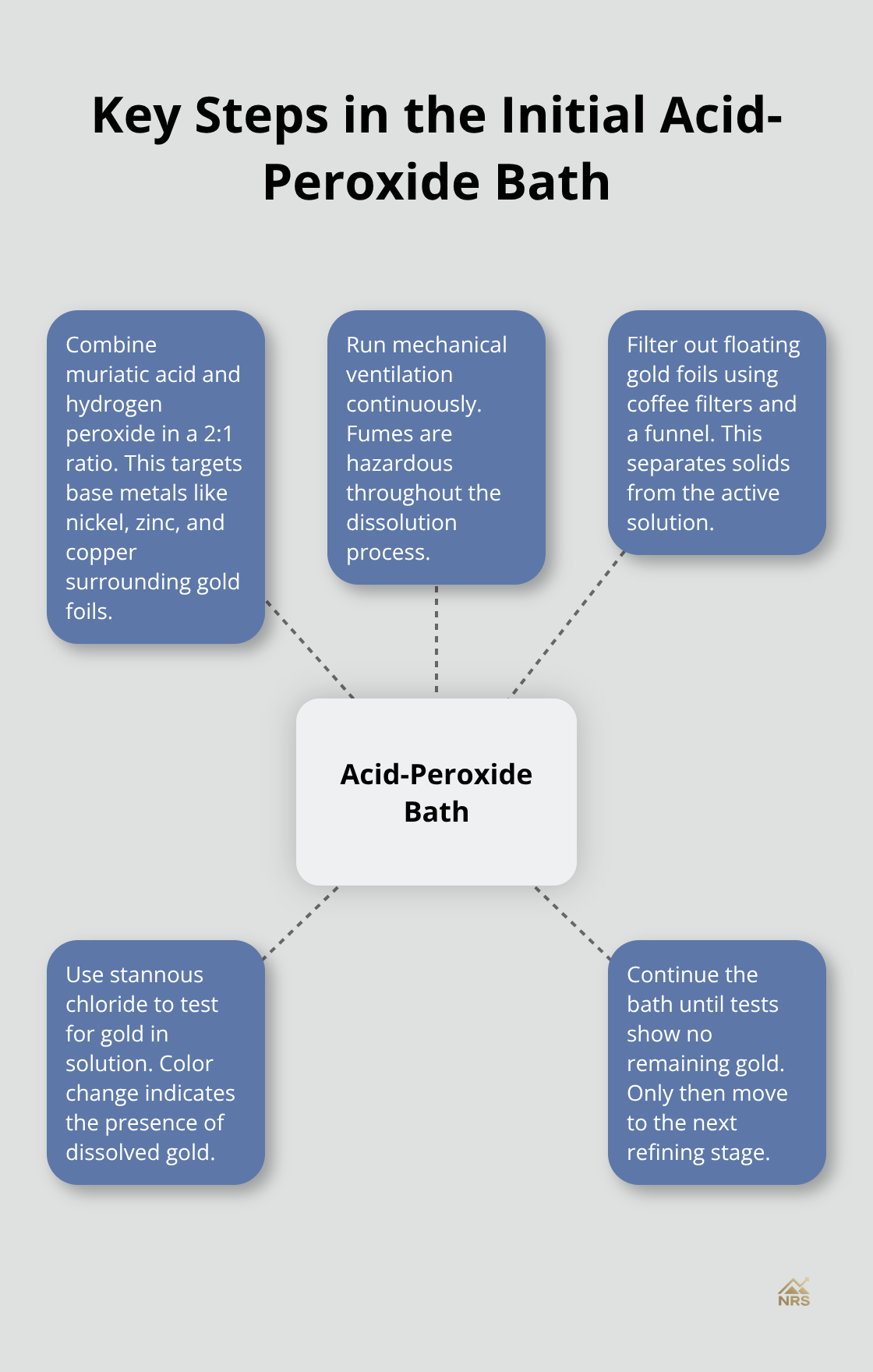
The chemical extraction phase demands precision and respect for the hazards involved. Your initial bath combines muriatic acid and hydrogen peroxide in a 2:1 ratio, and this mixture dissolves base metals like nickel, zinc, and copper that surround gold foils on circuit boards. Expect this process to take hours or even days depending on material quantity, and the acid produces hazardous fumes continuously, so mechanical ventilation must run the entire time. Gold foils rise to the surface as base metals dissolve, allowing you to separate them through simple filtration using coffee filters and a funnel. Test your solution with stannous chloride, a chemical reagent that indicates gold presence through color changes, and continue the bath until stannous chloride testing shows no remaining gold in solution.
Dissolving Remaining Gold and Precipitation
Your second chemical bath uses stronger acids to dissolve any remaining gold foils, again producing toxic fumes that require constant ventilation. After filtration removes impurities like inductors and transistors, you use stump-out (sodium metabisulfite) to precipitate gold from solution-this step releases sulfur dioxide gas, so outdoor work or a fume hood becomes mandatory. Allow the precipitated gold to settle for several hours, then retest with stannous chloride to confirm the precipitation completed fully.
Melting and Final Yield
The final melting step uses borax as a flux and a high-temperature torch to produce 24K gold from your precipitated material. Document your actual yield weight and compare it against your chemical costs and time investment to establish whether this recovery method makes financial sense for your specific material sources.
Final Thoughts on Your Precious Metal Recovery Journey
Home-based precious metal recovery works when you approach it methodically and respect the hazards involved. The reality is straightforward: older electronics contain measurable gold and silver, your initial investment in safety equipment and basic tools stays reasonable, and the chemical process itself follows established steps that produce real results. However, success depends entirely on honest accounting of your material costs, chemical expenses, and time investment against your actual yields. Many hobbyists discover that processing a single desktop computer yields roughly 0.2 grams of gold worth approximately $12, which barely covers their chemical costs and certainly doesn’t compensate for hours of work.
The transition from hobby to serious operation happens when your yields consistently exceed your costs and you’ve mastered the safety protocols without incident. At that point, you might consider upgrading to larger batches or investing in better equipment. However, professional recycling facilities handle precious metal recovery at industrial scale with closed-loop systems, proper waste management, and regulatory compliance built into their operations (these facilities process tons of material monthly and achieve economies of scale that home operations cannot match). If you process more than a few kilograms of material monthly or want to eliminate regulatory complexity, professional refiners become the logical choice.
Document your first three batches completely-material sources, weights, chemical costs, processing time, and final yields. This data reveals whether precious metal recovery aligns with your goals and whether the economics support continued effort. For investors interested in the broader precious metals sector, Natural Resource Stocks provides expert analysis and market insights into gold, silver, and other resource investments that might better suit your financial objectives.