






















Geopolitical tensions are reshaping metal markets in real time. Trade wars, sanctions, and regional conflicts create both risks and opportunities for resource investors.
At Natural Resource Stocks, we’ve identified specific metals facing supply disruptions and price volatility tied to global political events. Understanding these dynamics helps you position your portfolio strategically.
How Geopolitical Shocks Hit Metal Markets
Trade wars and sanctions reshape metal supply chains within months, not years. When the U.S. imposed tariffs on Chinese aluminum and steel in 2018, prices spiked immediately and U.S. manufacturers faced 25% tariff costs on imports. The disruption wasn’t theoretical-companies had to source alternatives or absorb losses. Similarly, sanctions on Russian palladium and nickel after 2022 forced automakers and battery producers to scramble for substitutes, with palladium prices jumping over 50% in weeks. These aren’t isolated incidents. The Geopolitical Risk Index tracks geopolitical tensions since 1985 through news coverage and shows clear correlation with metal price volatility. When the index spikes, metals tied to sanctioned regions or conflict zones experience sharp price movements within days. For resource investors, this means watching trade policy announcements and sanctions developments isn’t optional-it’s essential for timing entry and exit points.
Mining Operations Face Real Disruption
Regional conflicts directly shut down production. South Africa’s electricity crisis and civil unrest reduced platinum output by roughly 8% in 2022, tightening global supplies and lifting prices. Similarly, the Strait of Hormuz remains a critical chokepoint for energy shipments that power metal refineries across the Middle East and Asia. If shipping through the strait faces disruption, refining costs spike and metal production slows. Lithium mines in Chile and cobalt operations in the Democratic Republic of Congo sit in politically sensitive regions where labor unrest, government changes, or export restrictions can halt shipments overnight. The practical signal here is straightforward: diversify your metal exposure across geographies with stable political institutions. Concentrating exposure in single-country sources-whether rare earths from China, cobalt from Congo, or platinum from South Africa-amplifies your risk when politics shift.
Metals React Differently to Political Shocks
Historical data from J.P. Morgan Private Bank and Ned Davis Research covering 80 years of events shows geopolitical shocks have no lasting impact on large-cap equity returns after 6 to 12 months. However, precious metals behave differently. In the weeks around major geopolitical events, gold returns averaged 1.8% with a median of 3.0%, while stocks showed negative averages of roughly minus 1.6%. This is why gold and silver act as tactical hedges-they spike when uncertainty peaks. The 1973 Arab oil embargo generated lasting equity damage with the S&P 500 down 37% over 12 months, but that occurred because oil supply remained constrained for years. The 2022 energy shock from Russia’s invasion was shorter-lived because U.S. shale production provided flexible supply alternatives.
Distinguish Temporary Disruptions from Structural Supply Loss
Short-term geopolitical events create trading opportunities in metals, but sustained supply disruptions drive longer-term structural shifts. A conflict that threatens permanent supply loss demands a different allocation strategy than temporary disruption. Monitor whether a conflict restricts output for weeks or years-your investment horizon depends on that distinction. Energy prices, refining capacity, and shipping routes all factor into how long a disruption lasts. When you assess a geopolitical event, ask whether alternative suppliers can fill the gap quickly or whether the affected region holds irreplaceable production capacity. This analysis separates tactical trades from strategic portfolio positioning. Understanding these dynamics positions you to capitalize on price volatility while avoiding overexposure to temporary shocks that resolve within months.
Which Metals Face the Biggest Geopolitical Supply Risks
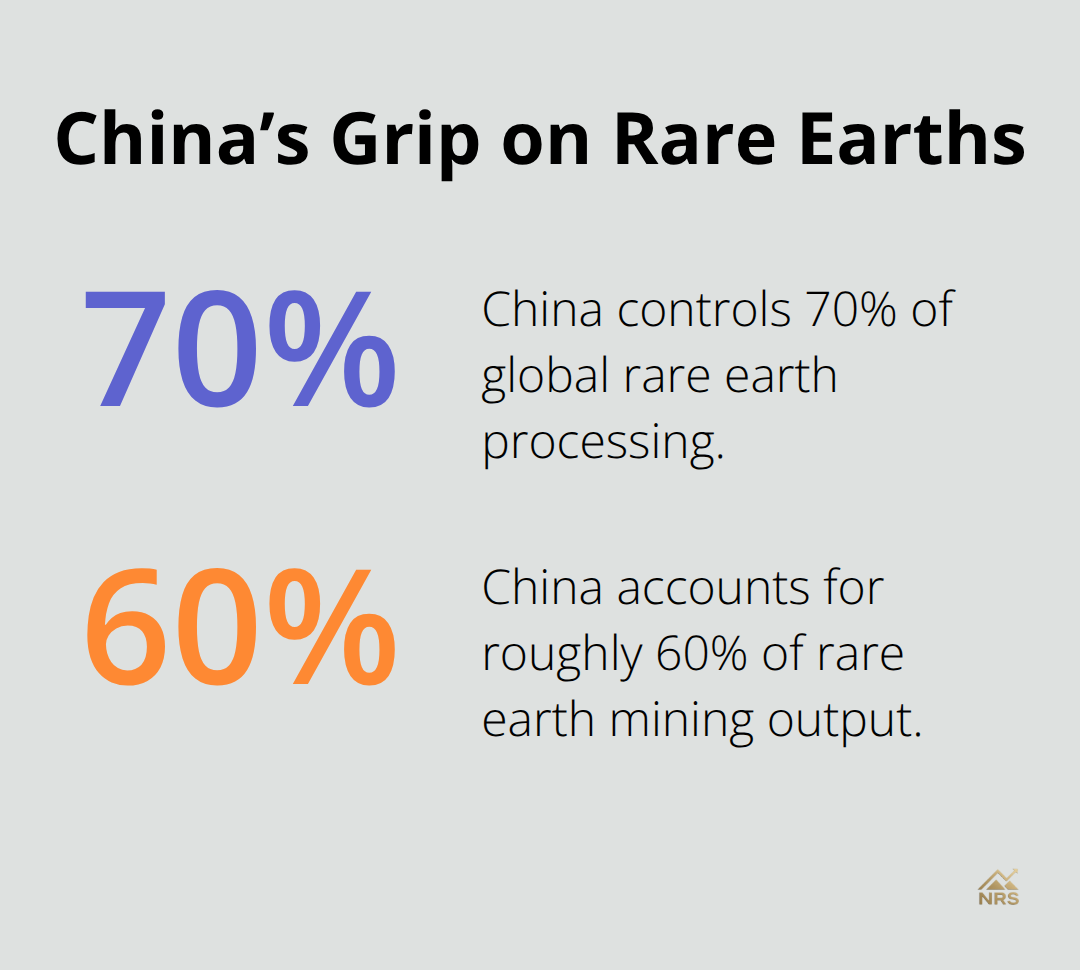
Rare earth elements remain China’s strategic weapon in geopolitical disputes. China controls approximately 70% of global rare earth processing and roughly 60% of mining output, according to the U.S. Geological Survey. When tensions rise with the West, China has explicitly threatened export restrictions on rare earths used in defense systems, semiconductors, and renewable energy technology. In 2010, China restricted rare earth shipments to Japan over a territorial dispute, and prices for dysprosium and terbium spiked over 400% within months.
Western manufacturers cannot quickly find alternatives because building new processing capacity takes five to ten years and requires massive capital investment. If you hold exposure to companies dependent on Chinese rare earth supplies, a geopolitical escalation could force production halts or force you to absorb sudden cost increases. The practical move is to identify which of your holdings source rare earths from China versus alternative suppliers like Myanmar or Malaysia, then stress-test your portfolio against a hypothetical six-month supply restriction.
Lithium and Cobalt Create Acute Vulnerabilities
Lithium and cobalt face worse concentration risks than rare earths because battery demand accelerates while supply remains geographically pinched. Lithium production concentrates in Chile, Argentina, and China, with Chile and Argentina accounting for roughly 60% of global supply. Cobalt sourcing depends heavily on the Democratic Republic of Congo, which produces over 70% of global cobalt. The Congo’s political instability, labor disputes, and export permit delays have repeatedly disrupted shipments. In 2023, cobalt prices jumped 40% within weeks after the Congo threatened new export taxes. Battery makers cannot substitute these metals easily, so supply disruptions translate directly into EV and energy storage cost increases. For your portfolio, this means lithium and cobalt exposure should include geographic diversification across producers. Evaluate whether your holdings have secured long-term supply contracts or spot-market exposure. Companies locked into long-term agreements weather price spikes better than those exposed to spot markets during supply crunches.
Copper and Aluminum Face Different Pressures
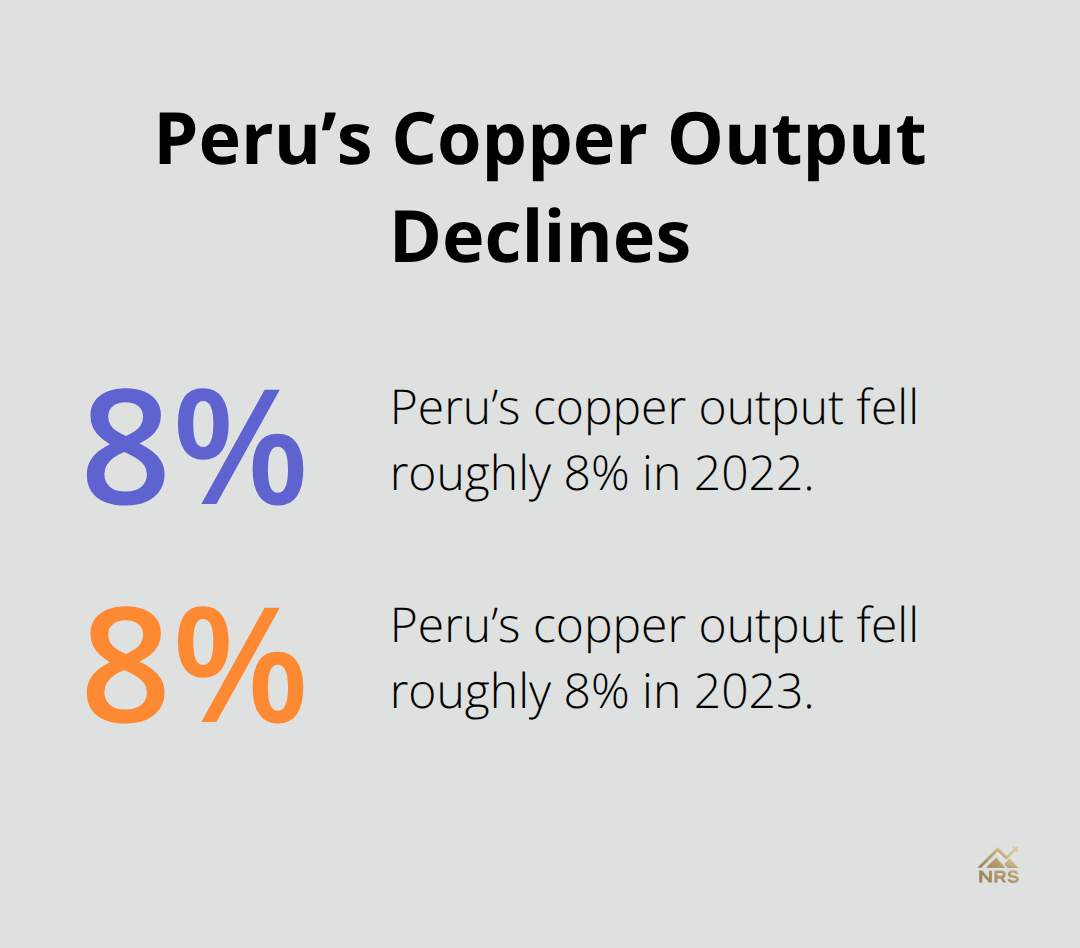
Copper and aluminum differ from rare earths and battery metals because substitutes exist and production spreads across more geographies. Copper production concentrates in Chile, Peru, and China, but alternative suppliers in Indonesia, Australia, and Zambia provide flexibility. Aluminum smelting requires massive electricity, making energy costs and supply the primary constraint rather than ore availability. The Strait of Hormuz disruption risk directly impacts aluminum refineries across the Middle East and Asia because these facilities depend on petroleum coke and natural gas for power. A sustained energy shock through the strait would tighten aluminum supplies and lift prices significantly. Copper faces different geopolitical pressure through labor unrest and government policy shifts in major producing regions. Chile’s leftist government has increased mining taxes and environmental restrictions, raising production costs and slowing expansion. Peru experienced political turmoil and mining strikes that reduced copper output by roughly 8% in 2022 and 2023. For copper and aluminum positions, monitor energy prices and regional labor dynamics alongside trade policy.
Unlike rare earths, you have more flexibility to shift sourcing, but energy-cost shocks can still create meaningful supply constraints and price spikes that persist for quarters.
How Supply Concentration Shapes Your Allocation Strategy
The metals facing the highest geopolitical risk share one trait: production concentrates in a handful of countries or regions. This concentration means a single political event-a coup, export ban, or labor strike-can disrupt global supplies and spike prices within weeks. Rare earths, lithium, and cobalt all exhibit this pattern, while copper and aluminum offer more geographic flexibility. Your allocation strategy should reflect these differences. Metals with concentrated supply warrant smaller portfolio positions unless you hold long-term supply contracts that lock in prices. Metals with diversified production (like copper and aluminum) tolerate larger positions because alternative suppliers can fill gaps if one region faces disruption. The next section examines how to identify which specific companies and regions offer the most resilience when geopolitical tensions escalate.
Building Resilience Through Geographic Diversification
Spread Metal Exposure Across Political Jurisdictions
Geopolitical shocks punish concentrated bets on single-country metal sources. The practical solution is straightforward: spread your exposure across producers in different political jurisdictions so no single event cripples your position. This isn’t theoretical risk management-it’s survival. When cobalt prices jumped 40% in 2023 after Congo export threats, investors holding only Congo-sourced cobalt exposure absorbed the full blow. Investors diversified across Congo, Indonesia, and Australia weathered the spike because alternative suppliers filled partial gaps.
For copper, positions in Chile, Peru, and Indonesia mean a labor strike in one country doesn’t force you to exit the entire position. Lithium diversification proves trickier because Chile and Argentina control 60% of supply, but adding exposure to Australian and Chinese lithium producers reduces single-country risk. The key metric to track is your portfolio concentration: calculate what percentage of each metal exposure comes from each country, then set a maximum threshold-say no more than 40% of your copper exposure from a single country. This forces you to identify underweighted geographies and rebalance systematically.
Real diversification requires work. You must research individual producer balance sheets, supply contracts, and political stability ratings, not just buy the largest ETF. Companies with long-term contracts weather supply disruptions better than spot-market competitors because prices lock in before political shocks hit.
Identify Undervalued Metals During Political Uncertainty
Panic selling often drives prices below production costs when geopolitical risk spikes, creating entry opportunities for disciplined investors. This happened with palladium after Russian sanctions in 2022-prices crashed initially despite tight fundamentals because investors feared supply loss. Companies with alternative sourcing recovered faster than consensus expected, rewarding investors who distinguished temporary panic from structural supply loss.
Your allocation timing depends on separating these scenarios. Monitor the Geopolitical Risk Index alongside metal prices and ask whether a supply disruption is temporary or permanent. A six-month mining strike differs fundamentally from a multi-year export ban. Use energy prices as a secondary signal: rising oil costs signal sustained inflation pressures that support precious metals, while falling oil suggests temporary disruption.
Time Entry Points With Price Signals and Fundamentals
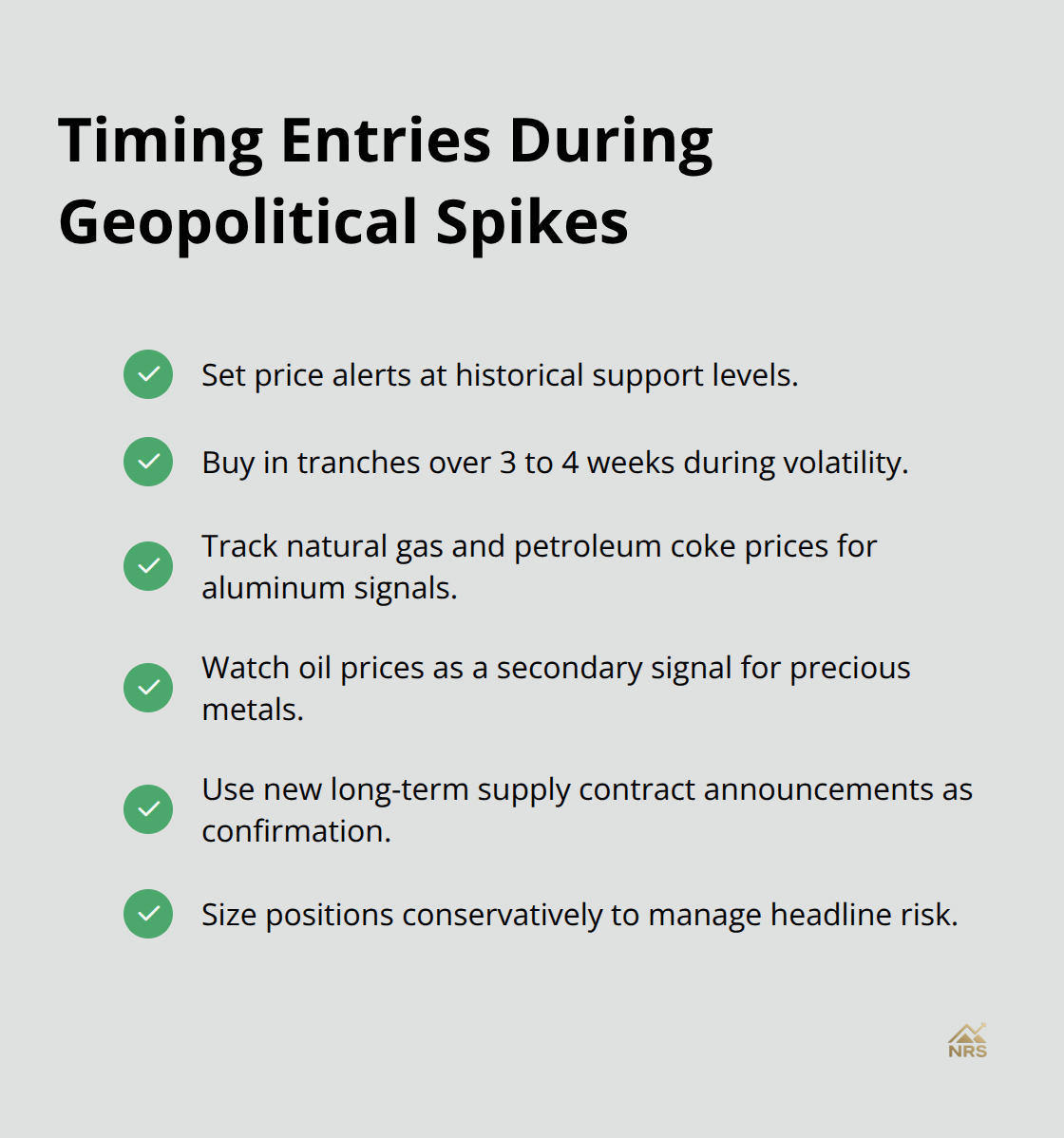
Set price alerts at historical support levels when geopolitical spikes occur. When copper drops 10% on headline risk but fundamentals remain intact, that represents a potential entry point. Aluminum presents different timing signals because energy costs dominate-watch natural gas and petroleum coke prices alongside geopolitical news. If the Strait of Hormuz faces disruption risk, aluminum smelting costs rise within weeks, but that signal appears in energy markets before metal prices fully reprice.
Position sizing matters more than perfect timing. Rather than deploying capital in one large tranche during a spike, scale into positions across three to four weeks as volatility settles and you gain clarity on whether disruption persists. This approach captures most of the price recovery while avoiding the worst of the panic selling. You can also use supply contract announcements as timing signals-when major producers announce new long-term agreements, that often precedes price stabilization in that metal.
Monitor Supply Contracts and Producer Resilience
Companies with locked-in supply agreements demonstrate greater resilience than those exposed to spot markets. When you evaluate a metal producer, examine whether they hold long-term offtake contracts that protect against price volatility. These contracts act as shock absorbers during geopolitical disruptions because prices remain stable even as spot markets spike.
Research individual producer balance sheets to identify which companies can absorb temporary supply shocks without cutting production. Strong cash positions and diversified sourcing allow producers to maintain output when competitors face disruptions. This distinction separates winners from losers when geopolitical tensions escalate. Companies with weak balance sheets often cut production or sell assets at distressed prices when political risk rises, while well-capitalized producers expand market share by maintaining steady output.
Final Thoughts
Geopolitical impact on metals markets demands active portfolio management, not passive exposure. Rare earths, lithium, and cobalt concentrate production in politically sensitive regions where a single policy shift disrupts global supplies within weeks. Copper and aluminum offer more geographic flexibility, but energy shocks and labor unrest still create meaningful price volatility that tests your allocation strategy.
Stress-test your positions against realistic geopolitical scenarios so a six-month export ban on Chinese rare earths or a Congo cobalt supply restriction does not force you to liquidate at distressed prices. Companies with locked-in offtake agreements and strong balance sheets weather disruptions better than spot-market competitors, so prioritize producers demonstrating supply resilience. Your portfolio should absorb these shocks through geographic diversification, long-term supply contracts, and appropriate position sizing.
Use the Geopolitical Risk Index alongside metal prices to distinguish temporary panic from structural supply loss, then scale into positions gradually across multiple weeks rather than deploying capital in single tranches. Energy prices serve as secondary signals-rising oil costs support precious metals through inflation expectations, while falling oil suggests temporary disruption. Visit Natural Resource Stocks to access expert analysis on how geopolitical developments reshape metal markets and refine your allocation strategy as global tensions evolve.