



























Metal prices have surged in 2026, and the reasons go far beyond simple supply and demand. At Natural Resource Stocks, we’ve identified the key metal price drivers shaping markets right now-from geopolitical tensions to central bank moves to shifting investor behavior.
Understanding these forces matters if you own or plan to buy natural resource stocks. This breakdown shows you exactly what’s moving prices and what to watch next.
Macro Headwinds Reshaping Metal Valuations
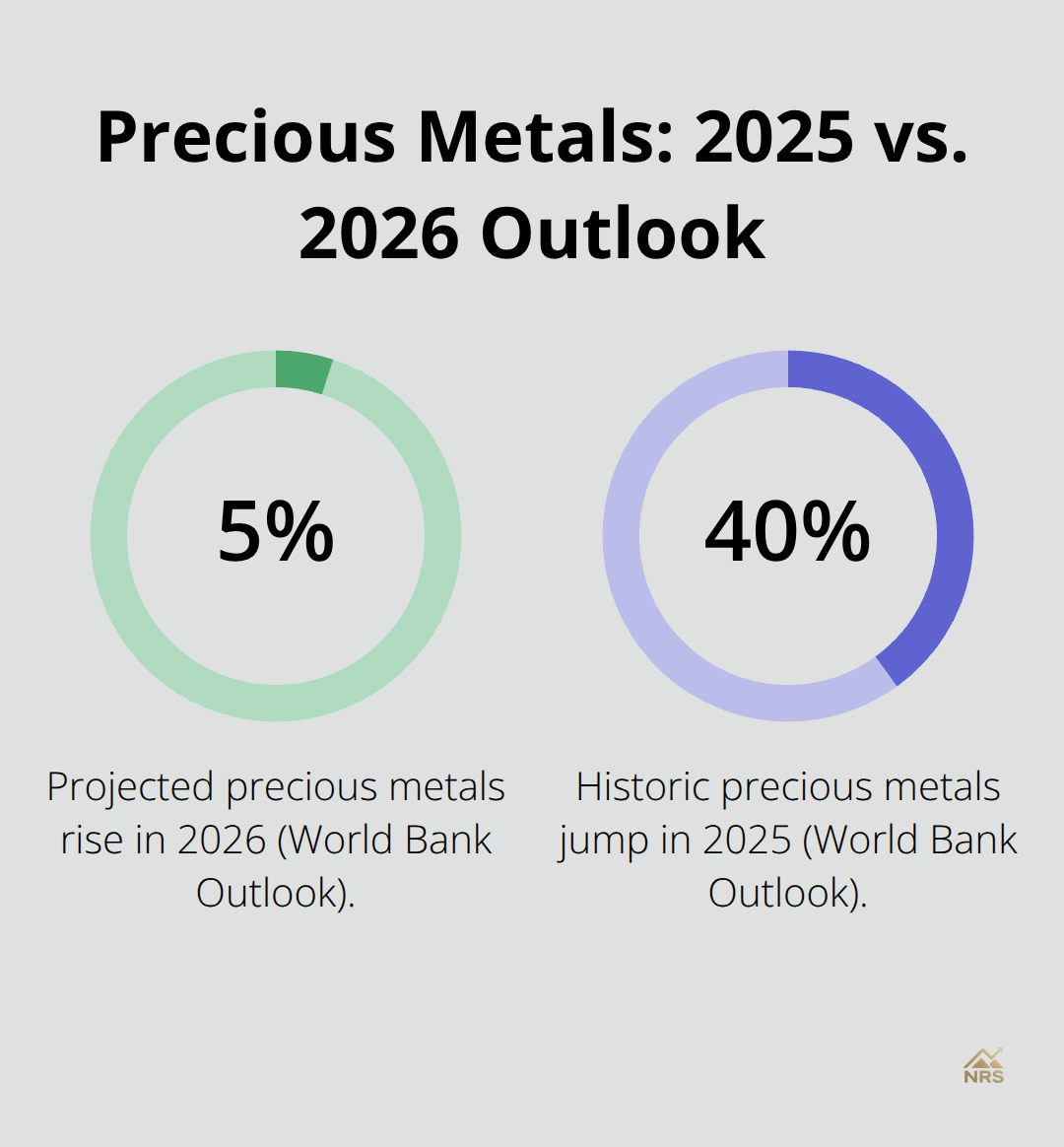
Interest rate cuts expected around 75 basis points in 2026 fundamentally alter the metals equation. Lower yields reduce the opportunity cost of holding non-yielding assets like gold and silver, making them more attractive relative to bonds. Central banks globally recognize this shift-the World Bank Commodity Markets Outlook projects a roughly 5% rise for precious metals in 2026 following a historic 40% jump in 2025. This reflects rational portfolio rebalancing as real yields compress. The Federal Reserve’s cutting cycle removes a major headwind that plagued metals in 2022 and 2023 when aggressive rate hikes made cash equivalents more appealing.
Watch the Fed’s actual cut pace closely-if inflation data forces policymakers to pause or reverse cuts, precious metals face immediate pressure.
The Dollar’s Structural Weakness Favors Metals
A weaker U.S. dollar makes gold and silver cheaper for foreign buyers, directly boosting demand across Asia and Europe. De-dollarization accelerates as nations diversify away from U.S. dollar reserves, with central banks purchasing 863 tonnes of gold in 2025 according to the World Gold Council-roughly 20 to 25 percent of annual mine production. This reflects long-term portfolio restructuring by sovereign wealth funds and central banks concerned about geopolitical risk and currency stability. The practical implication stands clear: as the dollar weakens further or remains under pressure, metal prices receive structural support independent of commodity cycles. Monitor the dollar index closely alongside Federal Reserve communications-sharp dollar rallies can trigger 3 to 5 percent pullbacks in metals prices within days.
Emerging Market Growth Drives Industrial Demand
China and India account for the majority of global precious metals investment demand, with Chinese investors particularly sensitive to policy shifts and inflation expectations. Silver demand from industrial sectors like solar panels, electronics, and AI data centers directly ties to emerging market growth rates. McKinsey estimates computing-power expansion at roughly 6.7 to 7 trillion dollars (with over half concentrated in the United States, but significant portions flowing to Asia). This industrial pull differs fundamentally from speculative investment demand-it represents structural consumption that supports price floors even during corrections. Track emerging market manufacturing data and Chinese import volumes as leading indicators for metal price direction in the months ahead.
Supply Constraints Amplify Price Pressure
Mining production constraints in key regions tighten metal supplies across the board. The Democratic Republic of Congo accounts for about 14 percent of global copper production, yet rebel-controlled areas disrupt operations and create supply uncertainty. Russia sanctions persist despite continued exports, adding another layer of geopolitical risk to supply chains. These operational pressures mean that even modest demand increases can push prices higher when production cannot respond quickly. Copper moved into a deficit in late 2025, while silver has remained in a five-year shortfall-both signals that supply cannot keep pace with consumption. The metals market enters 2026 with structural supply tightness that supports prices independent of macroeconomic tailwinds.
What Moves Metals Next
The interplay between Fed policy, dollar strength, and emerging market demand creates multiple pressure points for metal prices. A pause in rate cuts, a dollar rally, or a slowdown in Chinese growth could each trigger sharp corrections. Conversely, sustained structural demand from AI data centers and the energy transition could push prices higher if supply remains constrained. The next chapter examines how investment demand and central bank behavior amplify these macroeconomic forces-and why institutional capital flows matter more than ever in 2026.
Supply Constraints and Geopolitical Risks Tighten Metal Markets
Structural Deficits Signal Persistent Price Support
Copper moved into a deficit in late 2025, and silver has remained in a five-year shortfall. These aren’t minor supply hiccups-they signal structural constraints that will dominate 2026 pricing. When supply cannot respond to demand shocks, prices spike. The metals market enters 2026 with tightness that supports prices independent of macroeconomic tailwinds. Industrial demand from AI data centers pulls 25 to 30 tonnes of copper per megawatt, while solar installations consume over 50 percent of industrial silver demand. Meeting these consumption levels without substantial price increases becomes impossible when production lags behind.
Geographic Concentration Creates Supply Vulnerabilities
The Democratic Republic of Congo produces roughly 14 percent of global copper, yet rebel-controlled mining regions create unpredictable production disruptions that force smelters and refiners to bid aggressively for available material. Russia continues exporting metals despite sanctions, but geopolitical uncertainty discourages long-term supply contracts and investment in new capacity. Chinese refineries control over 60 percent of global silver refining, concentrating supply risk in a single jurisdiction vulnerable to policy shifts or export restrictions. This geographic concentration means that localized disruptions ripple across global markets and trigger price premiums that persist for months.
Byproduct Mining Limits Supply Elasticity
Copper and silver supply comes disproportionately from byproduct mining of gold, zinc, and lead operations, making supply relatively inelastic to price signals. When primary silver mines struggle to attract workers or when copper mines face permitting delays, production falls regardless of prices. Labor shortages compound production constraints across major mining regions and reduce the industry’s ability to ramp output quickly.
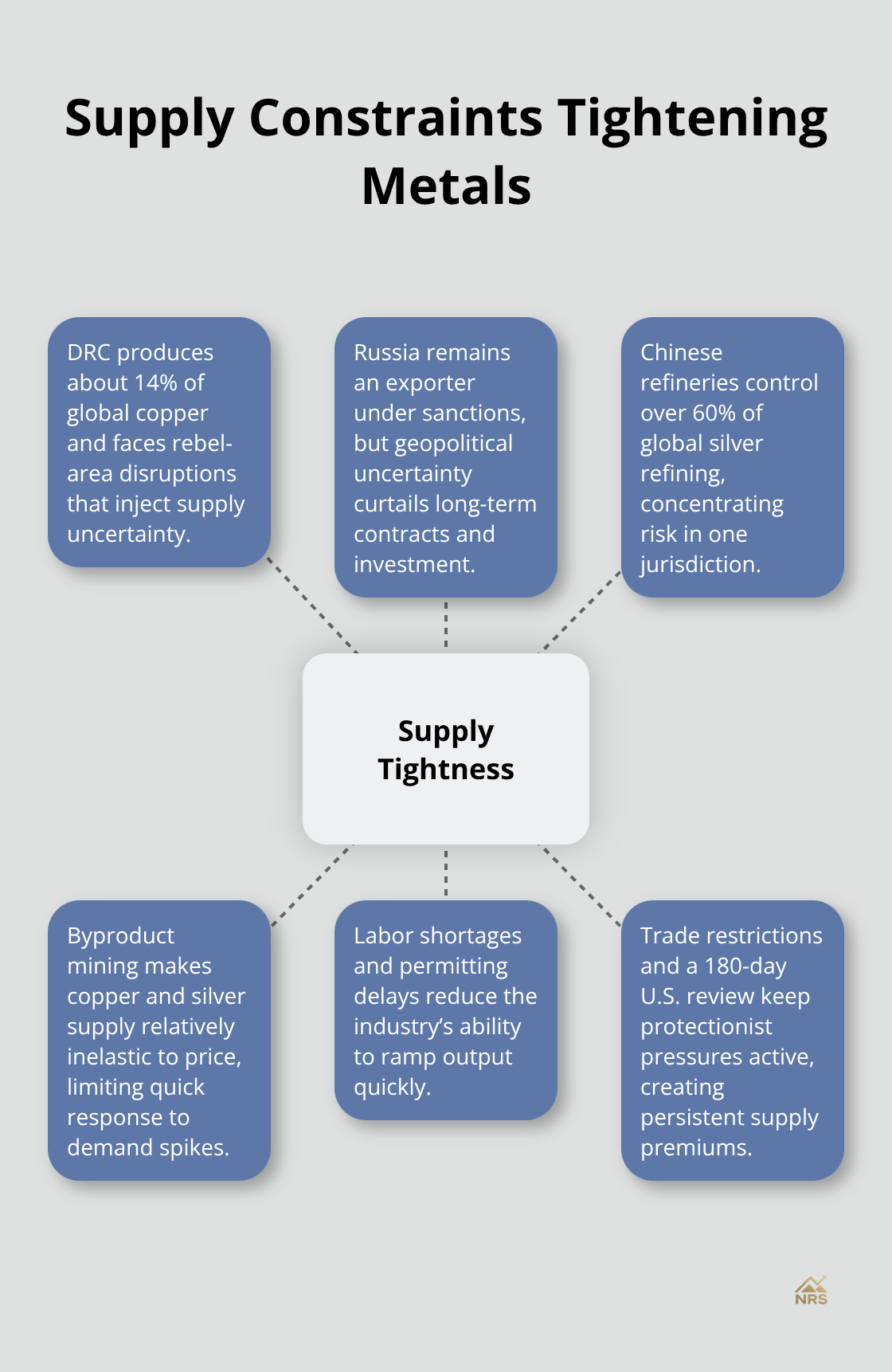
Producers cannot simply increase silver or copper extraction in response to higher prices because these metals emerge as secondary outputs from other mining operations.
Trade Restrictions Reshape Supply Chains
Trade restrictions and export controls tighten further in 2026 as nations prioritize domestic supply chains for critical minerals. The U.S. Section 232 critical minerals review avoided broad tariffs, but bilateral supply-bridge discussions are planned for roughly 180 days to shore up domestic supply chains, signaling that protectionist pressures remain active. Regional conflicts in key producing areas create supply uncertainty premiums that persist even when actual disruptions remain limited. Monitor production guidance from major miners closely-any downward revisions to annual output forecasts typically trigger 3 to 5 percent price rallies within days as markets recognize tightening supplies.
What Supply Tightness Means for Investors
These bottlenecks mean that even modest increases in industrial demand cannot be met without substantial price increases. Supply constraints act as a price floor that prevents sharp corrections even during periods of weak investor sentiment. The next chapter examines how investment demand and central bank behavior amplify these supply-side pressures-and why institutional capital flows matter more than ever in 2026.
Investment Demand and Market Sentiment Drive 2026 Metals Rally
Central Banks Remove Supply and Create Price Floors
Central banks purchased 863 tonnes of gold in 2025 according to the World Gold Council, representing roughly 20 to 25 percent of annual mine production. This reflects deliberate portfolio restructuring by sovereign wealth funds and monetary authorities convinced that geopolitical risk and currency instability justify hard assets over paper claims. The buying accelerated dramatically since 2022, more than doubling from prior levels as nations diversify away from U.S. dollar holdings. Bank of America, Goldman Sachs, and Deutsche Bank all project gold prices between 4,900 and 5,000 per ounce by year-end 2026, signaling institutional consensus that central bank demand will persist. Central bank buying acts as a price floor that prevents sharp corrections even when speculative traders exit positions. When emerging market central banks accumulate gold, they remove supply from markets and create lasting support for prices independent of short-term sentiment shifts.
Institutional Investors Treat Metals as Core Holdings
Institutional capital reallocation toward metals has accelerated far beyond traditional commodity allocations. Morgan Stanley’s Chief Investment Officer endorses a 20 percent gold allocation in institutional portfolios, representing a significant shift in how professional investors view precious metals within diversified accounts. This recommendation signals that major asset managers now treat gold and silver as core portfolio holdings rather than speculative trades or hedge fund positions. The shift reflects structural changes in how institutions manage risk and diversification across asset classes.
Retail Investors Build Positions Through Disciplined Strategies
Retail investors have responded aggressively, with physical precious metals demand surging as individuals seek tangible assets outside the financial system. The dollar-cost averaging approach through automated investing programs provides disciplined entry points without market-timing risk, allowing investors to accumulate positions consistently regardless of daily price fluctuations. This mechanical discipline removes emotion from investment decisions and builds substantial holdings over time.
Physical Metals Require Strategic Structural Choices
For those considering physical ownership, government-backed coins like American Gold Eagles carry higher premiums but superior liquidity and fraud protection due to legal tender status, while bars offer lower premiums and greater cost efficiency for larger purchases. IRA eligibility applies to many government coins and bars, making precious metals viable for retirement accounts. Coins divide easily for small transactions and store compactly, while bars maximize space efficiency for substantial holdings. These mechanical differences influence how serious investors structure long-term accumulation strategies, with many splitting holdings between coins for flexibility and bars for capital efficiency.
Final Thoughts
Three structural forces converge to shape metal price drivers in 2026: macroeconomic shifts from lower interest rates and dollar weakness, supply constraints that prevent production from matching demand, and institutional capital flows that treat precious metals as core portfolio holdings. These forces reinforce each other-when central banks remove 863 tonnes of gold annually from markets, they tighten supplies, and when AI data centers pull 25 to 30 tonnes of copper per megawatt, they create industrial demand that byproduct mining cannot easily satisfy. For natural resource stock investors, this environment rewards positions in companies that benefit from sustained metal demand and constrained supply, particularly producers operating in stable jurisdictions with established supply contracts.
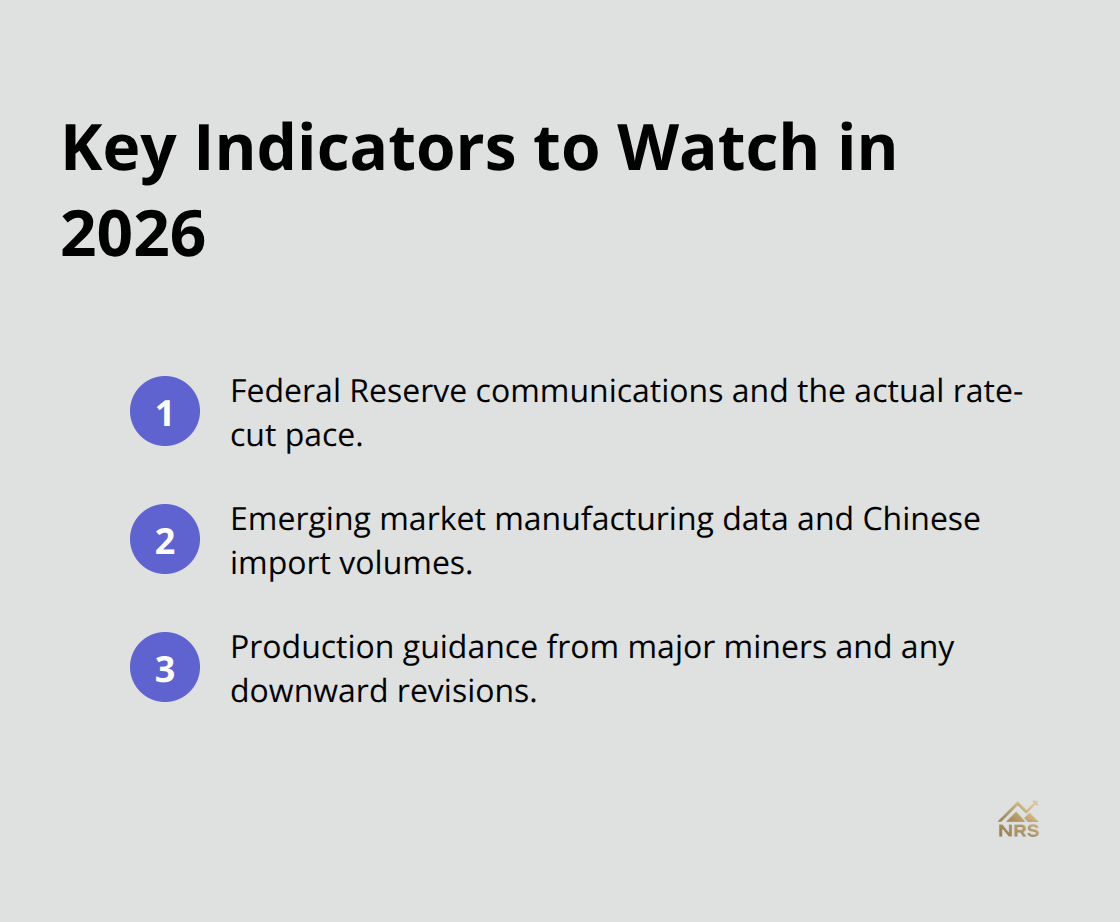
Monitor three indicators closely over the coming months to track how metal price drivers 2026 evolve. Track Federal Reserve communications and actual rate-cut pace-any pause or reversal in cuts removes a major tailwind for metals. Watch emerging market manufacturing data and Chinese import volumes, which signal whether industrial demand remains robust or begins to soften, and follow production guidance from major miners since downward revisions typically trigger sharp price rallies as markets recognize tightening supplies.
The World Bank projects a 5 percent rise for precious metals in 2026 following a 40 percent jump in 2025, reflecting rational portfolio rebalancing rather than speculative excess. Visit Natural Resource Stocks to access in-depth commentary on how macroeconomic factors and geopolitical developments shape resource prices and emerging opportunities across the natural resource sector.