
























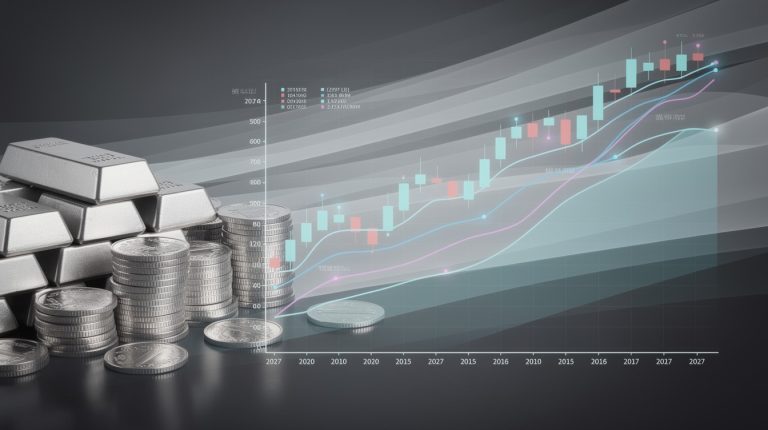
Silver is entering a pivotal year. Industrial demand, renewable energy expansion, and geopolitical tensions are reshaping the silver market trends for 2027, creating both significant risks and compelling opportunities for investors.
At Natural Resource Stocks, we’ve identified three critical areas that will define silver’s trajectory this year: what’s driving demand, what could derail it, and where smart investors should position themselves.
What’s Driving Silver Demand in 2027
Industrial Manufacturing and Price Sensitivity
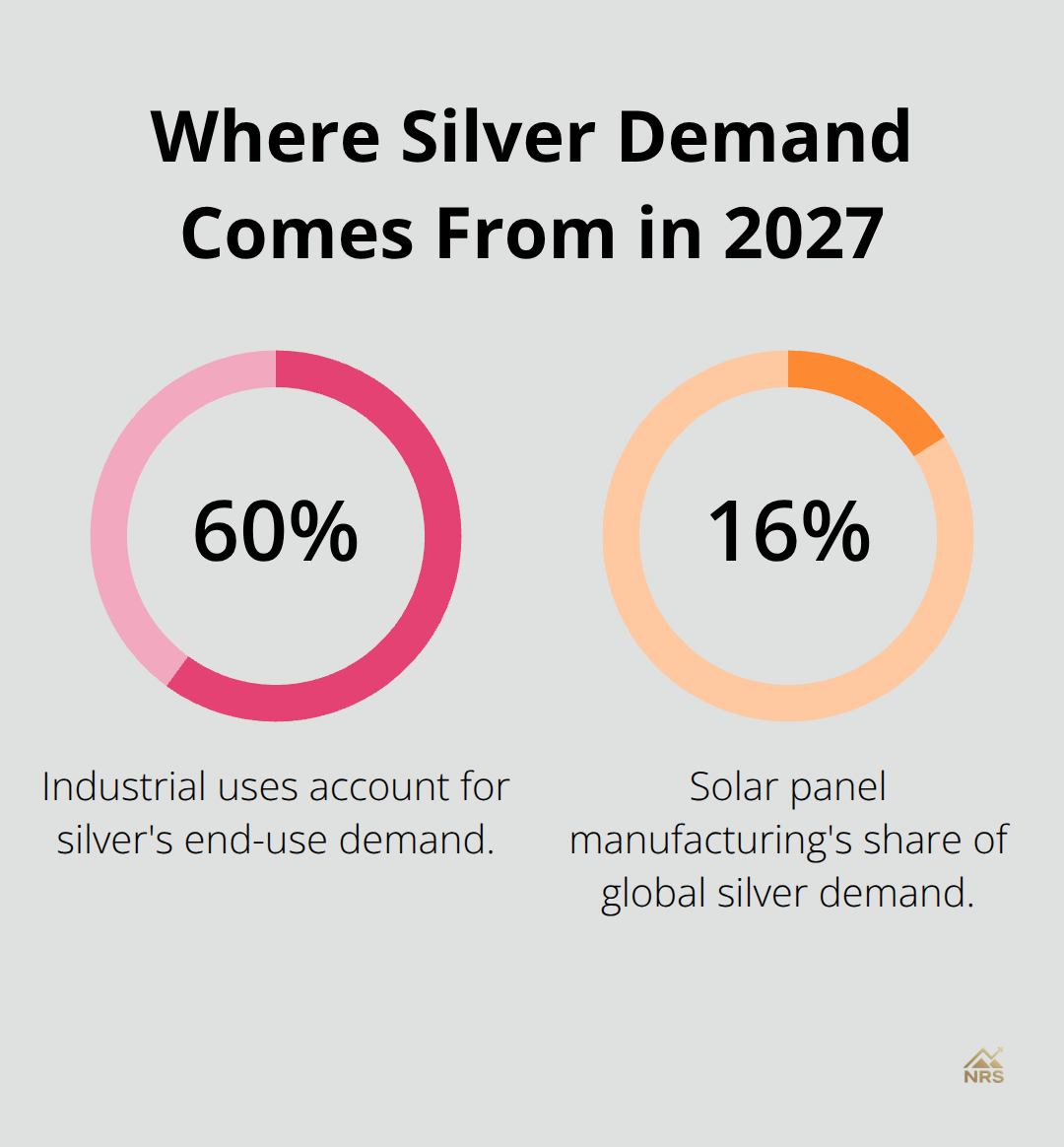
Industrial manufacturing remains silver’s backbone, and the numbers tell a compelling story. According to JP Morgan Global Research, industrial demand accounts for roughly 60% of silver’s end-use demand, making silver far more sensitive to manufacturing cycles than gold. Electronics, automotive, and medical device production will continue consuming substantial volumes throughout 2027. Solar panel manufacturing specifically accounts for approximately 16% of global silver demand, a structural tailwind that persists despite recent price volatility.
Rising silver prices trigger substitution effects that most investors overlook. Higher prices push manufacturers toward silverless or reduced-silver solar panels, and cadmium telluride thin-film technology poses a long-term replacement risk. This means silver demand growth faces a ceiling-it won’t accelerate indefinitely even if prices remain elevated.
Investment Demand and Geopolitical Pressures
Geopolitical tensions reshape silver’s investment appeal. US-Iran tensions and ongoing US-China dynamics create safe-haven demand for silver as investors hedge against broader instability. India’s tariff increase on bullion from 6% to 15% signals demand headwinds in a major consumer market, yet emerging markets continue accumulating physical silver during periods of uncertainty.
Investment demand surges when real yields turn negative and inflation expectations rise, but this demand proves far more volatile than industrial consumption. JP Morgan notes that global silver ETF holdings diverged from price momentum in early 2026, confirming that investment flows can drive short-term moves independent of physical market tightness.
The Supply Deficit Advantage
The structural supply story strengthens the 2027 case considerably. The Silver Institute has documented six consecutive years of global silver supply deficits, with a seventh deficit widely expected in 2026 and likely continuing into 2027. Silver supply remains largely inelastic because approximately 70% of mine production comes as a byproduct of mining other metals-only 30% derives from primary silver mines. Mining companies cannot simply ramp up silver output to match price spikes.
Scrap and recycled silver could become more significant supply sources as primary production stays constrained, but recycling rates remain modest compared to total demand. A stronger US dollar pressures silver prices since the metal trades in USD globally, yet if Federal Reserve rate-cut expectations materialize later in 2027, real yields could fall and support prices substantially.
Positioning for 2027 Opportunities
The 2026 average price near $81 per ounce, per JP Morgan, provides a baseline for 2027 positioning. Conservative forecasts place silver near $85 per ounce in 2027, while bull scenarios exceed $100 per ounce if industrial demand accelerates alongside inflation concerns. Position sizing matters more than chasing price targets-dollar-cost averaging into silver exposure reduces timing risk given the market’s pronounced volatility.
Monitor solar-panel demand trends, track tariff developments affecting US silver imports, and watch for central bank activity in related precious metals markets as early signals of shifting investor sentiment. These factors will determine whether silver breaks through resistance levels or faces renewed headwinds as 2027 unfolds.
What Could Derail Silver’s 2027 Rally
The structural supply deficit and industrial demand tailwinds we outlined earlier face serious headwinds that could flatten or reverse silver’s trajectory in 2027. A genuine economic recession would crush industrial demand faster than most investors anticipate. Manufacturing activity in electronics, automotive, and construction typically contracts sharply during recessions, and silver consumption follows suit. Industrial demand accounts for 60% of silver’s end-use, meaning a significant downturn in factory output translates directly into lower silver prices regardless of investment demand or geopolitical safe-haven flows. The US manufacturing PMI fell below 50 in several months during 2024 and early 2025, signaling contraction. If this pattern intensifies through 2027, silver could face downward pressure even if macroeconomic conditions don’t deteriorate into a full recession. Trading Economics forecasts place silver near $97 per ounce in 12 months, but that assumes no major economic shock. A meaningful recession could push prices toward the $60–65 range that bear-case analysts like TD Securities have flagged.
Currency and Rate Dynamics That Matter
Dollar strength remains silver’s persistent enemy, and this risk intensifies if Federal Reserve rate cuts don’t materialize as markets currently expect. Silver prices in US dollars move inversely to the strength of the greenback because international buyers face higher costs when the dollar appreciates. The USD index hovered near 98.49 in mid-May 2026, and if the Federal Reserve maintains hawkish policy through 2027, the dollar could strengthen further and suppress silver upside.
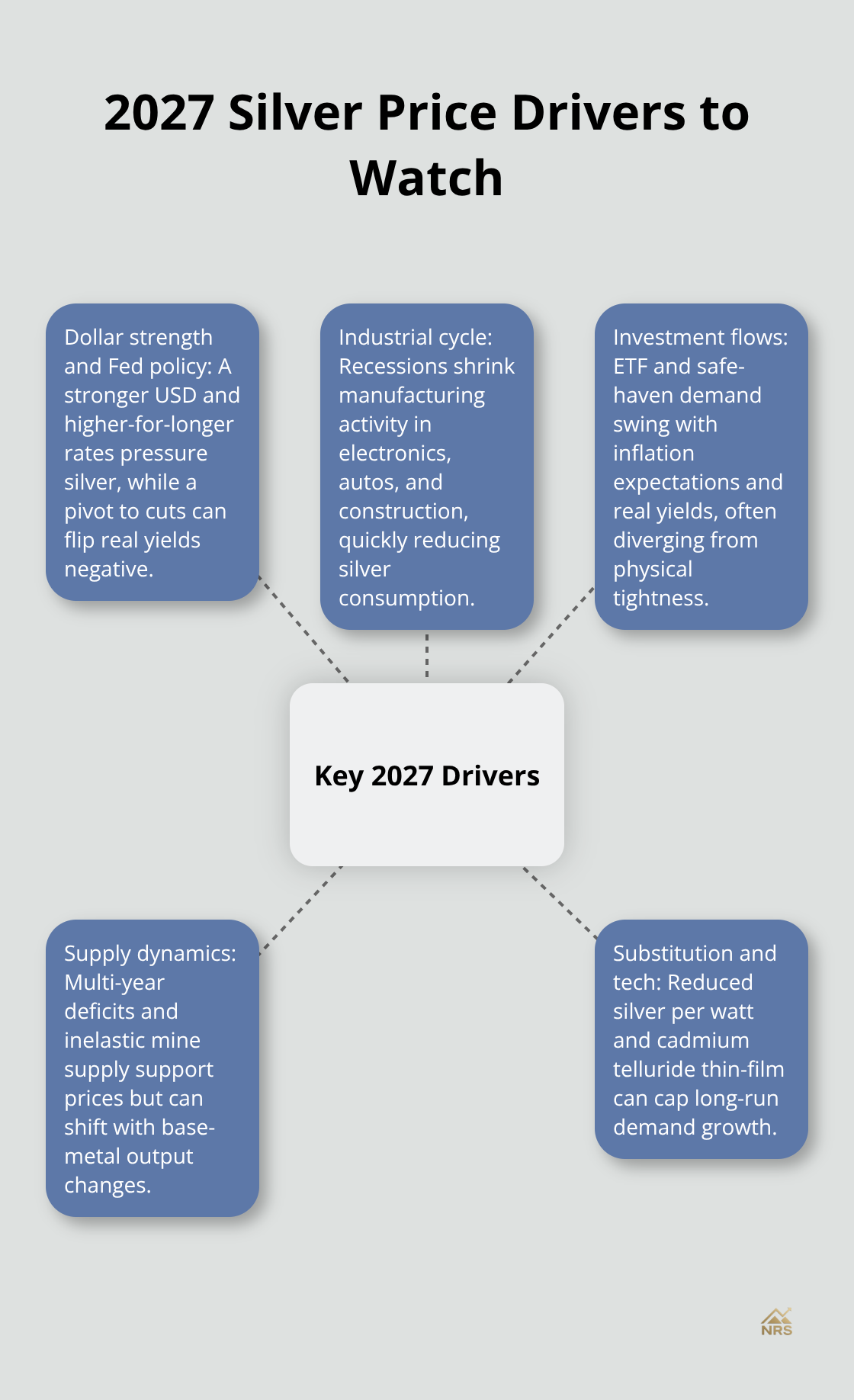
Hotter-than-expected US inflation data already pushed back expectations for rate cuts, according to CME Group’s FedWatch analysis. Higher-for-longer interest rates mean real yields stay positive, which reduces silver’s appeal as an inflation hedge. Conversely, if inflation accelerates unexpectedly or geopolitical shocks force the Fed to pivot toward cuts, real yields could turn negative and support substantial upside. This creates a binary outcome framework for 2027: either rates fall and silver rallies, or rates stay elevated and silver struggles. Position sizing becomes critical under this uncertainty. Monitor the Fed’s dot plot and inflation breakeven rates as leading indicators for rate expectations rather than relying on consensus forecasts that frequently shift.
Mining Supply and Substitution Risks
Supply constraints that appeared structural through 2026 could weaken if mining companies find economic incentives to boost output or if industrial substitution accelerates faster than expected. Silver supply remains largely inelastic because only 30% comes from primary silver mines, with the remaining 70% as a byproduct of copper, zinc, and lead mining. However, if copper or zinc prices collapse due to recession, mining companies reduce base metal output, and silver production falls alongside those metals. This dependency creates a hidden vulnerability that most investors overlook. Equally important, solar panel manufacturers have already begun reducing silver content per watt through improved efficiency and thrifting strategies. Cadmium telluride thin-film technology could capture meaningful market share if silver prices remain elevated through 2027. JP Morgan notes that higher silver prices trigger substitution effects that cap demand growth, meaning silver cannot benefit indefinitely from price appreciation without facing demand destruction.
Policy Shifts and Tariff Headwinds
India’s tariff increase on bullion from 6% to 15% signals that governments can quickly shift demand dynamics through policy. Watch for similar tariff moves in other major silver-consuming regions, particularly in electronics manufacturing hubs across Southeast Asia. These policy shifts can suppress demand faster than mining supply can adjust. Tariff developments affecting US silver imports warrant close attention, as they influence price spreads between London and New York markets. Bilateral trade agreements and Section 232 tariff policy create near-term volatility that extends beyond simple price movements. Investors who track these policy developments gain an edge in timing entry and exit points throughout 2027. The interplay between tariffs, currency movements, and industrial demand creates a complex landscape where positioning requires active monitoring rather than passive holding.
How to Position Silver Exposure in 2027
Physical Silver: Direct Ownership and Hidden Costs
Physical silver and bullion investments appeal to investors seeking direct ownership and protection against currency debasement, but storage costs and premiums create friction that many overlook. A standard approach involves purchasing coins or small bars from reputable dealers, though premiums over spot price typically range from 5% to 15% depending on market conditions and product type. Larger bars reduce per-ounce premiums but require secure storage solutions that incur annual fees ranging from 0.5% to 1.5% of holdings value. Insurance adds another layer of expense. For someone holding $50,000 in physical silver at current prices, annual storage and insurance could total $250 to $750 depending on the vault provider and location. This ongoing cost drag matters significantly over multi-year holding periods, particularly if silver prices stagnate. Physical silver makes sense primarily for investors with strong conviction about inflation acceleration or geopolitical instability, combined with the discipline to hold for three to five years minimum. The recent price movements attracted momentum buyers who may face painful realizations when volatility strikes, so physical ownership should reflect a strategic allocation rather than chasing recent performance.
Mining Stocks, ETFs, and Futures: Alternative Pathways
Silver mining stocks and commodity futures offer alternative exposure pathways with different risk profiles and cost structures. Mining stocks provide leverage to silver prices while potentially offering dividends or operational cash flow, though individual company performance depends heavily on management execution, ore grades, and cost control rather than silver prices alone. Silver ETFs eliminate storage hassles entirely, with expense ratios typically ranging from 0.4% to 0.7% annually, far cheaper than physical storage. COMEX silver futures represent the most direct price exposure but demand active management and margin capital, making them unsuitable for most retail investors unless they possess trading experience.
Building a Diversified Silver Strategy
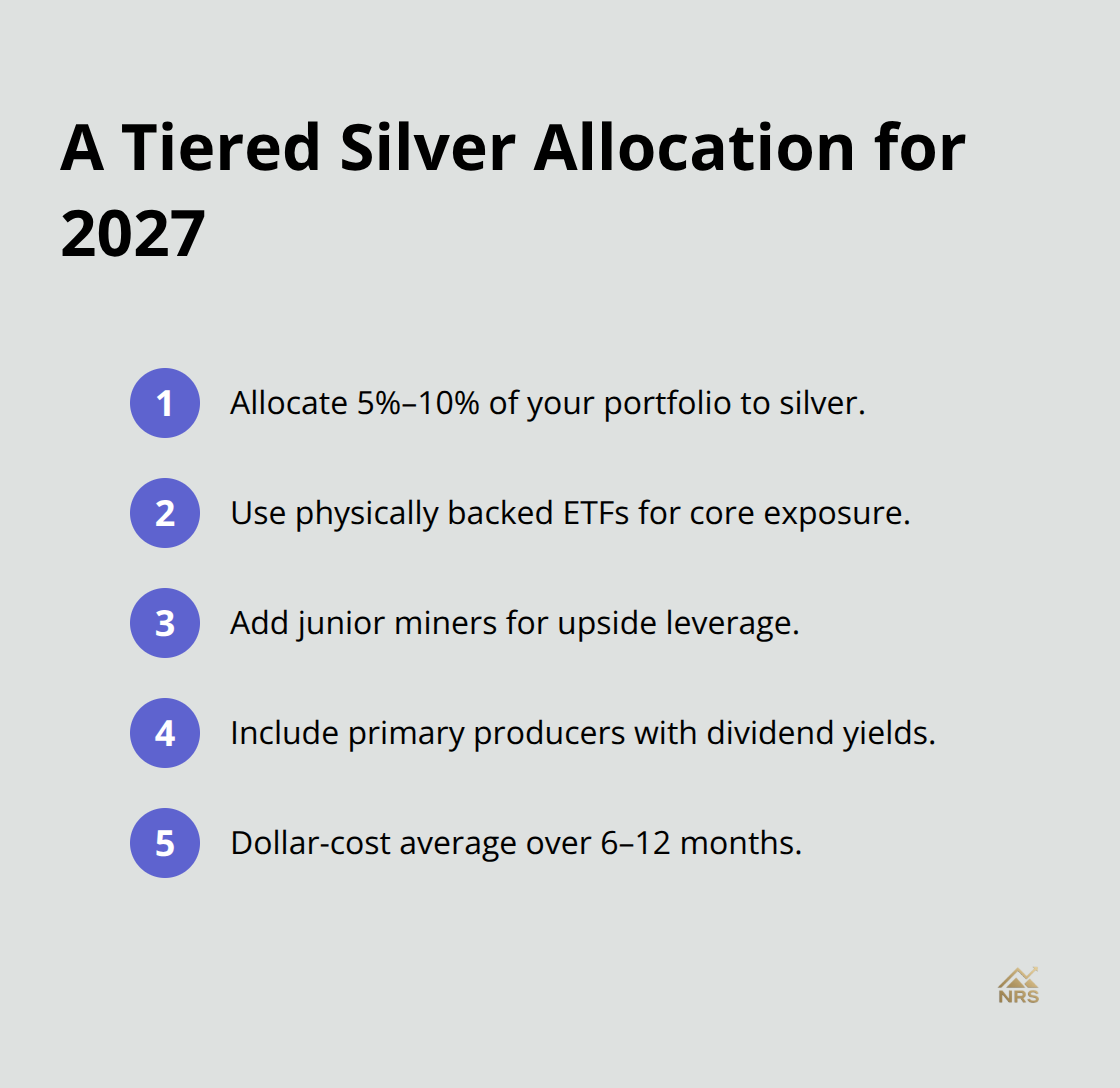
For most investors positioning silver exposure through 2027, a tiered approach works best: allocate 5% to 10% of a diversified portfolio toward silver through a combination of physically-backed ETFs for core exposure, junior mining stocks for upside leverage if industrial demand accelerates, and a small position in primary silver producers offering dividend yields. This diversification across vehicle types reduces single-point-of-failure risk while managing cost drag. Dollar-cost averaging into positions over six to twelve months smooths timing risk given silver’s demonstrated volatility. Avoid concentrating exposure during price spikes like the January 2026 surge near $121 per ounce when momentum-driven buying had already compressed valuations relative to fundamentals.
Valuation Signals and Entry Timing
Monitor the gold-to-silver ratio as a valuation guide; when silver trades below a 70:1 ratio to gold, the risk-reward favors waiting for better entry points rather than forcing positions. The ratio collapsed from approximately 105:1 in April 2025 to about 59–61:1 by April 2026, signaling that silver has repriced relative to gold but no longer trades at historically cheap levels. This metric helps investors distinguish between genuine value and momentum-driven rallies. Track inflation data and Federal Reserve policy expectations as leading indicators for rate movements that influence silver’s real yield appeal. Tariff developments affecting US silver imports and bilateral trade agreements create near-term volatility that extends beyond simple price movements. Investors who monitor these policy developments gain an edge in timing entry and exit points throughout 2027.
Final Thoughts
Silver market trends for 2027 hinge on three competing forces: industrial demand growth from electronics and renewable energy, currency and rate dynamics that determine real yields, and supply constraints that persist despite price volatility. The structural supply deficit documented by the Silver Institute provides a genuine tailwind, yet substitution risks and potential economic weakness could flatten silver’s trajectory faster than most investors anticipate. JP Morgan’s $85 per ounce forecast for 2027 represents a reasonable baseline, though outcomes range from $60 to $100+ depending on whether the Federal Reserve cuts rates and whether industrial demand accelerates or contracts.
Disciplined positioning outperforms chasing price targets when you navigate silver market trends in 2027. Physical silver makes sense only for those committed to multi-year holding periods and willing to absorb storage costs, while mining stocks and ETFs offer more practical exposure pathways with lower friction. Dollar-cost averaging into positions over six to twelve months smooths timing risk given silver’s demonstrated volatility, and the gold-to-silver ratio above 70:1 signals that waiting for better entry points often outperforms forcing positions during momentum rallies.
Strategic positioning in natural resource portfolios requires allocating 5% to 10% toward silver while monitoring inflation data, Federal Reserve policy, and tariff developments as leading indicators for price direction. Visit Natural Resource Stocks for expert analysis and market insights to help you navigate these dynamics through our investment platform focused on natural resource stocks. Silver’s 2027 outlook remains constructive for patient investors who understand both the upside catalysts and the genuine risks that could derail the rally.