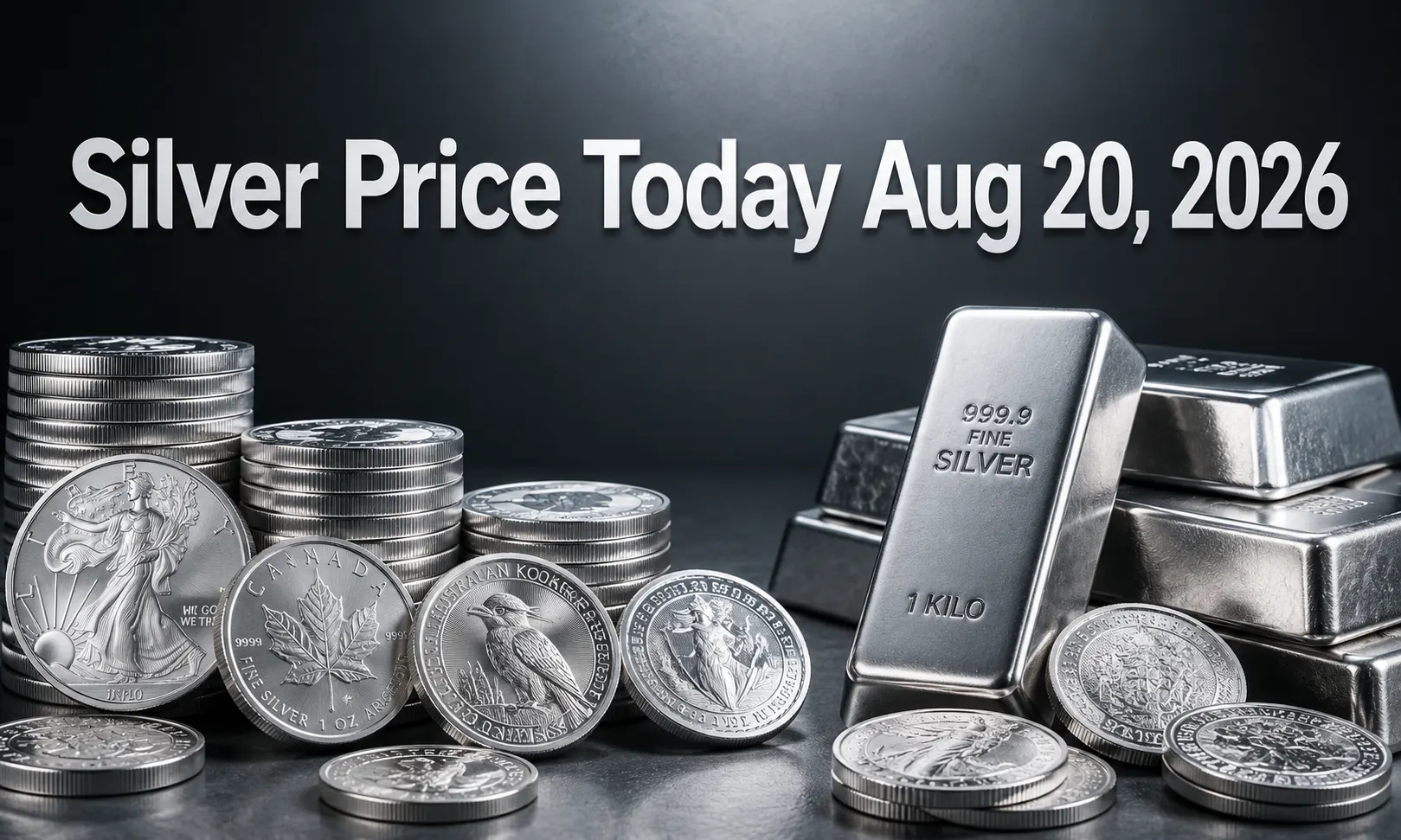

























Silver prices have surged dramatically over the past year, driven by a perfect storm of supply shortages and rising demand. At Natural Resource Stocks, we’ve identified the core silver market drivers reshaping this sector.
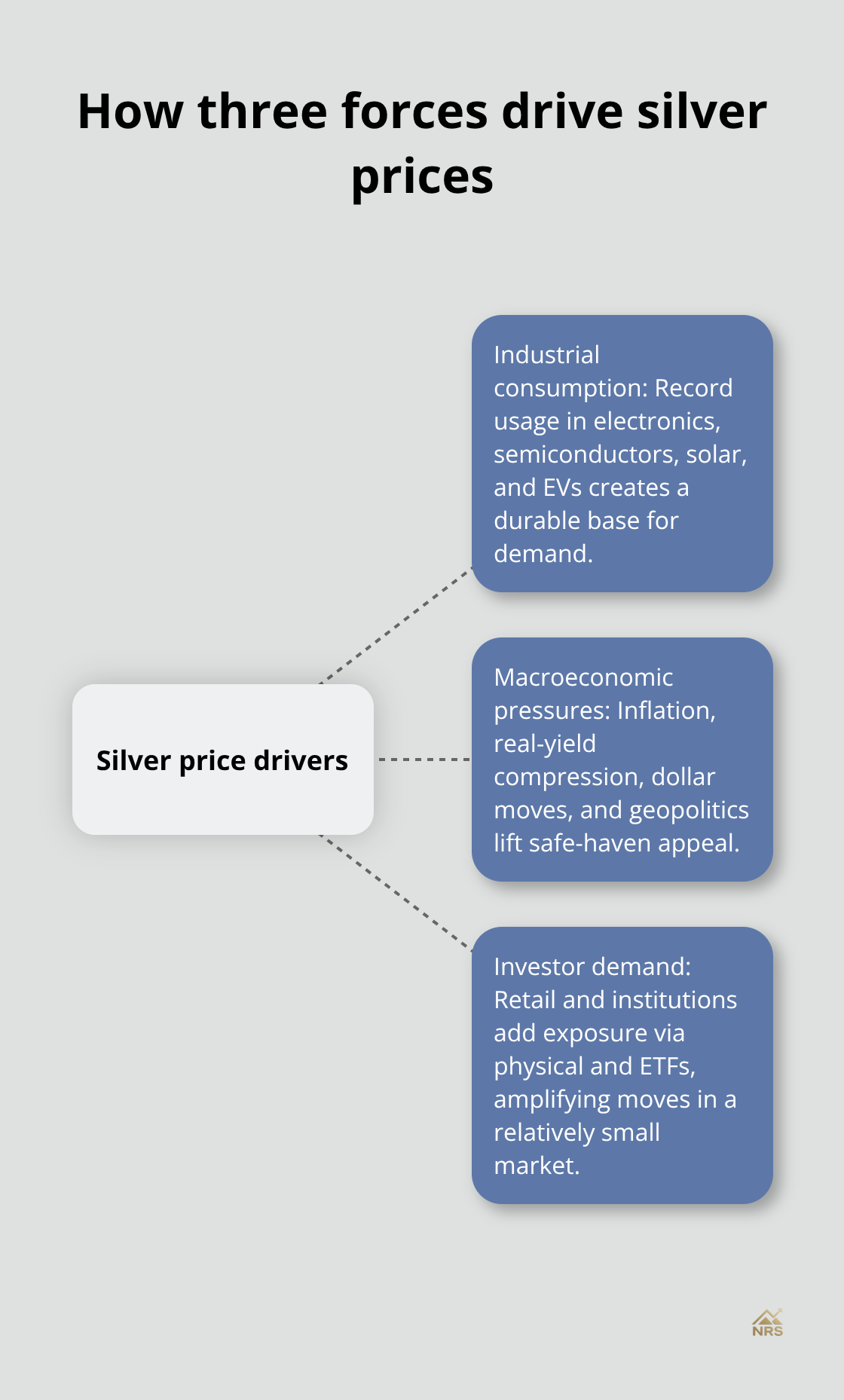
Three major forces are pushing prices higher: industrial consumption that shows no signs of slowing, macroeconomic pressures that make silver attractive, and investor demand reaching new peaks. Understanding these dynamics is essential for anyone tracking precious metals.
Industrial Demand and Supply Constraints Shape Silver Prices
Why Industrial Demand Alone Cannot Explain Silver’s Surge
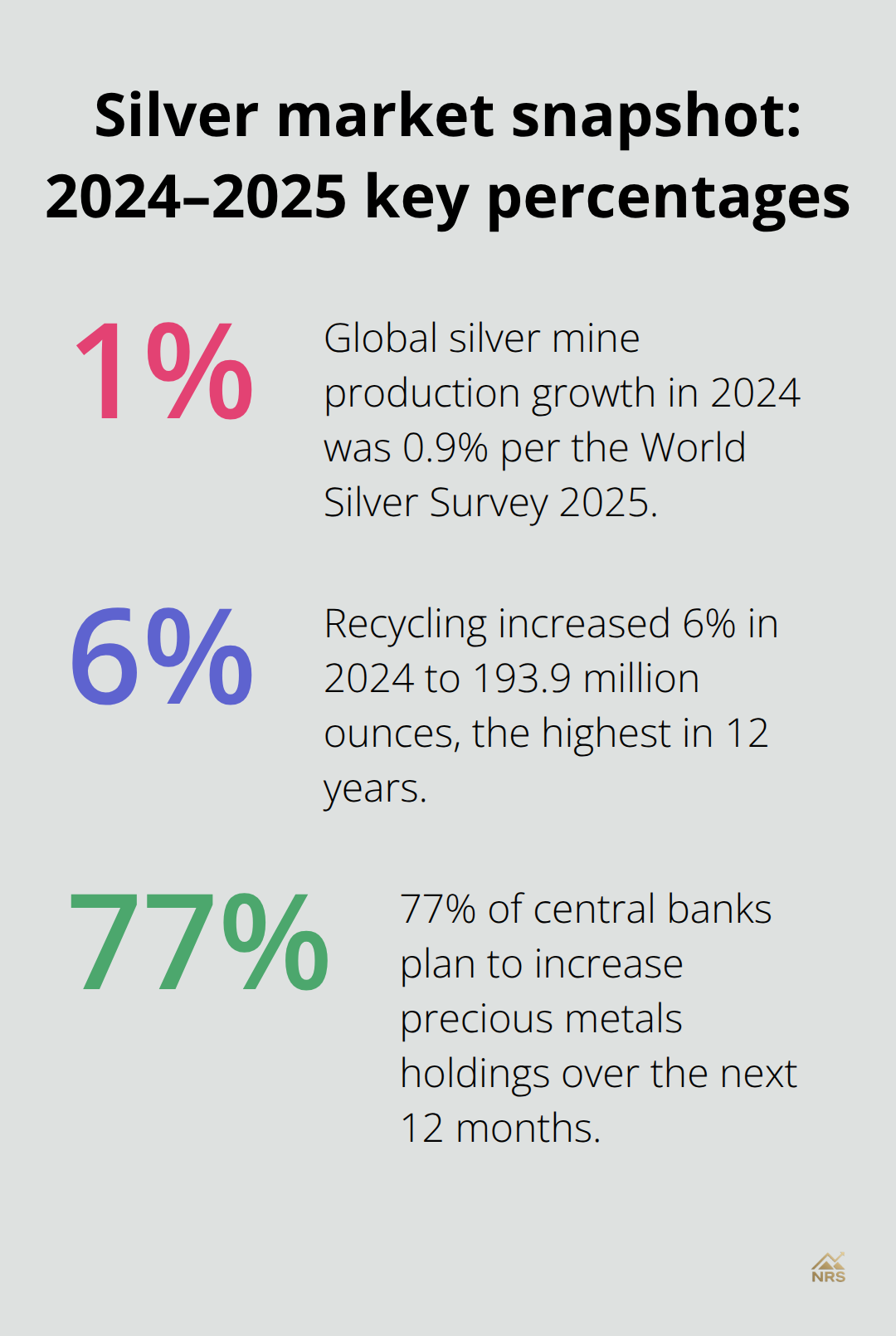
Industrial demand for silver has genuinely hit record levels, but supply constraints are what actually drive prices higher. Global silver mine production rose just 0.9% in 2024 to 819.7 million ounces according to the World Silver Survey 2025, a pace that cannot keep up with accelerating industrial consumption. Electronics and semiconductors consumed record volumes in 2024, while solar panel installations expanded globally-roughly 20 grams of silver go into each panel. The green energy transition is no longer a future story; it is happening now, and silver consumption from photovoltaic systems, electric vehicles, and grid infrastructure reached another record year in 2024. However, primary mine production growth has stagnated due to declining ore grades and tightening environmental regulations, creating a structural imbalance that favors prices. Mexico remains the world’s largest silver producer, followed by China, Peru, Bolivia, and Chile, but Chile’s output fell 8.8 million ounces year over year in 2024. This geographic concentration means supply disruptions in any single country can ripple through global markets. Recycling rose 6% in 2024 to 193.9 million ounces-the highest in 12 years-driven by industrial scrap and silverware sales, yet this incremental gain barely offsets the production shortfall.
The Hidden Vulnerability in Silver’s Supply Chain
Lead and zinc mines remain the dominant source of silver as a byproduct, and this dependency creates a hidden vulnerability. When lead and zinc prices weaken, mining companies reduce output, which directly cuts silver supply even if silver itself is in high demand. Gold-mined silver production grew 12% year over year to 13.9 million ounces, reaching a three-year high in 2024, but this segment remains too small to compensate for constraints elsewhere. Above-ground inventory levels sit at historic lows, meaning the market cannot draw on stockpiles to moderate price spikes during supply crunches. This inventory depletion is not temporary; it reflects years of demand exceeding production.
What Investors Must Monitor
Investors should track mining company guidance in Mexico and Peru closely, as these regions account for a significant share of global supply. If production continues to lag demand growth by even 1–2% annually, silver will remain structurally undersupplied for years. The industrial demand story is real and growing, but the supply side has truly become the price driver. This structural undersupply sets the stage for how macroeconomic forces amplify silver’s appeal beyond its industrial uses.
Macro Forces Reshaping Silver’s Price Structure
Inflation and Real-Yield Compression Drive Silver Demand
Inflation has returned as a genuine concern across developed economies, and silver responds directly to real-yield compression. When central banks hold interest rates below inflation rates, the opportunity cost of holding non-yielding assets like silver drops sharply, making physical metal more attractive relative to bonds or savings accounts. Inflation and real-yield compression create exactly this environment. Historical precedent matters here: during the late 1970s and early 1980s, when inflation peaked near 18% in the UK, silver surged to approximately £18 per ounce as investors fled depreciating currencies. Today’s inflation environment differs, but the mechanism remains identical-currency debasement drives hard-asset demand. Central banks globally recognize this dynamic, which explains why the World Gold Council reports that 77% of central banks plan to increase their precious metals holdings over the next 12 months. Poland has purchased over 67 tonnes of gold year-to-date, while the People’s Bank of China added roughly 36 tonnes recently.
These moves represent structural shifts in how reserve managers protect against currency risk, not speculative positioning.
Currency Weakness and Dollar Movements
For investors, this means silver demand has shifted from being purely cyclical to increasingly structural. Track the US dollar index closely-a weaker dollar makes silver cheaper for foreign buyers and typically supports prices, while dollar strength creates headwinds. Monitor central bank communications about rate trajectories, as forward guidance often precedes price movements by weeks. The structural nature of central-bank accumulation means silver prices now respond to long-term reserve-management decisions rather than short-term sentiment swings alone.
Geopolitical Tensions and Supply-Chain Concentration
Geopolitical tensions sustain safe-haven demand across precious metals, with silver amplifying those moves due to its smaller market size and higher volatility. Supply-chain disruptions in Mexico, Peru, or other major producing regions carry outsized impact because above-ground inventories remain depleted. Unlike oil or wheat, silver cannot be rapidly substituted or sourced from alternative suppliers without months of lead time. This concentration risk means investors should monitor political stability in Mexico and Chile specifically-two countries that account for roughly 30% of global primary silver production.
Industrial Demand as a Price Floor
The green-energy transition creates a secondary geopolitical layer. Countries competing for renewable-energy dominance drive solar installations aggressively, directly boosting silver consumption from photovoltaic systems. Chinese solar deployments alone consumed substantial silver quantities in 2024 as part of broader electrification goals. This industrial demand floor supports prices even when investment sentiment weakens, unlike gold, which relies primarily on monetary and geopolitical factors. The convergence of macroeconomic pressures, geopolitical risks, and structural industrial demand creates multiple price supports that reinforce one another. Investment demand now enters the picture as a third force, amplifying these macro tailwinds and determining whether silver’s rally accelerates or consolidates.
Investment Demand and Market Sentiment Reshape Silver Prices
Retail and Institutional Investors Drive Physical Demand
Retail investors shifted dramatically toward silver in 2024 and 2025, motivated partly by social media discussion and partly by genuine recognition that central banks accumulate hard assets. This retail enthusiasm absorbs physical supply at current price levels, preventing inventory from rebuilding even when industrial demand slows temporarily. Institutional money has followed more quietly, with silver ETFs capturing flows as fund managers allocate to inflation hedges and diversification. The silver market’s total size remains small compared to equities or bonds, which means relatively modest institutional capital flows create outsized price impacts.
Physical demand from jewelers, electronics manufacturers, and solar installers continues at record pace, but industrial consumption accounts for 55–60% of total silver demand. This shift matters because investment money responds more sharply to sentiment swings, rate expectations, and geopolitical headlines than industrial buyers do.
Track ETF Flows as Early Positioning Signals
Practical investors should monitor weekly ETF inflows from sources like iShares Silver Trust or Sprott Physical Silver Trust as early signals of institutional positioning. When these flows turn negative, price weakness often follows within weeks. Dollar-cost averaging into silver positions remains more sensible than timing entries after large rallies, since silver’s volatility makes single-entry timing nearly impossible. A reasonable starting allocation sits around 5–10% of a portfolio’s hard-asset sleeve, with the remainder distributed across gold and mining equities rather than concentrating all exposure in physical silver.
Safe-Haven Status Creates New Price Dynamics
Safe-haven demand has reshaped silver’s price behavior compared to five years ago. During geopolitical shocks or financial stress signals, silver no longer simply tracks industrial cycles. The 2024 rally demonstrated this shift clearly, with silver rising alongside gold even as manufacturing data weakened in certain regions. This safe-haven status remains fragile compared to gold’s unquestioned reserve-asset status, but it exists. Central banks themselves don’t stockpile silver the way they do gold, which creates an asymmetry: when investors flee to safety, silver benefits from retail and institutional demand without offsetting central-bank selling pressure.
This dynamic suggests silver will outperform gold during crisis periods where panic drives broad hard-asset accumulation. However, silver underperforms during slow, steady economic growth when industrial demand alone drives prices. For practical positioning, this argues for holding both metals with different entry points rather than substituting silver for gold.
Physical Bullion, ETFs, and Mining Equities Offer Different Trade-Offs
Physical bullion remains the most direct exposure, though premiums matter significantly. Reputable government-issued coins like Britannia, Maple Leaf, or American Eagle typically carry 2–5% premiums over spot price, while bars often run 1–3% depending on weight. Storage costs for physical holdings typically run 0.5–1% annually through vault services, which erodes returns over multi-year holds.
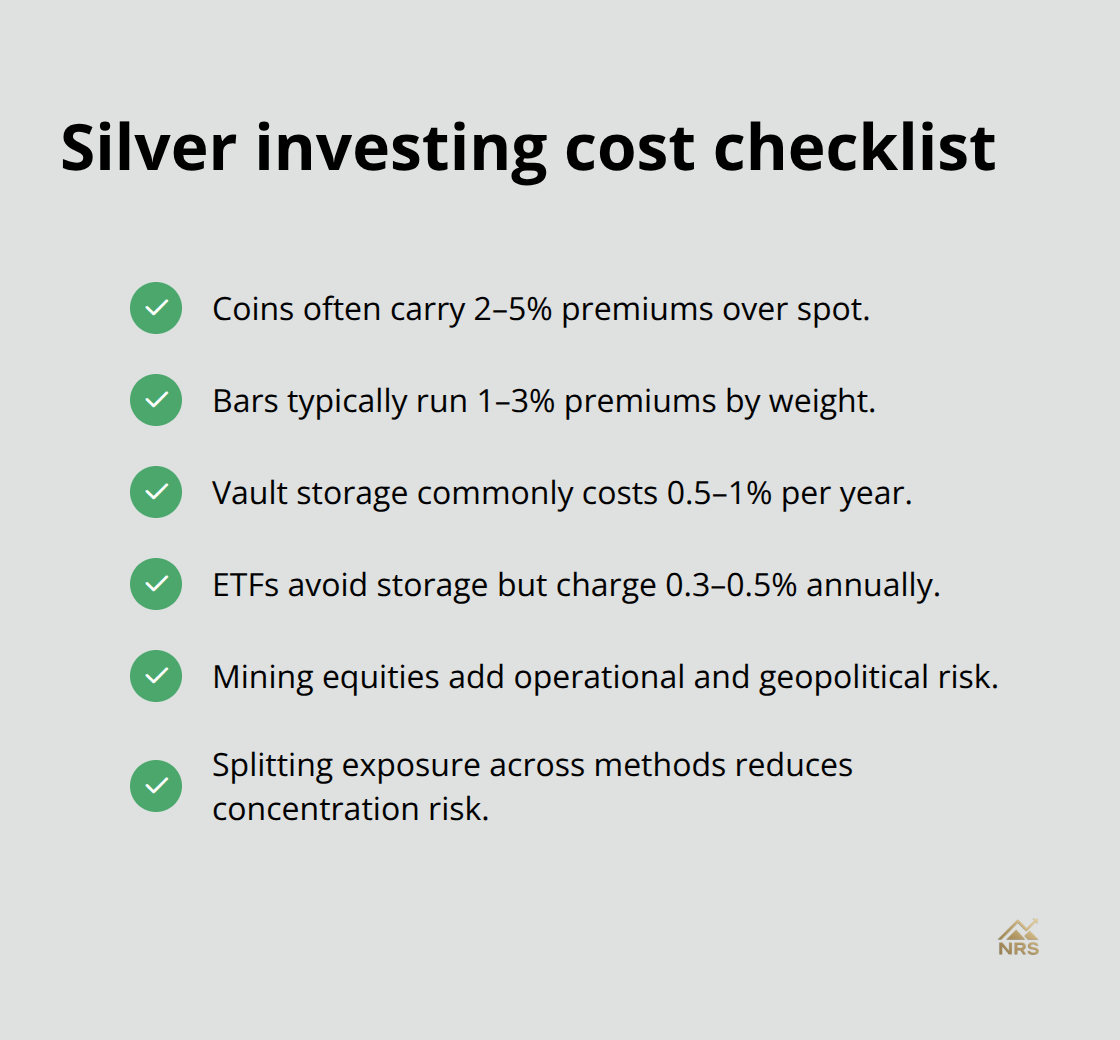
ETFs eliminate storage hassles entirely but introduce counterparty risk and annual expense ratios around 0.3–0.5%. Mining equities offer leverage to silver prices but carry operational and geopolitical risks distinct from the metal itself. Most investors benefit from splitting exposure across two or three of these methods rather than concentrating in one.
Final Thoughts
Silver’s rally reflects a convergence of forces that we at Natural Resource Stocks have tracked closely throughout 2024 and into 2025. Industrial demand from electronics, solar panels, and electric vehicles continues climbing, while primary mine production stagnates due to declining ore grades and environmental constraints. Simultaneously, macroeconomic pressures-inflation concerns, currency debasement, and central bank accumulation-have transformed silver from a purely cyclical commodity into a structural hedge that responds to multiple silver market drivers at once.
The forces we’ve outlined create multiple price supports that reinforce one another. Supply cannot expand quickly enough to meet demand growth, inventory sits at historic lows, and central banks now view precious metals as essential reserve assets. This structural undersupply means silver will likely remain supported even during periods of softer industrial demand, a shift from previous market cycles that fundamentally changes how investors should approach exposure.
Dollar-cost averaging into positions across physical bullion, ETFs, and mining equities offers balanced exposure without timing risk. A 5–10% allocation to silver within your hard-asset holdings captures upside while managing volatility, and Natural Resource Stocks provides expert analysis to help you navigate precious metals investments with confidence.