

























Rare earth elements power everything from smartphones to wind turbines, yet most investors overlook the stocks that control their supply. We at Natural Resource Stocks believe the best rare earth stocks represent one of the most undervalued opportunities in 2026.
Geopolitical tensions and surging demand for clean energy have created genuine supply shortages. This guide walks you through the companies positioned to profit from this shift.
Why Rare Earth Elements Control Tomorrow’s Technology
Rare earth elements are not rare at all-they exist in the Earth’s crust at levels comparable to copper or tin. What makes them valuable is their unique chemistry. These 17 elements possess magnetic, conductive, and fluorescent properties that no other materials can replicate at scale. Neodymium and praseodymium magnets are 2 to 7 times stronger than ferrite or ceramic alternatives, making them irreplaceable in electric vehicle motors, wind turbines, and defense systems.
A single F-35 fighter jet contains 418 kilograms of rare earth magnets. A Virginia-class submarine requires 4.6 metric tons. These are not theoretical applications-they are operational systems that depend on consistent rare earth supply. The problem is that extracting and purifying these elements generates substantial waste, including radioactive water and acids, which explains why processing has concentrated in regions with lax environmental standards rather than in Western nations.
Where Demand Is Actually Exploding
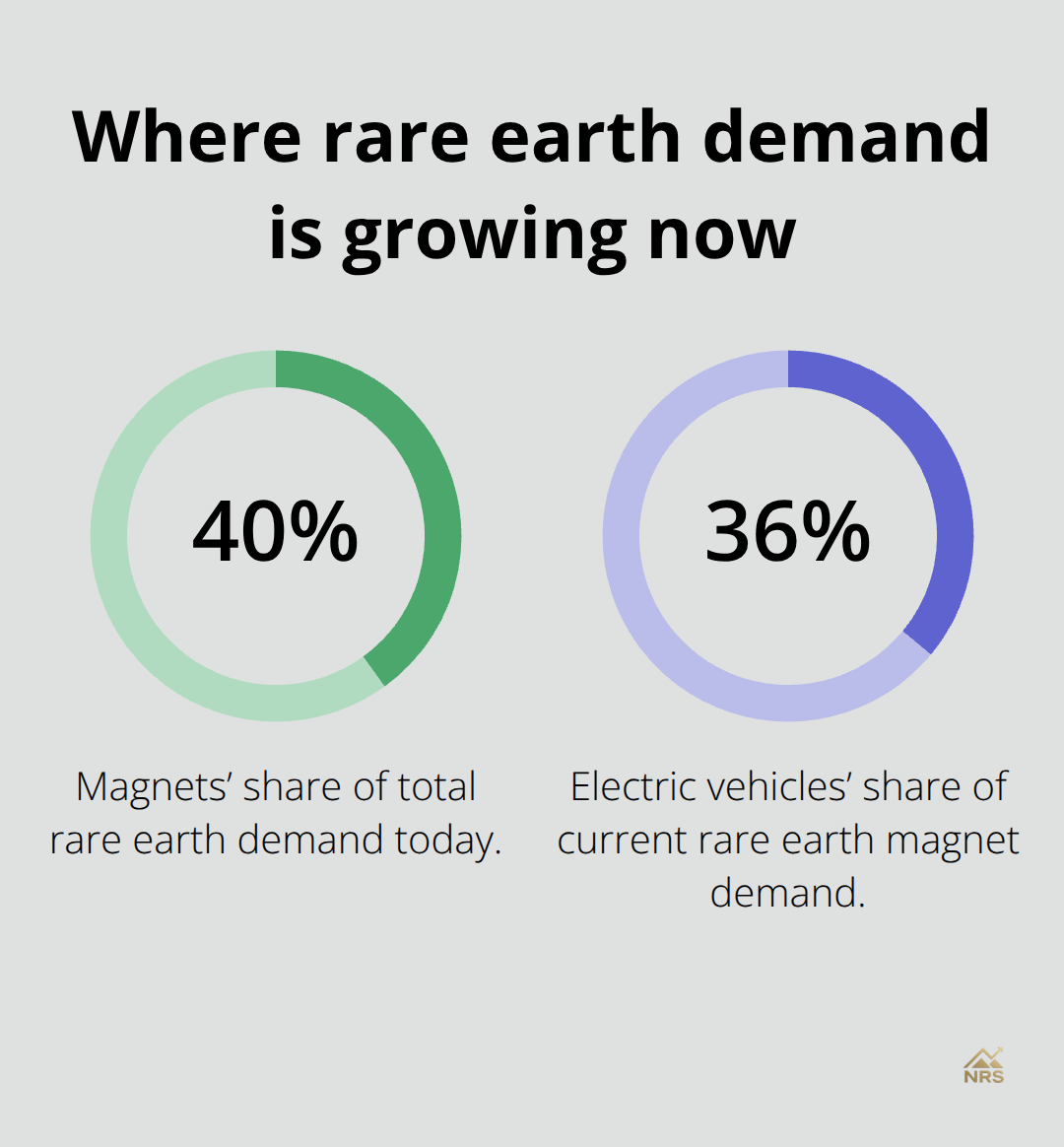
Magnets account for roughly 40 percent of total rare earth demand today, but this share will exceed 50 percent by 2035 according to industry analysis. Electric vehicles drive the primary growth, currently representing about 36 percent of magnet demand, with expectations to surpass 50 percent within the next decade. This is not speculative-General Motors and Apple have already signed long-term supply agreements with MP Materials for EV magnets and recycled magnet remanufacturing.
Simultaneously, AI infrastructure creates incremental demand through hyperscale data centers. The five largest hyperscalers increased capital expenditure by 72 percent in 2025 to approximately 400 billion dollars, with cooling systems consuming about 20 percent of data center energy. Defense spending accelerates as well. NATO moves toward 5 percent of GDP spending on defense, and the US expands replenishment programs. Defense demand for rare earths has grown roughly threefold over the last decade and shows no signs of slowing.
The Supply Concentration That Creates Investment Opportunity
China accounted for 60% of global mined production of magnet rare earths in 2024, with even higher concentration in refining. This concentration creates the reason rare earth stocks are positioned for sustained upside. Price divergence between Chinese and ex-China markets has widened significantly, with heavy rare earths outside China sometimes trading at 4 to 6 times Chinese prices.
Export controls and processing restrictions amplify policy risk, affecting facilities that contain even trace amounts of Chinese-origin inputs. North America will supply only 9 to 10 percent of refined rare earth oxides through 2035 even with significant government backing, meaning Western supply will remain constrained and premium-priced for years. Project Vault, a 12 billion dollar US initiative, aims to create a strategic reserve of 60 critical minerals including rare earths, signaling that government support for domestic supply is not temporary policy-it is becoming permanent infrastructure.
Why Western Supply Chains Command Premium Valuations
The gap between Chinese and Western rare earth prices reflects more than production costs. It reflects geopolitical risk, supply security, and the willingness of defense contractors and EV manufacturers to pay for supply chain independence. Companies that control non-Chinese production capacity operate in a market where customers actively seek alternatives to Chinese suppliers, regardless of price.
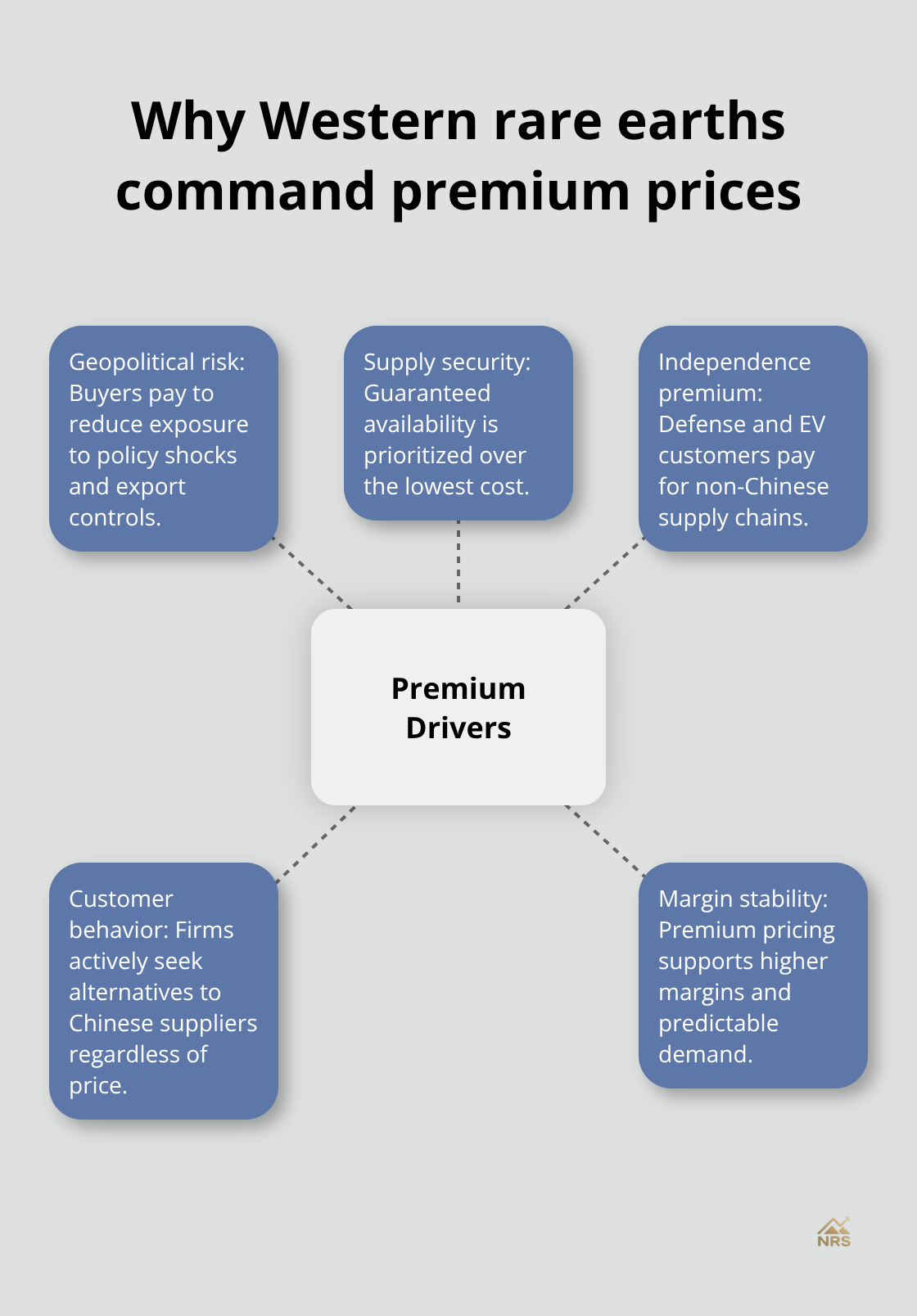
This dynamic supports higher margins and more predictable demand than commodity pricing alone would suggest.
The next section examines which companies have positioned themselves to capture this premium-priced Western supply opportunity.
Which Rare Earth Stocks Offer Real Upside in 2026
MP Materials: Government-Backed Production and Guaranteed Demand
MP Materials controls Mountain Pass, one of the world’s highest-grade rare earth deposits in California, and operates the only large-scale rare earth production facility in the Western Hemisphere. The company produced 50,000 metric tons of rare earth oxide last year, a 12 percent increase year-over-year, and has begun manufacturing finished magnets at its Independence facility in Texas. The US Department of Defense invested 400 million dollars through preferred stock, giving the DoD a 15 percent stake and creating a structural advantage few mining companies possess.
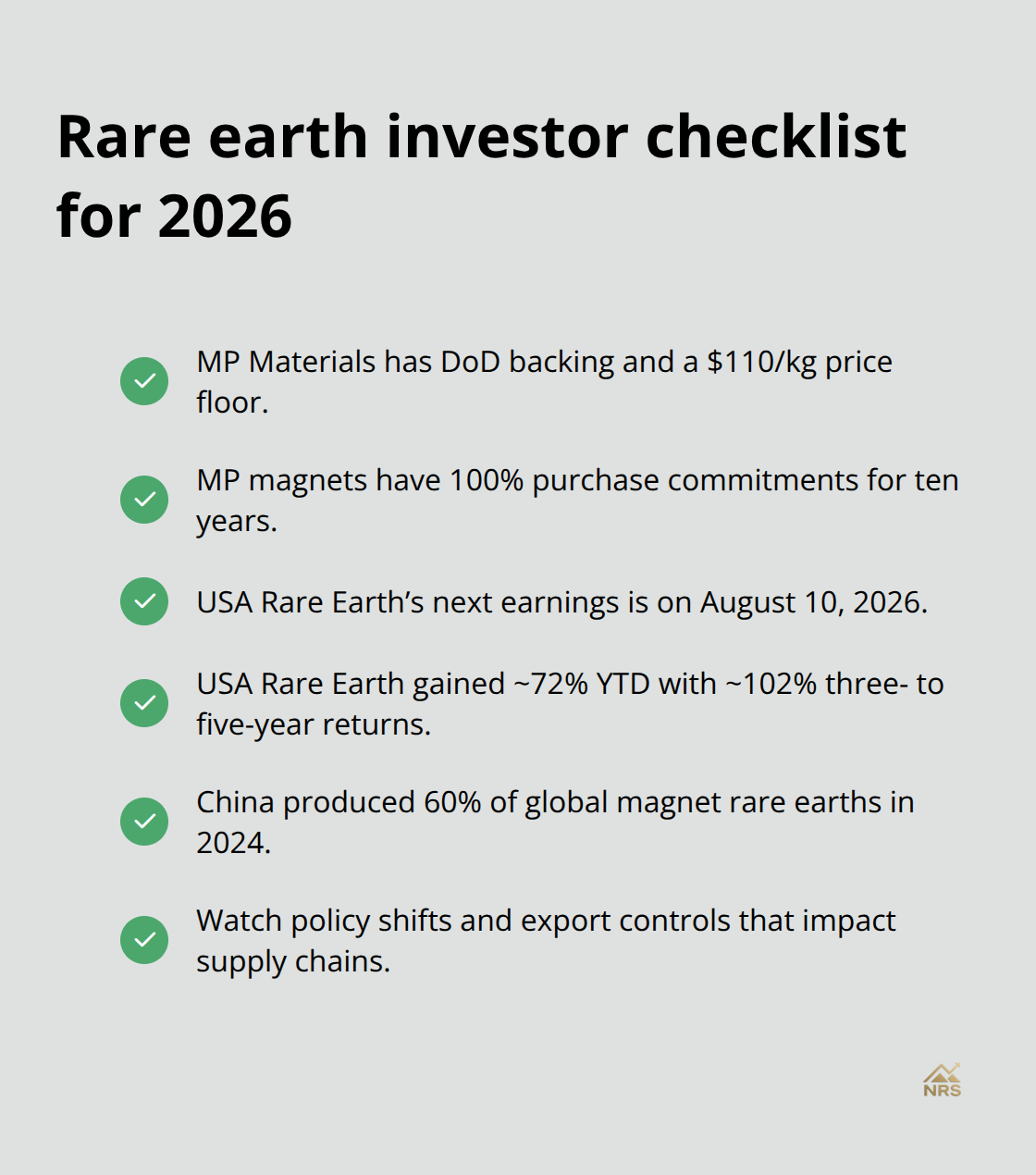
The defense department guarantees a floor price of at least 110 dollars per kilogram for neodymium-praseodymium oxide for 10 years after the 10X magnet facility becomes operational. This price floor removes downside risk from commodity cycles. Additionally, 100 percent of MP magnets face purchase commitments from defense and commercial customers during that period, transforming the company from a commodity producer into a revenue-visibility story.
General Motors signed a long-term offtake agreement for EV magnets, and Apple committed to a supply contract for recycled magnets. These binding commitments provide demand certainty that most mining stocks never achieve. Needham initiated a buy rating with a price target near 39 dollars, suggesting meaningful upside from mid-2026 levels. The combination of government backing, long-term offtake agreements, and a price floor positions MP Materials as the most de-risked rare earth play available to investors.
USA Rare Earth: High Growth Potential Offset by Development Risk
USA Rare Earth operates the Round Top Mountain deposit near Sierra Blanca, Texas, focusing on mining, processing, and supplying rare earths for aerospace, defense, semiconductors, data centers, and EV applications. The company trades near 20 dollars per share and has gained approximately 72 percent year-to-date, outperforming the S&P 500’s roughly 7 percent move. Over three to five years, total returns reached around 102 percent, reflecting investor enthusiasm for US-based supply alternatives.
The trailing revenue sits at approximately 7.3 million dollars with negative net income near 440 million dollars, reflecting development-stage losses typical of pre-revenue mining projects. Valuation metrics show a price-to-sales ratio around 365x and price-to-book near 2.7x, indicating investors are pricing in significant future production. Zacks highlights a hydromet demonstration facility as a potential growth catalyst for production capabilities.
With a beta around 2.36, USAR exhibits higher volatility than the broader market, making it suitable only for investors comfortable with commodity risk. The upside stems from US-based supply diversification away from China, but the continuing losses and premium valuation demand careful monitoring of project execution and regulatory developments. The next earnings release occurs on August 10, 2026, which will provide clarity on project milestones and facility progress-a critical inflection point for assessing whether the company can execute on its ambitious timeline.
Where Rare Earth Investors Find Real Opportunities in 2026
Security-Driven Procurement Replaces Price Competition
The rare earth market in 2026 splits into two distinct investment narratives. EV manufacturers and defense contractors have fundamentally shifted how they source rare earths, moving away from price-driven procurement toward security-driven procurement. General Motors and Apple have already locked in long-term supply agreements, signaling that Western producers can command premium pricing regardless of Chinese production costs. This structural shift means investors should focus on companies with secured offtakes and government backing rather than betting on commodity price appreciation alone.
MP Materials exemplifies this approach, with its DoD price floor of 110 dollars per kilogram and 100 percent purchase commitments from defense and commercial customers over ten years. The investment opportunity centers on revenue visibility, not speculation. USA Rare Earth represents the opposite end of the spectrum, offering high upside if execution succeeds but carrying substantial execution risk given its negative 440 million dollar net income and 7.3 million dollar trailing revenue. For investors comfortable with volatility, USAR’s 72 percent year-to-date gain and three to five year returns around 102 percent reflect market enthusiasm for US-based alternatives to Chinese supply.
Production Timelines and Execution Risk Separate Winners from Losers
The August 10, 2026 earnings release will determine whether USAR’s hydromet demonstration facility moves from promise to production reality. Upstream mine development faces multi-decade timelines, often 15 years or longer, while downstream processing can come online faster but remains constrained by ramp-up and capacity limitations. Companies that demonstrate progress on these fronts attract capital; those that miss milestones face investor skepticism. MP Materials has already begun manufacturing finished magnets at its Independence facility in Texas, moving beyond ore production into the higher-margin magnet business. This operational progress separates MP from earlier-stage competitors still years away from commercial production.
Government Support Transforms Rare Earth Economics
Government support for rare earth supply chain diversification has transitioned from temporary subsidy to permanent infrastructure. A $12 billion stockpile of critical minerals and rare earths was announced in February 2026 to create a strategic reserve as part of US supply diversification strategy. NATO’s movement toward 5 percent of GDP spending on defense creates a durable demand floor that transcends economic cycles. The IEA’s Rare Earth Elements report, published April 8, 2026, emphasizes that supply chain diversification requires government-industry collaboration and identifies eight targeted policy recommendations to secure more resilient supply chains.
This policy environment rewards companies with Western production capacity and punishes those dependent on Chinese processing. Investors should prioritize companies with non-Chinese mining projects, integrated processing capabilities, and demonstrated ability to secure long-term customer agreements. The price divergence between Chinese and ex-China markets, where heavy rare earths sometimes trade at 4 to 6 times Chinese prices, creates a pricing umbrella that protects Western producers even during commodity downturns.
Emerging Projects Signal Long-Term Diversification Strategy
Critical Metals’ acquisition of Greenland’s Tanbreez rare earth deposit signals that Arctic opportunities outside China are attracting capital and strategic backing. These emerging projects lack the production capacity of MP Materials today, but they represent the diversification infrastructure that policy makers actively support through loans, equity stakes, and price guarantees. For 2026, the investment thesis rests not on rare earth prices rising, but on Western supply commanding sustained premiums as customers pay for independence from Chinese suppliers.
Final Thoughts
MP Materials and USA Rare Earth represent the two best rare earth stocks for investors seeking Western supply exposure in 2026, though they appeal to different risk profiles. MP Materials offers de-risked returns through its Department of Defense backing, guaranteed price floor of $110 per kilogram, and 100 percent purchase commitments for magnets over ten years. USA Rare Earth delivers higher growth potential but demands tolerance for execution risk, with the August 10 earnings release determining whether its hydromet facility transitions from development to production.
The structural shift toward security-driven procurement means Western rare earth producers command sustained premiums regardless of Chinese pricing, protecting margins during commodity downturns and creating revenue visibility that traditional mining stocks rarely achieve. Government support through Project Vault and NATO’s defense spending commitments establishes a durable demand floor transcending economic cycles. This dynamic transforms rare earth investing from commodity speculation into a supply-chain security play where customers actively pay for independence from Chinese suppliers.
Monitor production timelines at both companies, track policy shifts in export controls, and assess customer concentration risk before committing capital (particularly important for USA Rare Earth, which lacks MP Materials’ diversified offtake agreements). We at Natural Resource Stocks provide expert analysis and market commentary on rare earth developments and geopolitical factors shaping resource stock performance throughout 2026.