

























Gold prices are heading into 2027 with multiple forces at play. Geopolitical tensions, central bank decisions, and inflation concerns will shape where the market goes next.
At Natural Resource Stocks, we’re tracking the supply side too. Mining production, regulatory pressures, and new projects will determine whether gold becomes scarcer or more abundant in the year ahead.
What Moves Gold Prices in 2027
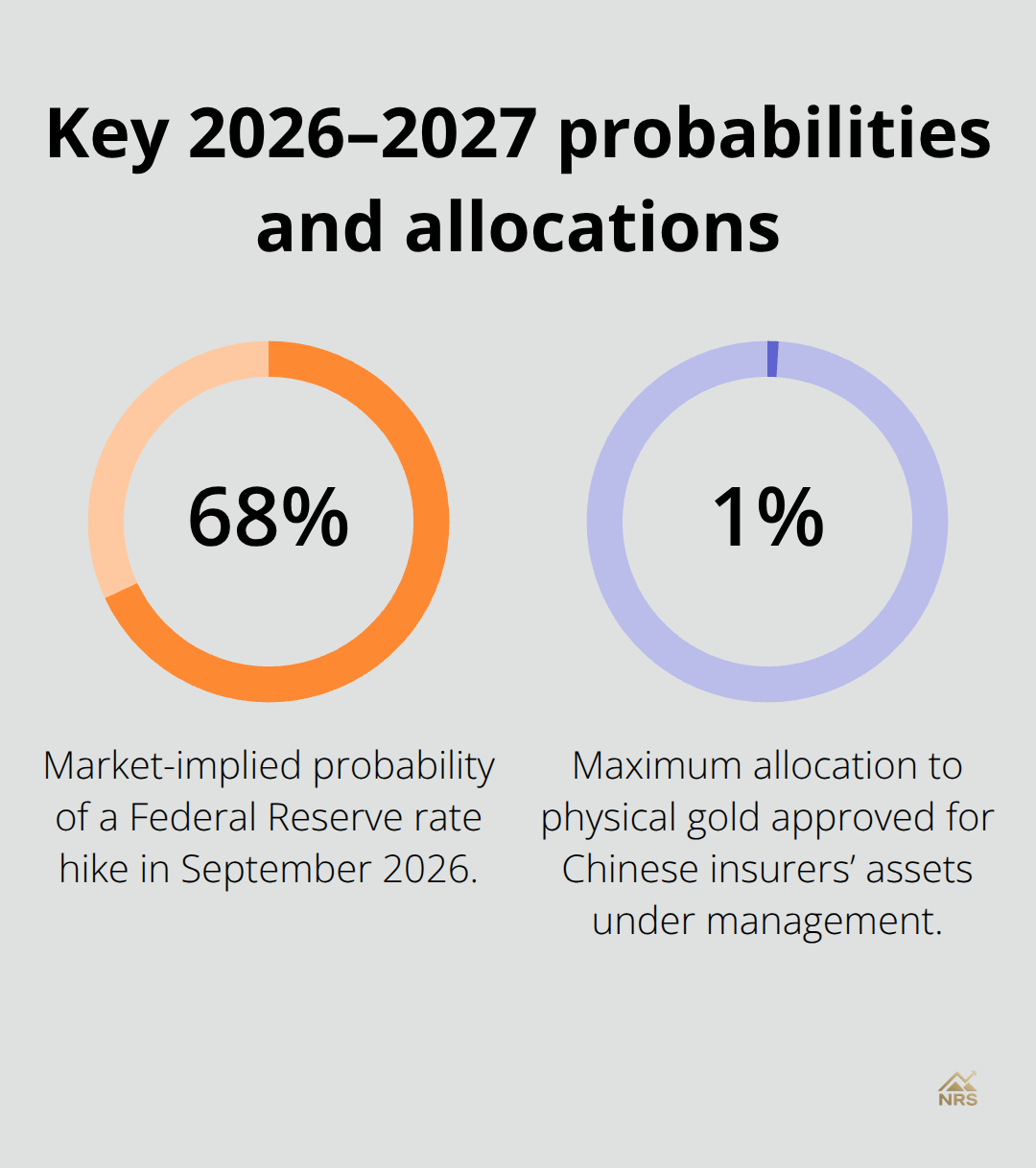
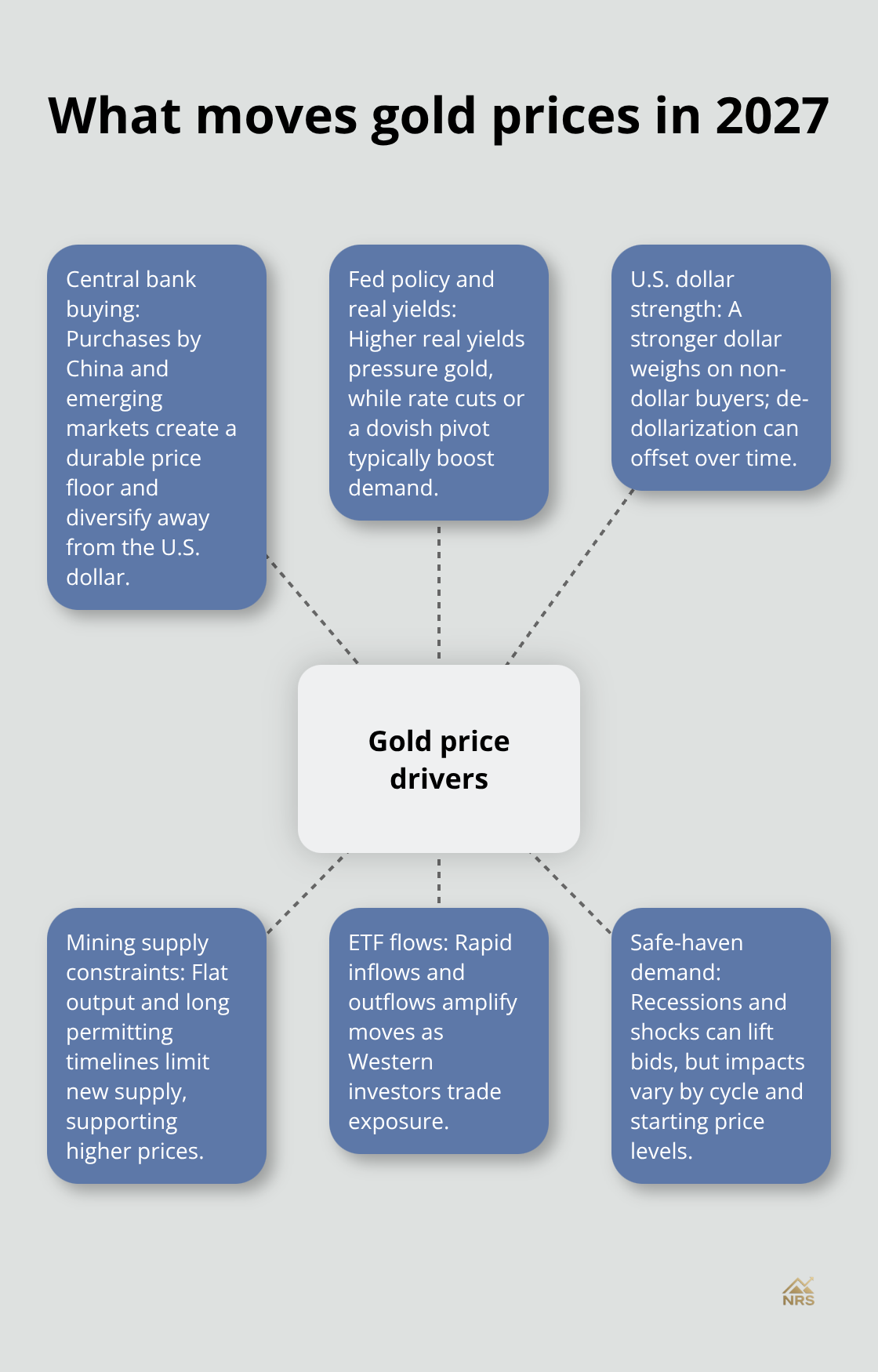
Central bank gold purchases will be the single most important driver of gold prices heading into 2027, and this trend is accelerating. According to World Gold Council data cited by JPMorgan, China has sharply increased its gold imports and the People’s Bank of China ramped up purchases in spring 2026. China deliberately builds gold reserves to diversify away from U.S. dollar assets and strengthen the renminbi as a reserve currency. Chinese insurers also received regulatory approval to allocate up to 1% of their assets under management to physical gold, which represents roughly 200 tons at current levels with potential for higher allocations later. This demand floor from central banks will support gold prices even if Western investors sell, making the 2027 outlook constructive despite near-term volatility.
Federal Reserve Policy Sets the Ceiling
The Federal Reserve’s interest rate decisions will determine how high gold can climb in 2027. JPMorgan projects gold averaging around $5,243 per ounce in 2026 and reaching $6,263 in 2027, with year-end 2027 potentially near $6,300. This forecast assumes the Fed maintains higher-for-longer rates but avoids a sharp tightening cycle. Gold lacks yield, so rising real yields work against it-a more aggressive Fed hiking cycle would push gold lower and trigger Western ETF outflows. As of June 2026, market pricing indicated about a 68% probability of a Fed rate hike in September, signaling continued hawkish pressure. Watch the Fed’s inflation communications closely.
If U.S. inflation accelerates despite tight policy, the Fed will hike more aggressively, which crushes gold despite inflation hedging appeal. Conversely, if inflation cools and the Fed cuts rates, gold becomes far more attractive.
The Dollar’s Stranglehold
A stronger U.S. dollar creates the immediate headwind weighing on gold prices in mid-2026. Gold trades inversely to the dollar, and when the dollar strengthens, it makes gold more expensive for non-dollar holders and reduces demand. As of late June 2026, the dollar index sits around 101.49, supporting higher gold prices on a relative basis, yet gold has still pulled back from its January 2026 all-time high of $5,608 per ounce to near $4,000. For 2027, de-dollarization trends work in gold’s favor. Emerging-market central banks systematically reduce U.S. dollar exposure and increase gold reserves as a real asset hedge against currency debasement. This structural shift will provide a price floor even if the dollar rallies temporarily, setting the stage for how mining supply will respond to these price signals.
Why Gold Mining Supply Remains Stuck While Demand Accelerates
Global gold mine production has flatlined since around 2018, and this stagnation matters enormously for 2027 pricing. China leads output, followed by Australia, the United States, South Africa, Russia, Peru, and Indonesia. Despite surging prices-gold hit $5,608 per ounce in January 2026-miners have not ramped up production meaningfully. This supply inelasticity is the real story. When you combine flat production with accelerating central bank demand from China and emerging markets, the math becomes simple: scarcity supports prices.
The Supply Constraint That Protects Prices
Miners face severe environmental and regulatory headwinds that constrain new capacity. Permitting timelines stretch across five to ten years in developed nations, and communities increasingly oppose new mines over water contamination and carbon concerns. South Africa’s power crisis has already reduced output from its aging operations. Peru faces political instability that threatens production from some of the world’s largest copper and gold mines.
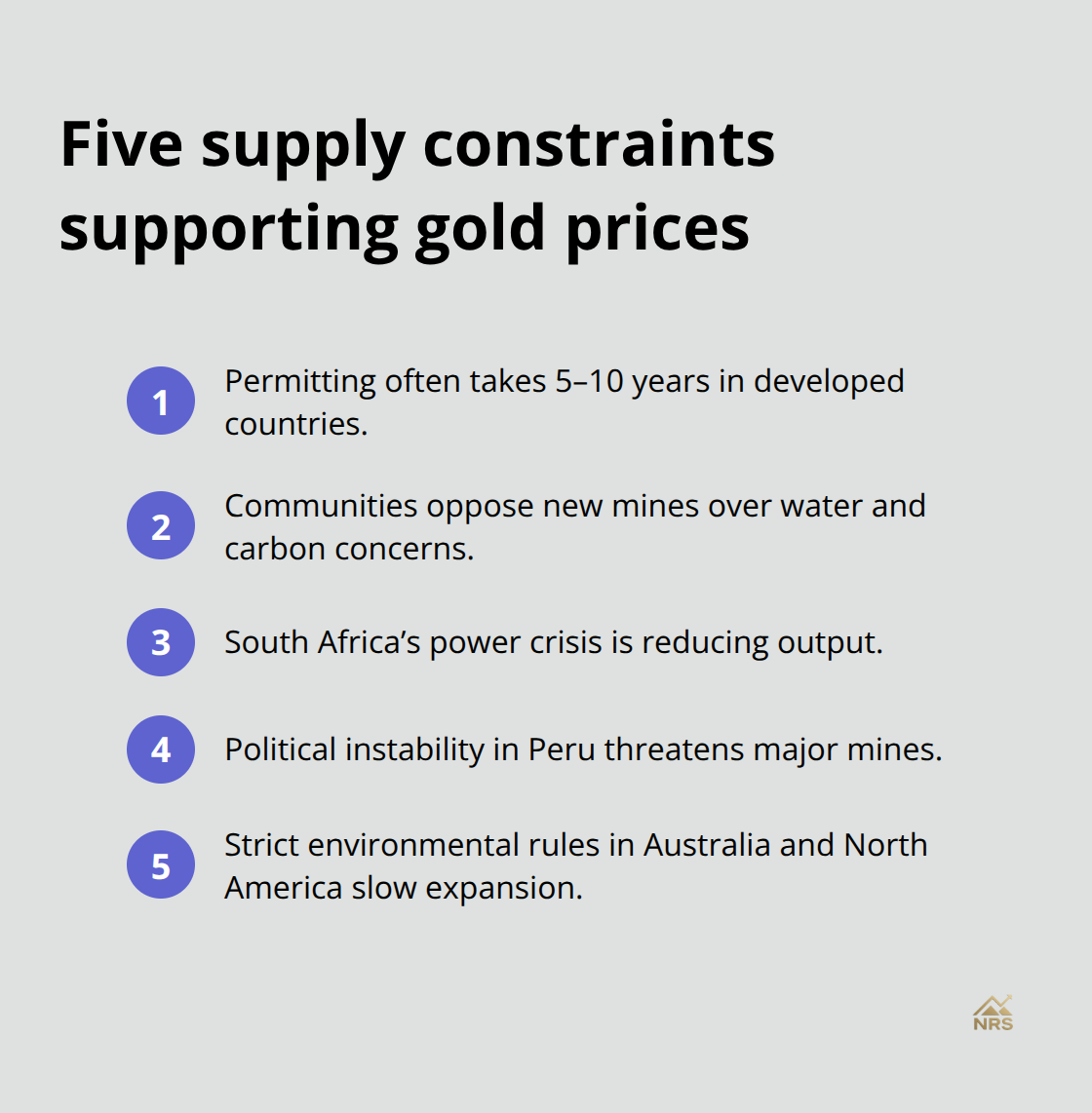
Environmental regulations in Australia and North America make expansion expensive and slow.
Emerging mining projects exist, but none will materially shift the supply picture before 2027. This regulatory friction means that even if gold prices climb toward $6,300 by year-end 2027 as JPMorgan forecasts, miners cannot flood the market with new supply to cap prices. The supply constraint acts as a price floor and removes a traditional brake on bull markets.
Why Incumbent Miners Win in a Supply-Constrained Market
The practical implication for investors is straightforward: gold mining stocks benefit directly from this supply shortage. When central bank demand accelerates and production cannot respond, mining companies capture wider margins and generate stronger cash flows. Regulatory barriers that plague new projects actually protect incumbent producers and their profitability.
Production growth from existing mines will likely remain flat to slightly negative as ore grades decline at mature operations, further tightening the supply picture. This structural constraint means that gold prices in 2027 will move more on demand shifts and central bank flows than on supply surprises, and mining equities will reward investors who understand this dynamic.
Where to Look for Mining Exposure
Try mining companies with existing operations in jurisdictions with stable permitting-Australia, Canada, and the United States offer this advantage. Avoid greenfield projects with uncertain timelines; they will not contribute materially to 2027 supply. Companies operating in these stable regions benefit from predictable regulatory environments while competitors struggle with permitting delays elsewhere.
As central bank demand accelerates and production constraints tighten, investment demand from retail and institutional investors will intensify. The next chapter examines how investor behavior and gold ETF flows will shape the 2027 market.
How Investor Flows Shape Gold Prices in 2027
ETF Inflows Drive Price Volatility
When central banks accelerate purchases and miners cannot increase supply, retail and institutional investors rush in to capture the trend. Gold ETF inflows have been substantial since 2025, with the launch of these products in 2004 dramatically expanding access to bullion and increasing price volatility through easier trading and liquidity. As of mid-2026, gold ETFs remain a primary vehicle for Western investors to gain exposure without storing physical metal. The practical reality is that ETF flows now rival physical demand as a price driver. When institutional money enters via ETFs, prices spike upward fast; when Western investors sell, prices fall equally quickly despite central bank support underneath.
JPMorgan’s 2027 forecast of $6,263 per ounce assumes steady ETF inflows continue, but a bear-case scenario exists where rising real yields and a stronger dollar trigger Western ETF outflows large enough to overwhelm central bank buying temporarily. Watch ETF holdings data weekly through providers like GLD or IAU to measure institutional conviction. If holdings decline while gold prices rise, that signals strong physical demand from central banks masking Western investor weakness-a bullish setup for later.
Conversely, falling prices with rising ETF holdings means retail panic selling, which typically marks tactical opportunities before central bank demand reasserts itself.
Safe-Haven Demand Requires Context
Economic recession fears will intensify gold’s appeal throughout 2027, but investors must distinguish between genuine safe-haven rallies and noise. Gold historically shines during market downturns and geopolitical shocks, yet the relationship is not mechanical. During the 2020 pandemic crisis, gold peaked at roughly $2,064 per ounce in August as investors fled risk assets, and geopolitical tensions in 2024 contributed to new highs again. The current environment differs because gold already sits near $4,000 after a January 2026 peak of $5,608, meaning much of the safe-haven premium may already be priced in.
If U.S. growth remains buoyant but inflation accelerates unexpectedly, the Fed will hike more aggressively, and gold will struggle despite recession fears because rising real yields punish non-yielding assets. The actionable insight is this: gold serves as portfolio insurance best when paired with equities and bonds, not as a standalone hedge.
Historical Performance Varies by Time Window
Over 1990–2020, stocks vastly outperformed gold at roughly 1,081% versus 360%, yet from 2000 through mid-2026, gold roughly tripled while the S&P 500 roughly doubled, showing that gold’s outperformance depends entirely on the window chosen. For 2027, allocate gold to your portfolio based on your inflation and currency debasement concerns, not on recession timing alone. A diversified approach using gold ETFs for liquidity or physical holdings for long-term wealth preservation beats chasing short-term price swings driven by recession headlines.
Final Thoughts
Gold prices in 2027 will trade between $5,500 and $6,500 per ounce under base-case conditions, with JPMorgan’s $6,263 annual average representing a realistic midpoint. Central bank demand from China and emerging markets will provide the price floor, while Fed policy and dollar strength determine the ceiling. This gold market outlook 2027 hinges on whether inflation cools enough for rate cuts or accelerates enough to force aggressive hikes.
Investment opportunities split into two paths. Established mining companies operating in stable jurisdictions like Australia, Canada, and the United States will generate strong cash flows as production constraints tighten and central bank demand accelerates. Gold ETFs remain the most liquid vehicle for investors seeking exposure without physical storage hassles, though you must monitor Western investor flows against central bank buying to measure true demand strength.
For resource stock investors, the strategic takeaway stands clear: gold mining equities outperform bullion itself when supply cannot respond to rising prices. Allocate to mining stocks with proven reserves in jurisdictions offering permitting certainty, and avoid greenfield projects with uncertain timelines. Visit Natural Resource Stocks to access detailed commentary on geopolitical impacts, policy shifts, and emerging opportunities in metals and energy sectors.