

























Rare earth price trends are sending clear signals about where this sector is headed. Supply constraints, geopolitical tensions, and surging demand from clean energy are reshaping the market in real time.
At Natural Resource Stocks, we’ve analyzed these price movements to help you understand what they mean for your portfolio. This guide breaks down the drivers, reveals emerging opportunities, and shows you how to position yourself strategically.
What’s Driving Rare Earth Prices Right Now
China’s Supply Dominance Creates Vulnerability
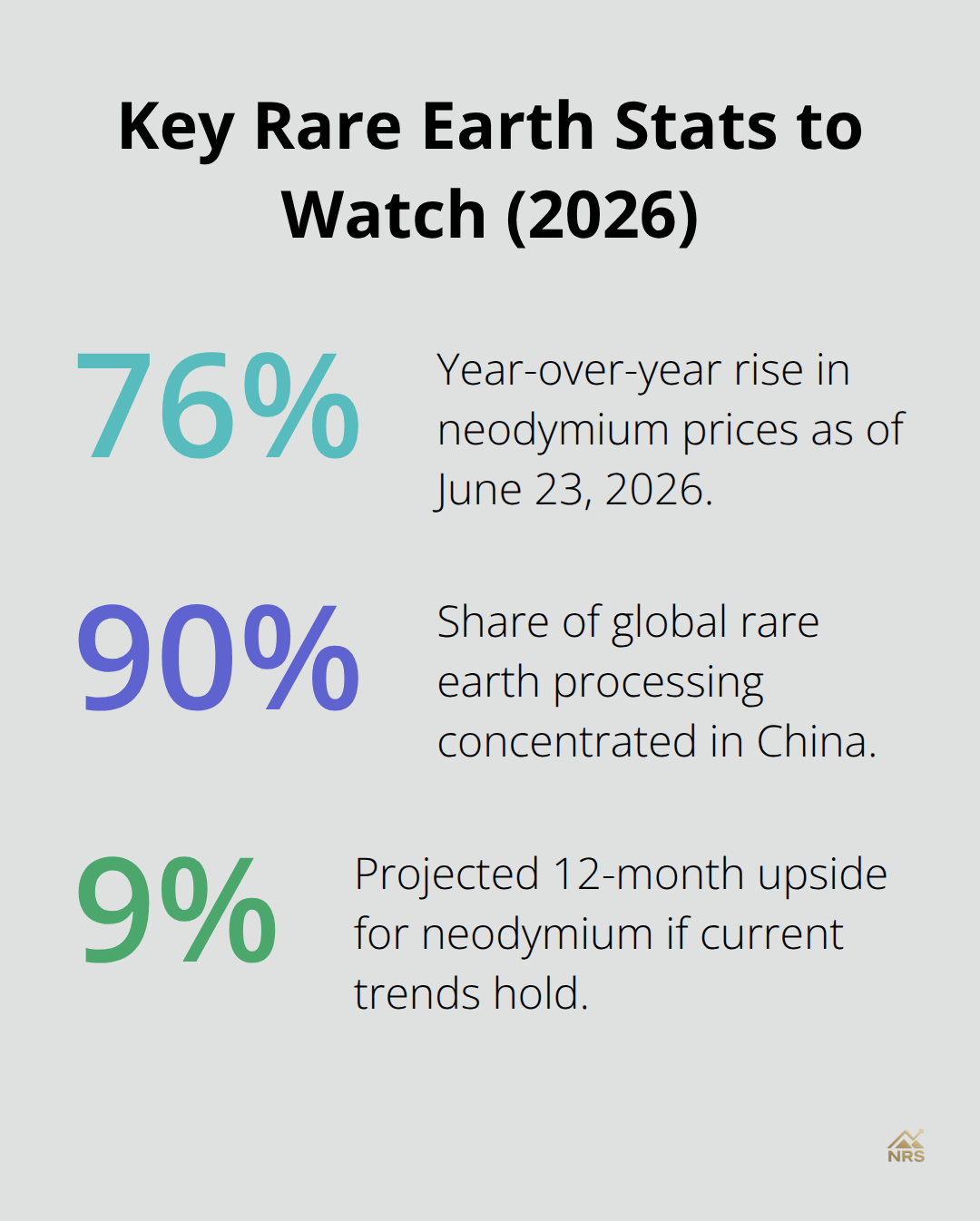
Neodymium prices reached 965,000 Chinese yuan per tonne on June 23, 2026, up 76 percent year-over-year according to Trading Economics data. This surge reflects three interconnected forces reshaping the sector. China’s supply dominance accounts for approximately 90% of global processing, a concentration that creates real vulnerability in supply chains. When China restricts exports or tightens environmental regulations, prices spike within weeks. The 2010 export ban to Japan after the Senkaku incident triggered price increases of several hundred percent, and the sector remains susceptible to similar policy shocks today.
The IEA’s April 2026 Rare Earth Elements report identified critical vulnerabilities across the mine-to-magnet value chain, highlighting how concentrated supply chains amplify price swings. Production bottlenecks extend beyond mining into processing and separation, where hazardous waste management drives costs higher. Mountain Pass in California attempted to restart in 2012 but filed for bankruptcy in 2015, with final processing moving back to China. This history demonstrates why alternative supply sources struggle to compete on cost and complexity.
Clean Energy Demand Anchors Price Floors
Clean energy demand anchors rare earth prices, and it will only intensify. Electric vehicle production requires neodymium magnets in motors, while wind turbines need dysprosium-heavy permanent magnets for efficiency. As EV sales accelerate globally and renewable capacity expands, rare earth consumption follows directly. The IEA report emphasizes that rare earths are now strategic inputs for energy security, not just commodity inputs.
Geopolitical risk itself influences prices in a two-way relationship: higher geopolitical tension pushes prices up as investors and governments seek supply security, while rare earth price surges can signal underlying supply stress before broader risk intensifies.
Three Signals to Monitor for Price Movement
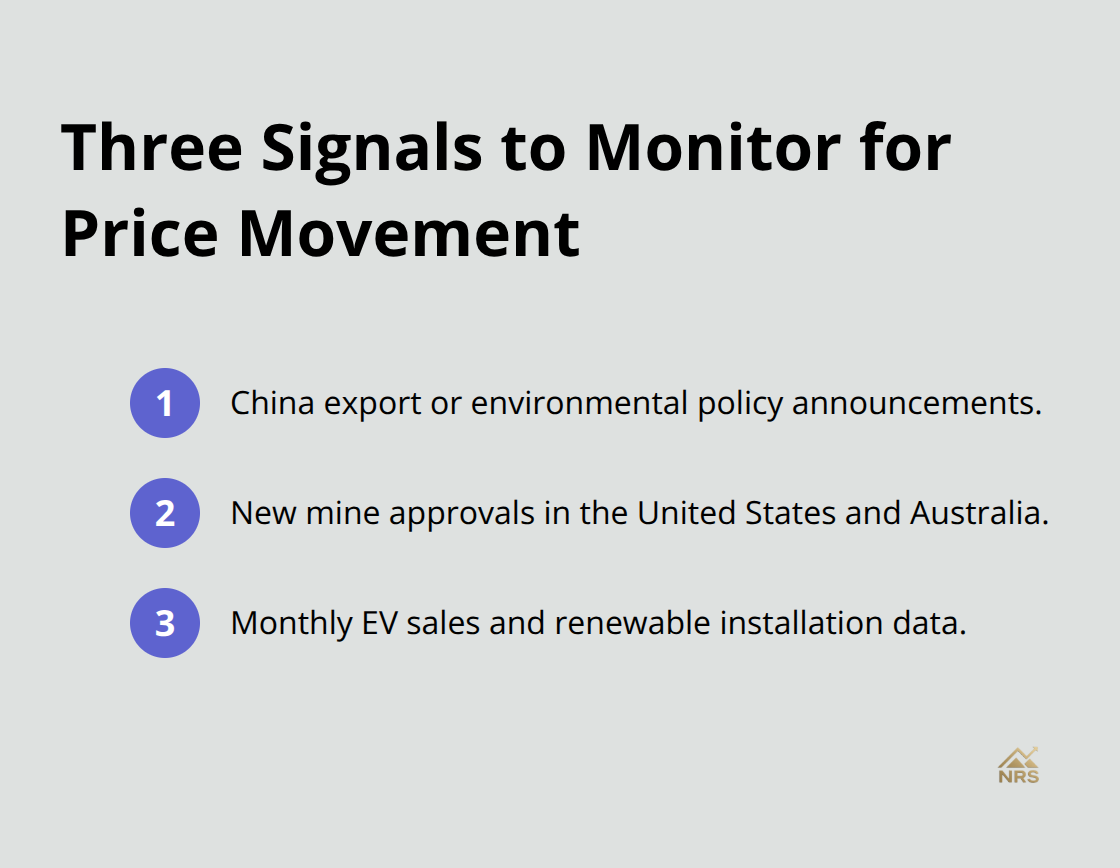
Forecasts suggest neodymium could reach around 1,047,000 yuan per tonne over the next 12 months if current trends hold, implying another 9 percent upside. For investors, three specific signals matter most. First, watch policy announcements from China regarding export quotas or environmental rules, as these shift prices fastest. Second, track new mine approvals outside China, particularly in the United States and Australia, since diversification directly compresses price premiums. Third, follow electric vehicle sales data and renewable energy installations monthly, as these reveal the demand floor beneath price movements.
Understanding these price drivers positions you to anticipate market shifts before they fully materialize. The next section examines what current price patterns reveal about broader market health and where opportunities emerge.
What Price Volatility Reveals About Market Health
Rare earth prices have swung wildly over the past 15 years, and these swings tell you exactly where sector stress points lie. Neodymium hit 1,520,000 yuan per tonne in February 2022, then collapsed significantly before recovering to 965,000 yuan on June 23, 2026. That 76 percent year-over-year gain shows the market is tightening again, not loosening.
The 2010 price spike of several hundred percent after China’s export ban proved that supply shocks hit instantly, but the 2012 WTO ruling that loosened export quotas proved just as quickly that policy shifts can reverse momentum. What matters for your portfolio is this: price volatility signals genuine supply constraints, not speculation. When prices move this sharply in response to real supply tightness rather than financial trading, it means the sector is entering a structural shift where demand is outpacing reliable supply sources.
Economic Cycles Show in Rare Earth Price Swings
Rare earth prices rise with strong global economic activity and fall during downturns, according to analysis using global real activity indices that track commodity-market demand cycles. This correlation matters because it tells you when the broader economy is pulling rare earth demand higher versus when slowdowns are coming. During COVID-19, downstream sectors like automotive and consumer electronics weakened while upstream rare earth supply remained steady, which created a supply-demand mismatch that inflated prices. Today, as EV sales accelerate and renewable installations expand, that same dynamic is reversing: demand is growing while supply bottlenecks persist. The IEA’s April 2026 report emphasized that rare earths are now strategic inputs for energy security, meaning policy support for supply diversification will likely increase rather than decrease. This tells you the price floor is rising structurally, not cyclically.
Where Real Opportunities Hide in Price Movements
Companies with processing capacity outside China face a fundamental tailwind that transcends price cycles. Mountain Pass failed in 2015 partly because processing moved back to China, but that same failure now represents a policy priority for governments seeking supply independence. Watch for companies that secure new processing permits or expand capacity in North America and Australia, since these investments signal confidence in sustained higher prices. For investors, the actionable insight is this: price strength combined with policy momentum toward supply diversification means companies positioned in upstream mining or downstream magnet production outside China will capture disproportionate margins.
Tracking the Companies Positioned for Structural Demand
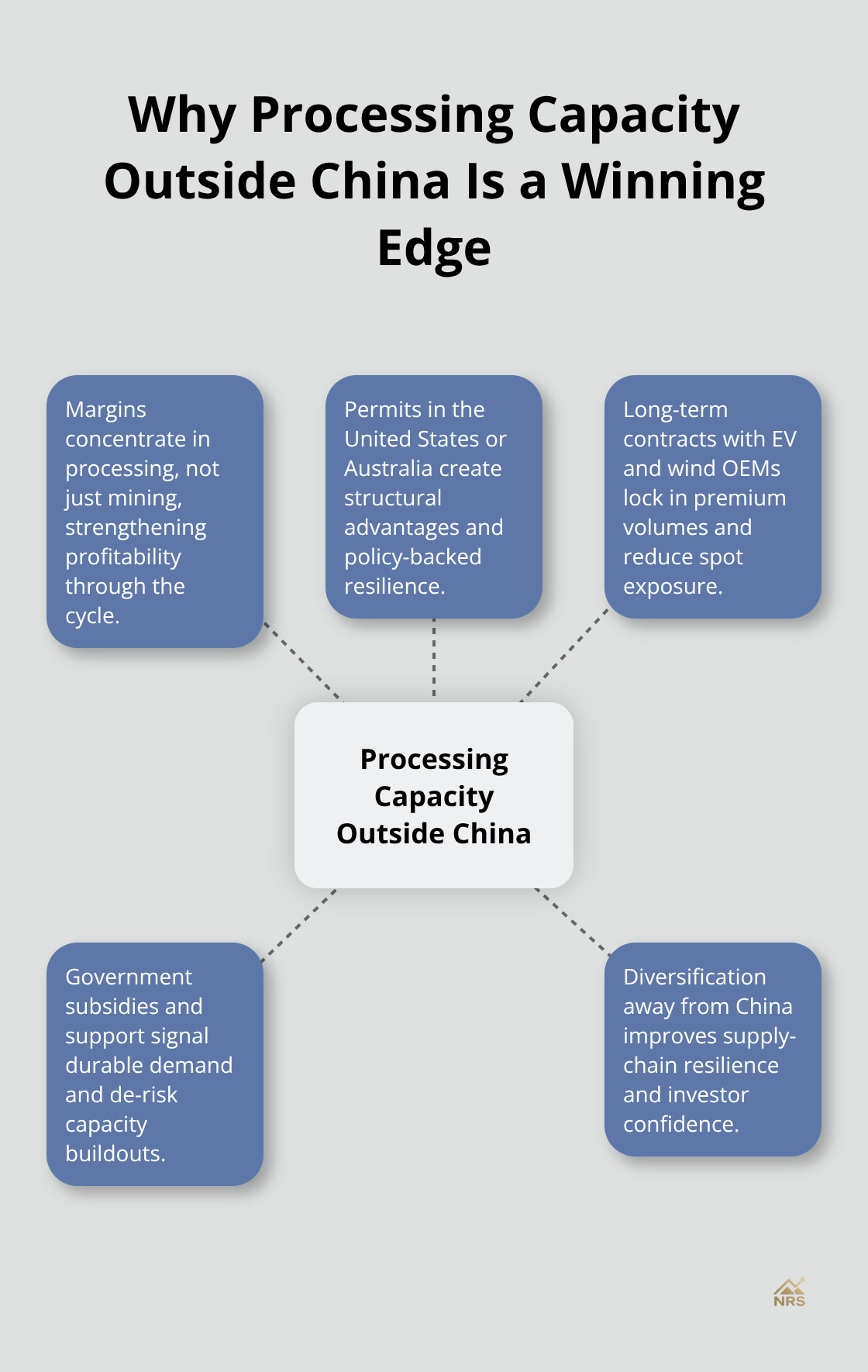
Track quarterly announcements from producers about capacity expansions or new contracts with EV manufacturers and wind turbine makers, since these reveal which companies are capturing the structural demand shift before broader markets price it in. Companies that announce processing facility expansions in the United States or Australia signal they expect sustained price strength (and policy support) over the next five to ten years. The most valuable signals come from long-term supply contracts with major EV makers or renewable energy equipment manufacturers, as these contracts lock in volumes at premium prices. Look for producers that have secured government backing or subsidies for new capacity, since policy support indicates the sector has moved from cyclical to strategic importance. These announcements often precede stock price movements by several quarters, giving investors who monitor them an edge in positioning ahead of broader recognition.
The companies that position themselves as reliable non-China suppliers will capture the structural shift in rare earth demand. Understanding which producers are making these moves positions you to identify the stocks most likely to outperform as supply constraints tighten further. The next section examines how to identify undervalued companies and time your entry points based on price cycle analysis.
How to Position Yourself in Rare Earth Stocks
Identify Processing Capacity as Your Competitive Edge
Finding undervalued rare earth producers requires looking past headline prices and examining which companies control processing capacity outside China. Most investors focus on mining tonnage, but processing capacity is where margins concentrate and where supply constraints bite hardest. A producer with a new processing facility approved in the United States or Australia commands a structural advantage that transcends commodity price cycles, because governments now treat rare earth supply as strategic infrastructure. Look for companies that have secured long-term contracts with EV manufacturers or wind turbine producers, since these agreements lock in volumes at premium prices and reduce exposure to spot price volatility. The IEA’s April 2026 report stressed that supply chain resilience depends on diversification away from China, which means regulatory approval for new processing facilities outside Asia now functions as a competitive moat. Companies with permits approved in 2025 or 2026 are entering a multi-year expansion cycle where capacity constraints will support margins even if spot prices moderate.
Read Earnings Reports for Capacity Timelines and Contracts
Check quarterly earnings reports and investor presentations for specifics on processing capacity timelines, contract volumes, and government subsidies or support commitments. Companies that announce government backing for facility construction signal confidence in sustained price strength and policy support, which typically precedes stock appreciation by six to twelve months. These announcements reveal which producers are positioning themselves as reliable non-China suppliers before broader markets recognize the shift.
Build Positions During Price Pullbacks, Not Peaks
Timing entry points demands discipline around price cycles rather than guessing absolute bottoms. Neodymium at 965,000 yuan per tonne on June 23, 2026 represents a 76 percent year-over-year gain, which means the market has already recognized supply tightness. The actionable approach is to build positions when price weakness coincides with positive capacity announcements, not when prices reach multi-year highs. Watch for companies that announce processing expansions or new contracts during price pullbacks, since these moves signal management confidence that current weakness is temporary.
Diversify Across Elements and Geographic Regions
Diversification across different rare earth elements matters because neodymium and dysprosium face different demand drivers and supply sources. Neodymium dominates EV magnet demand and will see sustained upside as EV production accelerates, while dysprosium scarcity in wind turbine magnets creates separate supply constraints. Producers with exposure to both elements reduce single-element price risk. Geographic diversification is equally critical: companies operating mines in Brazil, India, or Australia face lower geopolitical risk than those dependent solely on Chinese processing. The 2010 export ban and subsequent WTO ruling in 2012 proved that policy shifts can reverse price trends within months, so owning producers with supply optionality across regions protects against policy shocks in any single country. Try to hold both upstream miners with diversified geographic operations and downstream processors expanding capacity outside China, since this combination captures both commodity upside and structural supply premiums.
Final Thoughts
Rare earth price trends reveal a sector in structural transition, not cyclical recovery. The 76 percent year-over-year surge in neodymium pricing reflects genuine supply constraints colliding with accelerating clean energy demand. China’s dominance in processing, combined with geopolitical risks and concentrated supply chains, means prices will remain elevated as long as alternative capacity outside Asia remains limited, and the IEA’s April 2026 report confirmed what price movements already signal: governments now treat rare earth supply as strategic infrastructure.
For investors, processing capacity outside China has become the primary competitive advantage in this sector, worth more than mining tonnage alone. Price volatility signals real supply stress rather than speculation, which means the structural demand floor rises as EV production and renewable installations accelerate. Companies announcing capacity expansions or long-term contracts during price weakness position themselves ahead of broader market recognition of the supply shift.
Watch for new processing permits in North America and Australia, government subsidies for capacity expansion, and long-term supply contracts with major EV and renewable energy manufacturers (these announcements precede stock price movements and reveal which producers capture the structural demand shift). Visit Natural Resource Stocks to access in-depth analysis on rare earth markets, geopolitical impacts, and emerging investment opportunities across the natural resource sector.