




















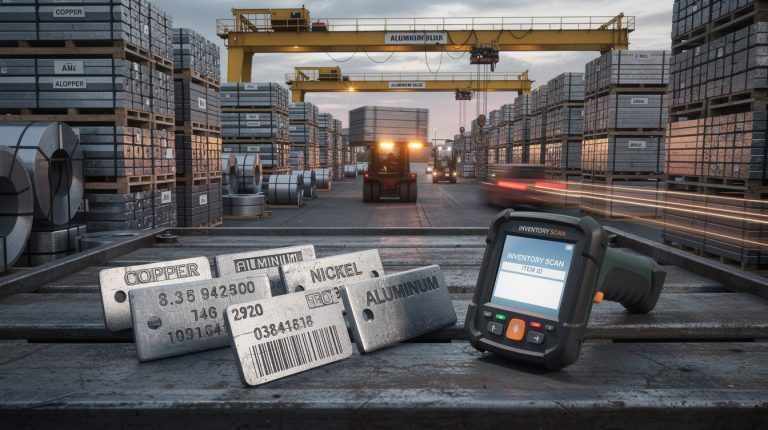
Geopolitical instability reshapes metal markets faster than most investors realize. When political tensions spike in resource-rich regions, supply chains fracture and prices swing wildly.
At Natural Resource Stocks, we’ve seen firsthand how geopolitical risk metals demand a different investment approach. Understanding these dynamics isn’t optional-it’s the foundation of protecting your portfolio.
Where Metal Supply Chains Break Under Geopolitical Pressure
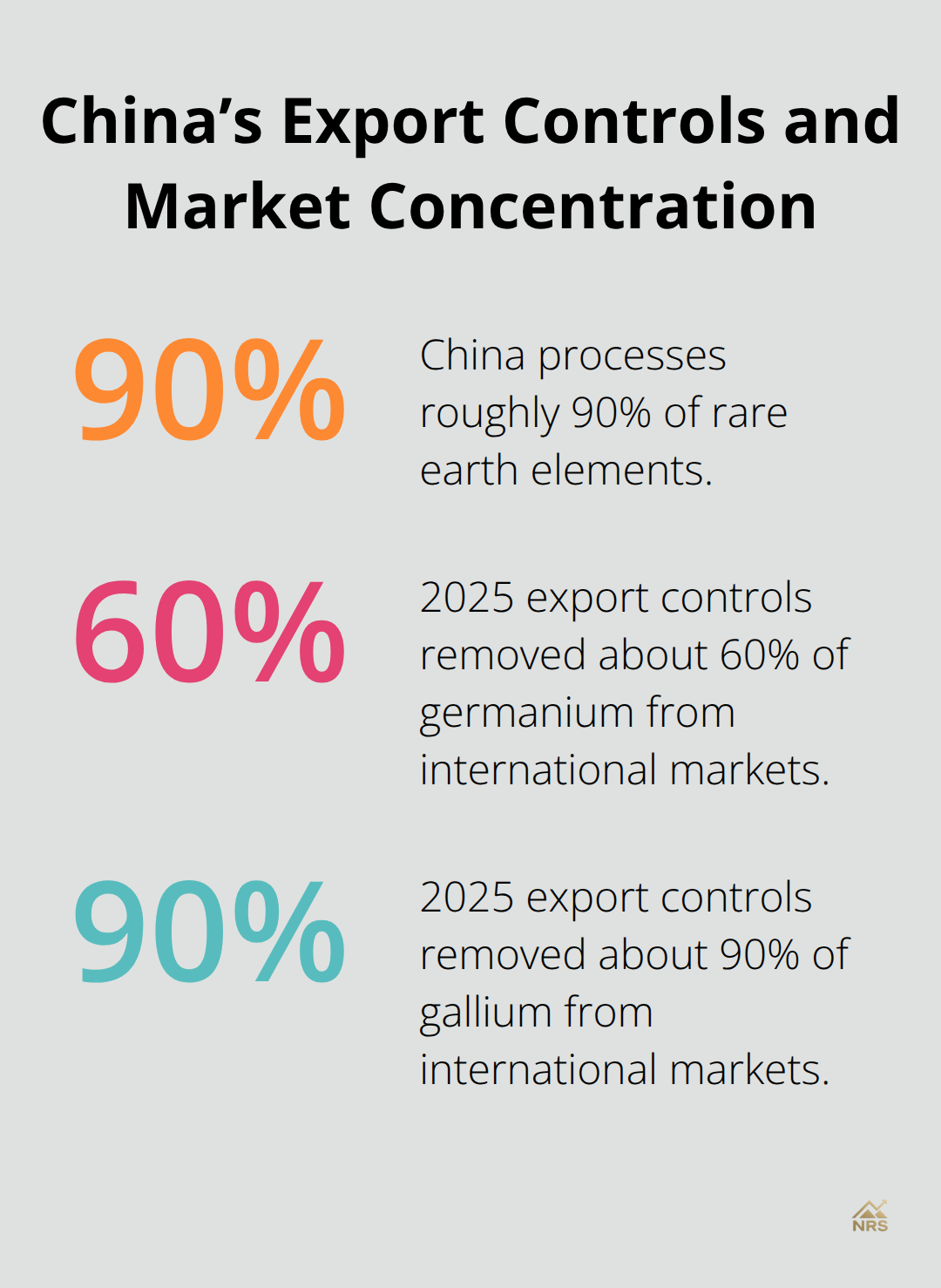
China’s control over critical mineral refining represents the real vulnerability in global metal markets. The country processes roughly 90 percent of rare earth elements and leads refining for 19 of 20 key energy-related minerals. This concentration means that when geopolitical tensions rise, entire industries face paralysis. In 2010, China restricted rare earth exports to Japan during a territorial dispute. In 2023, Beijing imposed licensing restrictions on gallium and germanium. In 2025, China broadened export controls to twelve rare earth elements, effectively removing about 60 percent of germanium and 90 percent of gallium from international markets. These weren’t theoretical threats-they shut down production lines and forced manufacturers to scramble for alternatives.
The Real Cost of Supply Chain Concentration
The World Bank reported in 2023 that geopolitical incidents raise corporate supply chain disruption probability by 47 percent compared to the 2010–2020 average, with recovery extending to roughly 8.3 months. That’s not a minor inconvenience. A semiconductor manufacturer losing access to critical minerals faces months of production delays and revenue losses that dwarf the cost of diversification. Non-state-owned enterprises suffer disproportionately because they lack the political connections that shield state-backed competitors. Research on Chinese A-share listed companies from 2008–2023 shows that firms with higher-ranked executive political connections experience notably lower exposure to geopolitical shocks in supply chain risk. Private companies cannot match that protection, which means they must invest aggressively in redundancy and alternative sourcing.
Resource Nationalism Tightens the Noose
Exporting countries increasingly weaponize their mineral wealth. Indonesia banned nickel ore exports in 2020 to force domestic smelting and capture more value. Zimbabwe restricted chromium exports. Russia’s 2022 occupation of Ukraine affected 63 percent of Ukrainian coal mines and significant deposits of lithium, titanium, uranium, graphite, manganese, and rare earth elements. These events signal a structural shift toward resource nationalism. The EU’s Critical Raw Materials Act caps reliance on any single supplier at 65 percent and actively promotes European mining and processing capacity. The U.S. Minerals Security Partnership, launched with allies including Australia, Canada, Japan, and South Korea, explicitly aims to reduce dependence on China through co-financed projects and trusted supply chains.
Allied Nations Build Alternative Capacity
Investors must track which countries tighten export controls and which allies construct alternative refining capacity. Greenland holds deposits covering 39 of the 50 critical minerals on the USGS list, with roughly 1.5 million metric tons of rare earth element reserves that could reshape global supply. Australia supplied about half of global lithium in 2023 and ranks among the top producers of cobalt, manganese, and rare earth elements. Canada holds more than half of the minerals on the U.S. critical list and expands mining and processing operations. These shifts create both risks and opportunities for investors willing to monitor policy changes across allied nations. The geopolitical competition for mineral control intensifies, and understanding which regions strengthen their processing infrastructure determines which supply chains remain resilient when tensions spike.
Building a Resilient Portfolio Against Geopolitical Shocks
Source Your Metals from Allied Nations
Diversification across suppliers sounds simple until you realize most investors concentrate their exposure in the wrong places. World Bank data showing that geopolitical incidents increase corporate supply chain disruption probabilities by 47 percent means that companies and investors relying on single-source supply chains face real financial damage. The practical strategy isn’t spreading bets randomly-it’s mapping which allied nations build refining capacity and positioning yourself in those supply chains before geopolitical tensions spike prices.
Australia controlled roughly half of global lithium production in 2023 and ranks among the top producers for cobalt, manganese, and rare earth elements. Canada holds more than half of the minerals on the U.S. critical list and continues expanding mining operations. These aren’t speculative plays; they’re structural responses to China’s 70 percent market share in rare earth refining. When you evaluate metal investments, check whether the company sources from allied nations with active capacity expansion or from politically fragile regions where export controls can trigger overnight disruptions.
The Minerals Security Partnership between the U.S., Australia, Canada, Japan, South Korea, and the EU explicitly finances projects to build trusted supply chains. This signals which regions will remain accessible during future crises.
Track Export Controls and Leadership Shifts
Monitoring geopolitical risk requires abandoning passive approaches and tracking three concrete indicators: export control announcements, political leadership changes in resource-rich nations, and capacity announcements from allied refiners. China’s 2025 expansion of export controls to twelve rare earth elements removed 60 percent of germanium and 90 percent of gallium from international markets within weeks-this wasn’t hidden information, but most portfolios didn’t adjust fast enough.
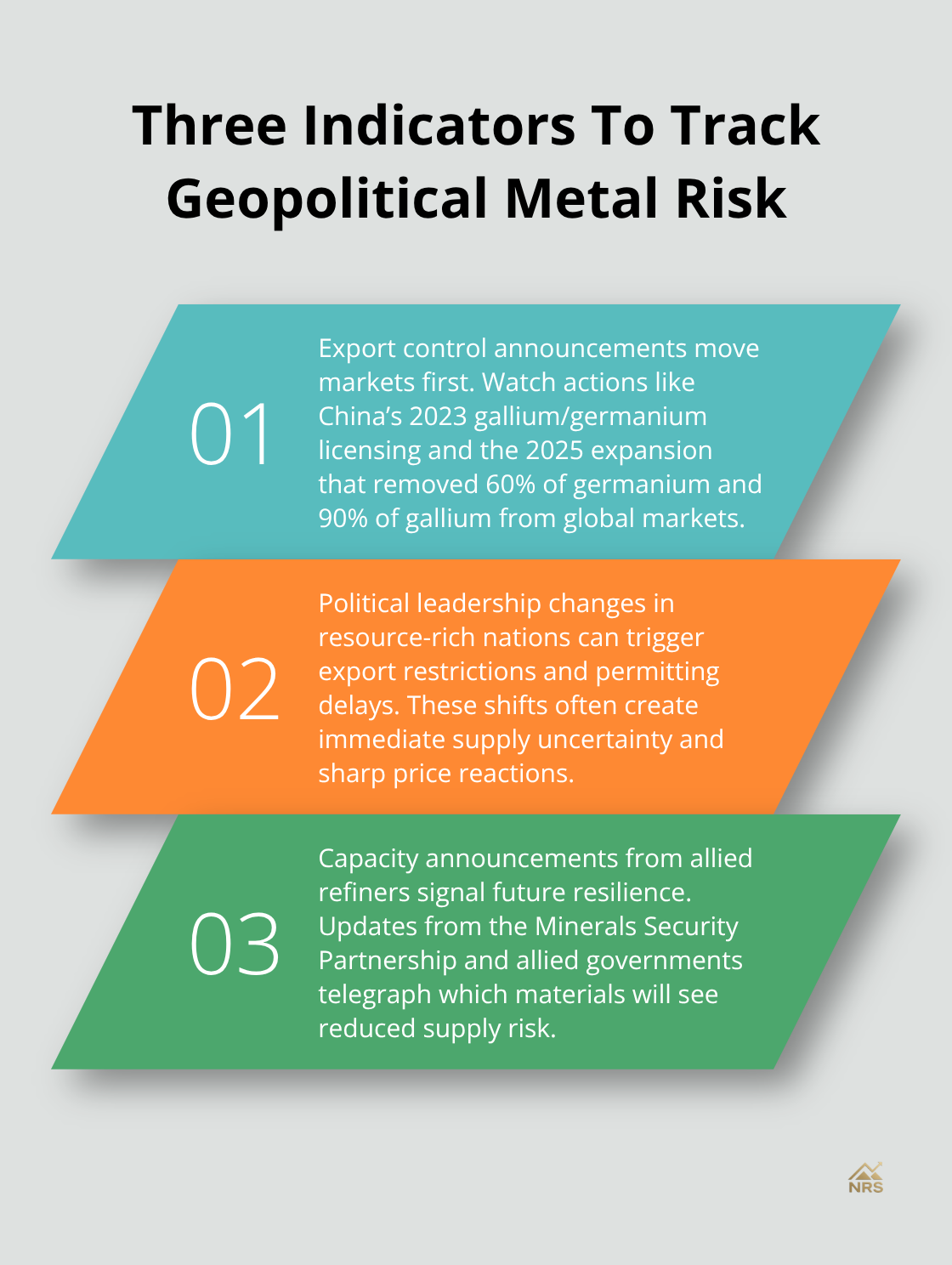
Subscribe to USGS mineral supply reports, track EU Critical Raw Materials Act implementation timelines, and monitor U.S. Defense Production Act funding announcements, which telegraph which minerals face strategic investment. The Geopolitical Risk Index measures media coverage of warfare and interstate confrontation-rising index values correlate with supply chain stress before prices fully reflect the risk.
Assess Political Stability and Institutional Commitment
Evaluate which resource-producing nations maintain stable governance structures, transparent permitting processes, and historical records of honoring contracts through political transitions. Greenland’s strategic importance stems partly from its 1.5 million metric tons of rare earth element reserves, but political uncertainty around Denmark’s sovereignty and competing Chinese interests create execution risk that must factor into your thesis.
Ukraine holds Europe’s largest lithium and titanium reserves, yet Russia’s occupation of 63 percent of Ukrainian coal mines demonstrates how geopolitical events instantly transform reserve estimates into inaccessible assets. Position capital in nations where allied governments actively support mining and processing infrastructure-Australia’s Critical Minerals Facility allocated 4 billion dollars specifically to fund projects meeting high environmental and governance standards, reducing political reversal risk compared to nations lacking institutional commitment.
These supply chain realities shape which investment opportunities survive geopolitical shocks. The next section examines how price volatility in resource metals reflects these structural vulnerabilities and creates tactical opportunities for informed investors.
Market Volatility Spikes When Geopolitical Risk Materializes
How Supply Disruptions Trigger Price Swings
Geopolitical tensions move commodity prices violently, not gradually. When China announced export controls on germanium and gallium in 2023, prices for these materials spiked within days as manufacturers confronted genuine supply chain disruption. The World Bank’s 2023 analysis showed that geopolitical incidents increase supply chain disruption probability by 47 percent compared to the 2010–2020 baseline, but this statistic understates the price impact. Supply chains fail at chokepoints. When a single chokepoint closes, prices for materials flowing through that chokepoint can double or triple in weeks. Russia’s 2022 invasion of Ukraine immediately affected significant deposits of lithium, tantalum, cesium, and strontium. Lithium prices responded violently because Ukraine holds Europe’s largest reserves and investors suddenly faced the reality that geopolitical occupation transforms reserves into inaccessible assets.
Leading Indicators Beat Lagging Price Signals
Investors who wait for official supply disruption announcements arrive too late. You must track geopolitical risk indicators before prices fully adjust. The Geopolitical Risk Index measures media coverage of warfare, terrorism, and interstate confrontation and provides a leading signal for supply chain stress before commodity markets price in the full damage. Rising index values correlate with inventory liquidation and financing constraints that compress prices downward initially before supply shortages drive them upward. Position yourself ahead of this volatility by monitoring allied nation capacity announcements and export control timelines rather than reacting to price movements after the fact.
Allied Capacity Expansion Reshapes Price Patterns
Allied nations now actively build refining capacity specifically to insulate themselves from geopolitical shocks, and this structural shift creates predictable price patterns for informed investors. Australia supplied roughly half of global lithium production in 2023 and continues expanding cobalt, manganese, and rare earth element extraction. Canada holds more than half of the minerals on the U.S. critical list and accelerates mining operations through Defense Production Act funding. These capacity expansions prevent single-nation export controls from triggering the catastrophic price swings that occurred during China’s 2010 rare earth restrictions to Japan.
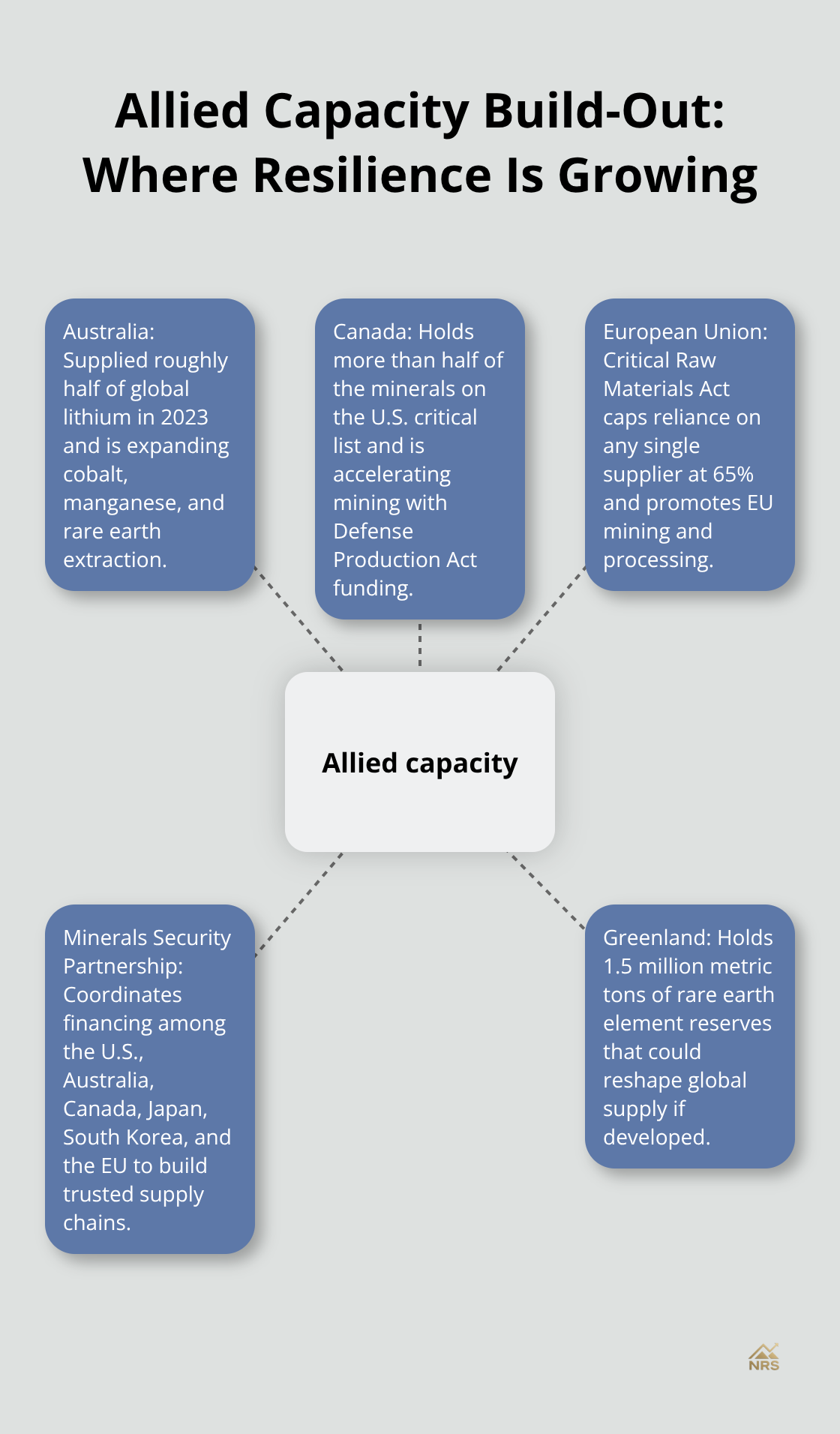
The EU’s Critical Raw Materials Act caps reliance on any single supplier at 65 percent and actively promotes European mining and processing, which means future geopolitical tensions in China will trigger smaller price movements than historical precedent suggests.
Greenland and New Frontiers Shift Supply Expectations
Volatility becomes more distributed across multiple materials and regions rather than concentrated in single chokepoints. Greenland’s 1.5 million metric tons of rare earth element reserves remain largely undeveloped, but U.S. backing for projects like Tanbreez signals that Western allies will accelerate development timelines if geopolitical tensions with China intensify. Investors should track capacity announcements from the Minerals Security Partnership, which coordinates financing across the U.S., Australia, Canada, Japan, South Korea, and the EU to build trusted supply chains. When allied nations announce new refining capacity or offtake agreements, prices for those specific materials typically compress because supply uncertainty declines.
Positioning Capital Around Policy Signals
Resource-producing nations impose export restrictions and leadership transitions create permitting delays that spike prices sharply. The actionable strategy is straightforward: monitor which allied nations expand refining capacity and position capital in supply chains tied to regions with active government support and transparent permitting processes rather than betting on price movements alone.
Final Thoughts
Geopolitical risk metals demand active portfolio management, not passive exposure. China controls 90 percent of rare earth refining, allied nations are building alternative capacity, and export controls can remove entire material categories from international markets within weeks. Investors who ignore these dynamics face supply chain disruptions that extend recovery timelines to 8.3 months and trigger disruption probabilities 47 percent higher than historical averages.
Source metals from allied nations actively expanding refining capacity-Australia, Canada, and emerging projects in Greenland backed by the Minerals Security Partnership. Monitor export control announcements, leadership transitions in resource-producing nations, and capacity timelines from allied refiners rather than waiting for price signals to confirm disruptions. Evaluate political stability by tracking which governments maintain transparent permitting processes and active support for mining infrastructure, since nations like Australia allocating 4 billion dollars to critical minerals projects signal lower execution risk than regions lacking institutional backing.
The geopolitical competition for mineral control intensifies, and this creates both risks and opportunities for investors willing to act on policy signals. Allied capacity expansion reduces the severity of future price swings compared to historical precedent, while Greenland’s 1.5 million metric tons of rare earth reserves and Australia’s lithium production leadership reshape supply expectations across multiple regions. Access our market analysis to stay informed on how geopolitical developments reshape resource markets before prices fully adjust, and position your capital strategically by understanding which supply chains remain resilient when tensions spike.