
























As of Jun 12, 2026, at 9:24 AM EDT, the live Gold spot price for 1 ounce of Gold in U.S. dollars (USD) is $4,215.97, 1 gram of Gold is $135.55, and 1 kilogram of Gold is $135,546.58. The gold spot price can fluctuate by the second, driven by investment demand and supply and other factors.
Gold Spot Prices
Gold Price | Price | Change |
Gold Price Per Ounce | $4,225.32 | +$5.51 |
Gold Price Per Gram | $135.85 | +$0.18 |
Gold Price Per Kilo | $135,847.35 | +$177.15 |
Live Metal Spot Prices (24 Hours) Last Updated: 06/12/2026 at 7:56 AM EDT
Current Gold Price June 12, 2026: Where the Market Stands
The current gold price on June 12, 2026, shows bullion stabilizing after a turbulent stretch for precious metals. The gold spot price on June 12 2026, sits at $4,225.32 per ounce, edging higher on the session even as the metal heads toward a second straight weekly decline. For investors tracking the gold price on June 12, 2026, USD per ounce, today’s modest gain offers a pause rather than a clear trend reversal.
The broader gold price rally in the June 2026 precious metals market narrative has cooled in recent sessions. Gold prices fell on Friday and headed for a second consecutive weekly loss, pressured by persistent inflation concerns and growing expectations of a U.S. Federal Reserve interest rate hike, while investors weighed renewed hopes for a U.S.-Iran peace agreement. The metal recently dropped to a six-month low on Thursday, but ended 3.5% higher after U.S. President Donald Trump said Washington and Tehran could sign a peace agreement as soon as this weekend, potentially reopening the Strait of Hormuz and easing concerns over global energy supplies.
That late rebound underscores how sensitive the current gold spot price, as of June 12, 2026, remains to geopolitical headlines. While the diplomatic breakthrough lifted risk sentiment, Iranian officials said no final agreement had yet been reached, leaving uncertainty about the region’s outlook.
Gold Price Drivers June 12, 2026: What’s Moving the Market
Understanding the gold price drivers on June 12, 2026, requires looking at three intersecting forces: monetary policy expectations, inflation data, and geopolitics.
1. Federal Reserve Rate-Hike Fears
The single biggest weight on the gold price June 12 2026, is the shifting outlook for U.S. interest rates. Gold, which is often viewed as a hedge against inflation and geopolitical uncertainty, has struggled in recent weeks as investors increasingly focus on the prospect of tighter monetary policy. The mechanics are straightforward: higher interest rates raise the opportunity cost of holding non-yielding bullion, reducing its attractiveness relative to interest-bearing assets.
2. Hot Inflation Data
Fresh economic readings reinforced the hawkish narrative. Producer prices rose more than expected in May, posting the largest annual increase in three-and-a-half years as higher energy costs filtered through the economy. As a result, the data prompted traders to increase bets that the Federal Reserve could resume policy tightening later this year, with markets pricing roughly a 60% chance of a rate increase by December.
3. Geopolitics and the Iran Peace Outlook
Geopolitical de-escalation has cut both ways for the gold spot price per ounce on June 12, 2026. Broader market sentiment improved on hopes for a diplomatic breakthrough. Oil prices fell sharply after Trump’s comments, while global equity markets rallied. A calmer geopolitical backdrop typically reduces safe-haven demand for gold, but the unresolved status of any final deal has kept a floor under prices.
UBS Trims Gold Forecasts on Delayed Fed Easing
Adding to the cautious tone, UBS has revised its outlook. UBS has lowered its gold price forecasts by $300-900/oz, citing a “double whammy” of stronger US economic data and a delayed Fed easing timeline now pushed to 2027. The bank’s strategists noted that gold has faced renewed pressure as resilient labor market data and higher real yields prompted markets to shift expectations toward a possible rate hike this year.
In the near term, UBS noted that momentum indicators suggest prices “may continue to gravitate toward the USD 3,850-4,000/oz range.” The bank also pointed out that the metal’s “muted response to the escalation between the US and Iran has encouraged some profit-taking,” leaving prices more exposed to traditional macro drivers like real yields and the dollar.
Yet the longer-term thesis remains intact. Despite the near-term cuts, UBS remains “constructive on gold over the next 12 months,” with its base case assuming the Fed cuts rates by up to 50bps in 2027 alongside below-trend US growth. The bank also flagged “scope for renewed US dollar weakness” given large fiscal and external deficits.
Critically for natural resource investors, central banks continue to underpin demand. Central bank demand remains a key pillar, with UBS expecting annual buying to stay within the 750-1,000 metric ton range. Recent activity confirms the trend, as preliminary May data showed the People’s Bank of China adding 10 metric tons and Uzbekistan’s central bank purchasing nearly 9 metric tons. UBS concluded that weakness toward $3,850-4,000/oz “may ultimately prove to be opportunities to build exposure rather than reasons to abandon it.”
Other Precious Metals at a Glance
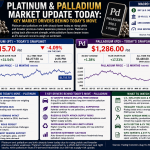
Gold wasn’t moving alone. Among other precious metals, spot silver fell 0.5% to $67.00/oz, while platinum rose 0.6% to $1,734.08/oz. The mixed performance across the complex reflects the same tug-of-war between rate-hike fears and residual safe-haven interest shaping the gold price rally in the June 2026 precious metals market.
What This Means for Natural Resource Investors
The gold price June 12 2026 USD per ounce picture is one of consolidation within a longer uptrend. Three takeaways stand out:
- Near-term caution is warranted. With roughly a 60% market-implied chance of a December Fed hike and producer-price inflation running hot, the path of least resistance could remain choppy.
- Central bank buying remains a structural support. Sustained official-sector demand of 750-1,000 metric tons annually provides a durable demand floor that distinguishes this cycle from previous corrections.
- Pullbacks may be opportunities. Even institutions trimming targets, like UBS, frame weakness toward the $3,850-4,000 zone as a potential accumulation area rather than a reason to exit.
For investors in gold miners, royalty companies, and physical bullion, the current gold spot price June 12 2026 reinforces a familiar message: short-term volatility driven by Fed expectations and geopolitics is playing out against a constructive medium-term backdrop.