

























Uranium demand is climbing as nuclear energy gains momentum worldwide. We at Natural Resource Stocks track the uranium price trajectory closely because it signals real opportunities for investors.
This guide breaks down current market conditions, expert price forecasts, and actionable strategies for building uranium exposure. You’ll find concrete data and practical steps to evaluate uranium stocks effectively.
Where Uranium Prices Stand Right Now
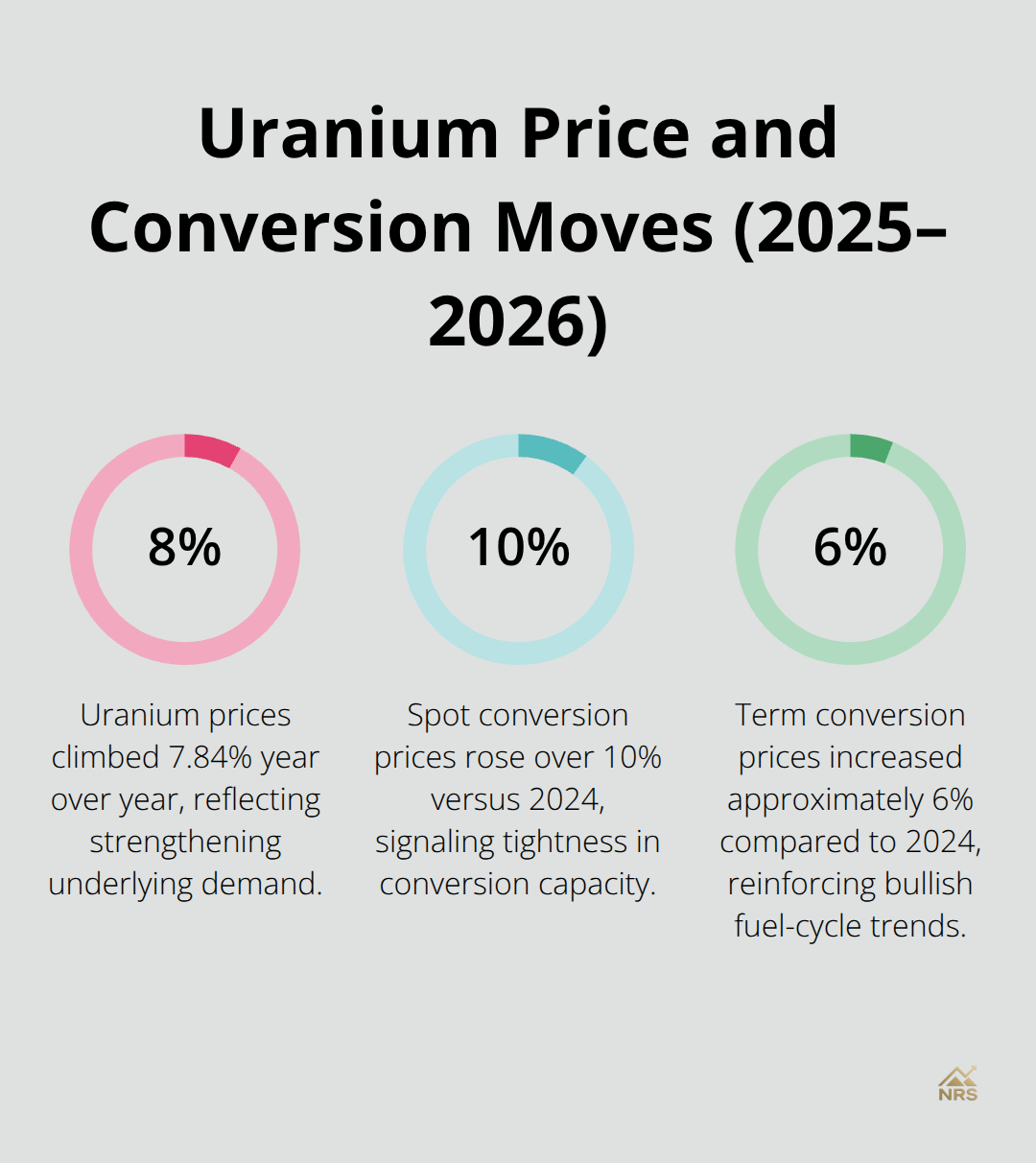
Uranium traded at 85.25 USD per pound on June 26, 2026, marking a relatively stable position after months of narrow trading ranges. Prices have climbed 7.84% over the past year, signaling genuine underlying demand strength rather than speculative volatility. The market sits far below the 148 USD per pound peak reached in May 2007, which means substantial historical precedent exists for much higher valuations when supply tightens and demand accelerates. Forecasters expect uranium to reach 90.31 USD per pound within 12 months, implying meaningful upside from current levels if geopolitical tensions persist and AI datacenter expansion continues to drive nuclear power adoption. This isn’t hype-major technology companies including Meta, Amazon, and Microsoft have already signed agreements to secure fresh nuclear capacity for future AI operations, creating tangible demand signals that utilities cannot ignore. The conversion market tells an equally bullish story, with conversion prices rising over 10% on spot contracts and approximately 6% on term contracts compared to 2024 levels.
Supply Constraints Are Real, Not Theoretical
Kazakhstan, Canada, and Australia control the majority of global uranium production, and disruptions in any of these regions immediately cascade through pricing. In 2025, supply risk intensified due to geopolitical uncertainty, energy security concerns, sanctions on Russia, the Niger mine suspension, and Kazakhstan-related supply chain challenges. UxC estimates cumulative uncovered uranium requirements of approximately 3.1 billion pounds through 2045, revealing a substantial structural deficit. About 116 million pounds were placed under long-term contracts in 2025, yet this remained below the replacement rate needed to cover future reactor demand, leaving potential uncovered requirements that spot market buyers must address. Utilities increasingly pursue long-term contracts to lock in supply, meaning spot market volatility will likely remain elevated as competition for immediate delivery intensifies. The long-term contracting backlog represents a substantial opportunity for proven, low-cost suppliers operating in geopolitically favorable jurisdictions-exactly the kind of specificity you need when evaluating uranium mining stocks.
Demand Drivers Multiply Across Sectors
The IAEA reported 438 operable reactors worldwide with 72 under construction, reflecting robust near- to mid-term growth. More importantly, 38 countries now pledge to triple their nuclear capacity by 2050, with Italy signaling intent to approve a legal framework to restore nuclear power. This represents policy-level commitment, not speculation. The IEA World Energy Outlook 2025 highlights unprecedented energy security risks as electricity demand will rise by at least one-third by 2035, forcing governments and corporations to prioritize stable baseload generation.
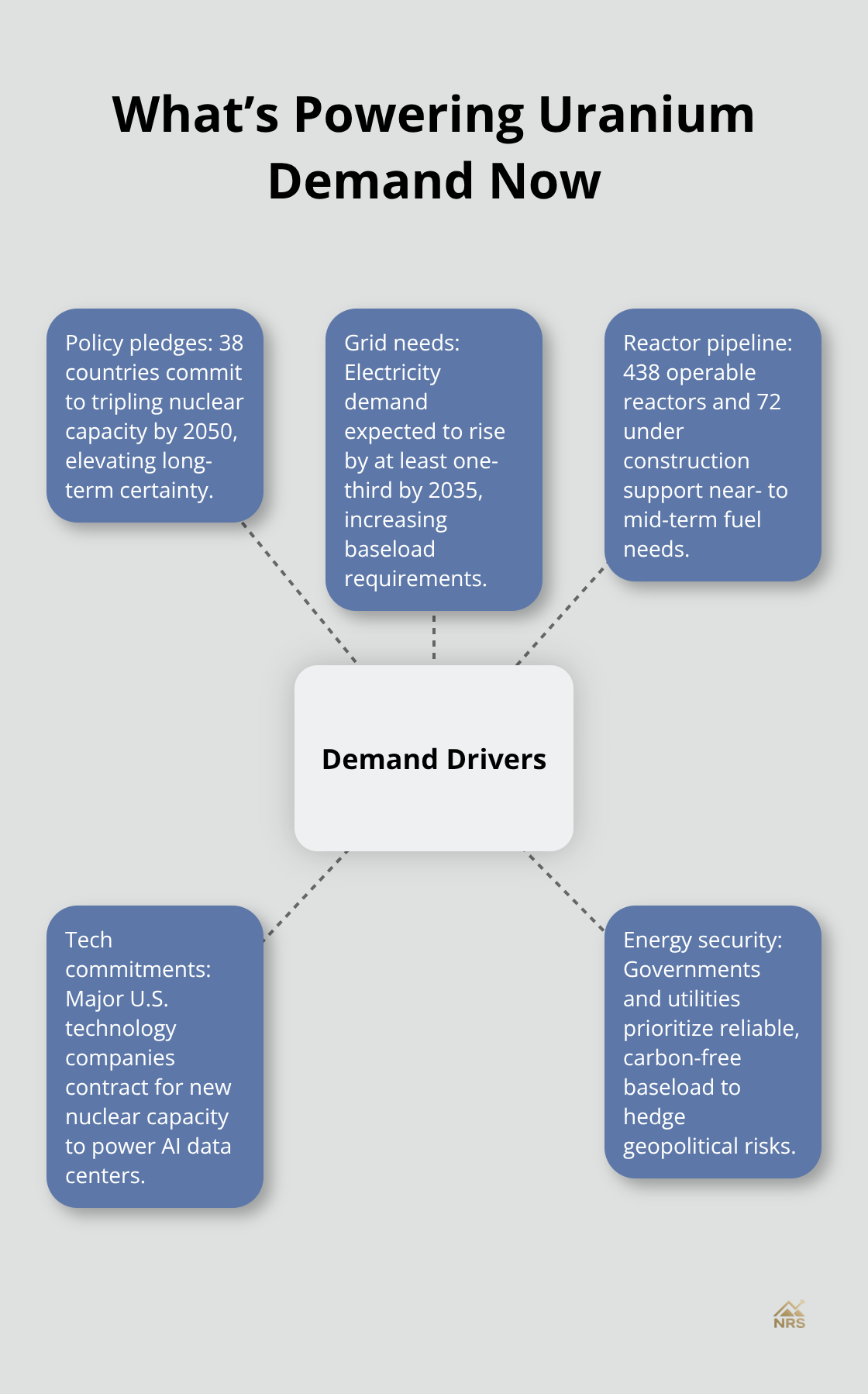
Utilities increasingly view nuclear energy as essential for climate security, energy security, and national security due to its carbon-free, reliable characteristics. Demand growth proves durable and includes near-term reactor restarts and life extensions, not just long-term new builds projected decades ahead. This multi-source demand acceleration-governments, utilities, and technology companies simultaneously pulling uranium-creates a fundamentally different market backdrop than the depressed conditions that followed the Fukushima disaster in 2011.
What These Market Signals Mean for Your Strategy
The convergence of supply tightness and accelerating demand creates a window for investors to identify uranium stocks positioned to benefit from higher prices and increased contracting activity. Utilities that secure long-term contracts at favorable terms will outperform those relying on volatile spot purchases. Mining companies with low production costs and assets in stable jurisdictions will capture disproportionate margins as prices rise. The 12-month price forecast of 90.31 USD per pound provides a reasonable near-term target, but the real opportunity lies in recognizing that current market conditions favor producers with contracted supply and geopolitically resilient operations. Understanding which uranium stocks possess these characteristics requires analyzing their contract portfolios, production costs, and jurisdictional exposure-factors that separate winners from laggards in commodity cycles.
Where Uranium Prices Head Over the Next 12 Months
The 12-Month Price Forecast and Near-Term Trading Range
Uranium will trade at 90.31 USD per pound within 12 months according to Trading Economics macro models and analyst expectations, representing approximately 6% upside from the June 2026 level of 85.25 USD. This forecast assumes geopolitical tensions persist and AI datacenter nuclear power agreements continue materializing-both realistic scenarios given current commitments from Meta, Amazon, and Microsoft. The near-term trading range should remain anchored around the mid-80s USD per pound through the remainder of 2026, with quarterly forecasts suggesting 85.29 USD by quarter-end. This stability masks underlying tightness in the contracting market, where utilities aggressively lock in supply before prices accelerate further.
Contract Positioning Separates Winners From Laggards
Uranium stocks with long-term contracts already in place will deliver steadier returns than those dependent on spot market sales, where pricing remains volatile and subject to geopolitical shocks. Coal price movements historically create short-run disruption in uranium pricing, so monitor energy commodity correlations closely when evaluating entry points for uranium mining stocks. Real GDP shocks and changes in nuclear electricity production also influence uranium spot prices in meaningful ways, meaning macroeconomic slowdowns could temporarily suppress valuations even if underlying demand remains robust.
The Historical Context and Long-Term Opportunity
The 12-month forecast of 90.31 USD per pound sits far below the historical peak of 148 USD reached in May 2007, and this gap matters significantly for long-term investors. Rising electricity demand projected to increase at least one-third by 2035 combined with 38 countries pledging to triple nuclear capacity by 2050 creates a multi-decade structural demand floor that supports much higher uranium valuations. UxC estimates cumulative uncovered uranium requirements of 3.1 billion pounds through 2045, and annual contracting volumes remain below replacement rates, meaning producers with proven low-cost operations will command pricing power as supply tightens.
Financial Dynamics and Geopolitical Wildcards
Financial factors including interest rate movements and real exchange rates play meaningful roles in uranium spot price dynamics, so rising rate environments could temporarily pressure prices even as physical demand accelerates. Geopolitical risk remains the wildcard: supply disruptions from Kazakhstan, Niger mine suspensions, or Russia-related sanctions could trigger rapid repricing upward that current forecasts do not fully capture. Uranium stocks positioned in geopolitically stable jurisdictions with diversified assets and low production costs will outperform those exposed to supply chain fragmentation or higher extraction costs as the market tightens through 2030 and beyond.
These price dynamics and supply constraints directly shape which uranium mining companies will thrive in the coming years-a distinction that becomes clear when you analyze specific producer characteristics and their exposure to the tightening market.
Which Uranium Stocks Will Capture Value as Prices Rise
The Three Metrics That Separate Winners From Laggards
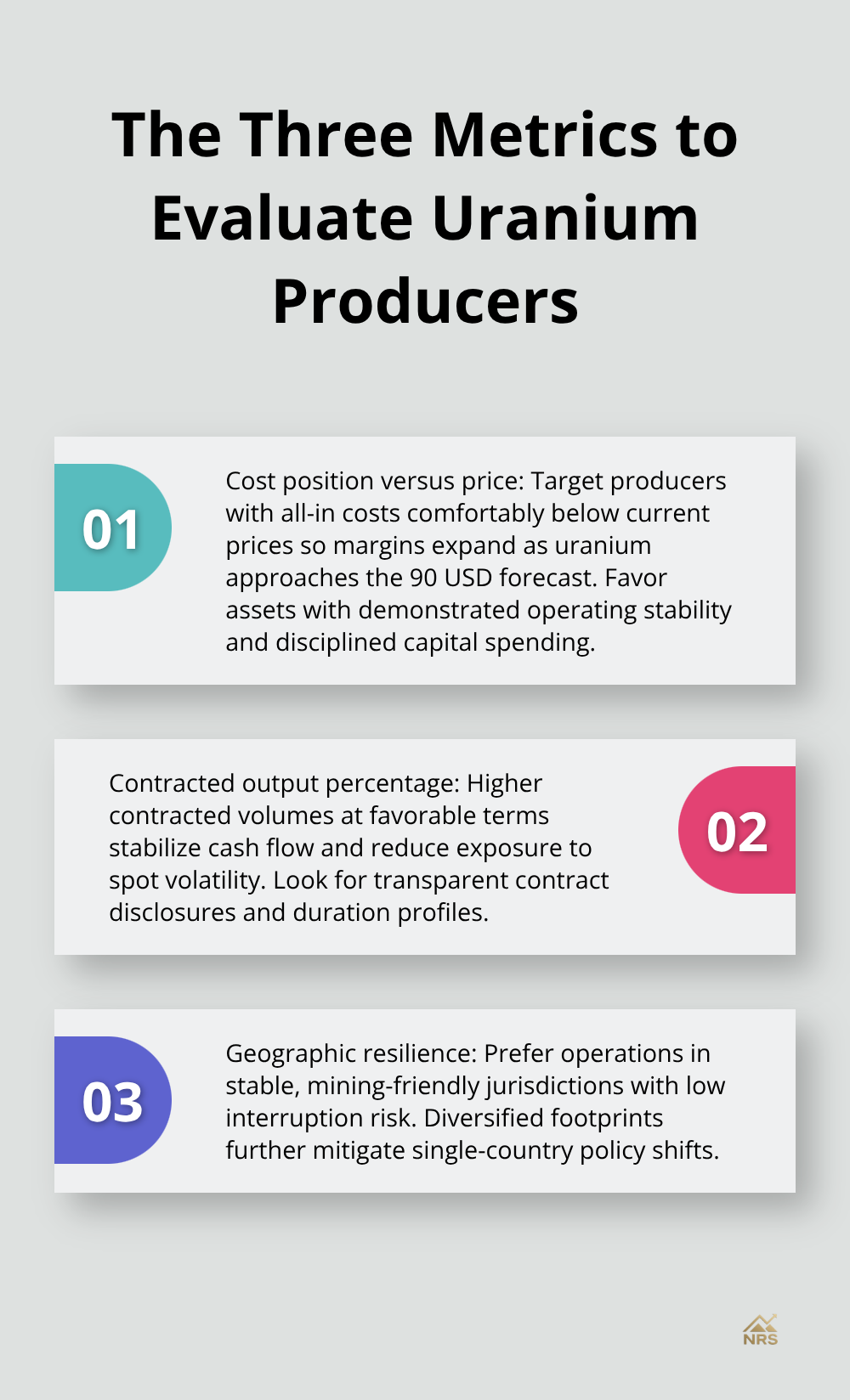
The tightening uranium market creates genuine wealth-building opportunities, but only for investors who identify producers with the right operational characteristics. Utilities actively secure long-term contracts to lock in supply at reasonable prices before scarcity intensifies competition, and mining companies positioned to fulfill these contracts will capture disproportionate margins as spot prices approach 90 USD per pound. Focus your analysis on three specific metrics: production costs relative to the current 85 USD per pound price, the percentage of annual output already contracted at favorable terms, and geographic exposure to stable jurisdictions. A producer with 70% of output contracted at prices between 75 and 85 USD per pound possesses far superior cash flow stability compared to one selling primarily on the spot market, where prices fluctuate based on geopolitical shocks and financial market movements.
Cost Structure Determines Profitability at Current Price Levels
Low-cost producers with all-in costs below 40 USD per pound will generate exceptional returns if uranium reaches the forecasted 90 USD level, while higher-cost operators face margin compression unless prices climb substantially further. Kazakhstan, Canada, and Australia dominate global supply, but within these regions, operational stability varies dramatically. Companies operating in these jurisdictions must demonstrate extraction costs that allow profitable production at current price levels while maintaining upside optionality as prices rise. Examine recent production announcements and restart timelines carefully, as companies bringing new capacity online between 2026 and 2028 will benefit from the highest prices before supply constraints ease. Production pipelines and project status data reveal which mines advance and which face delays from permafrost challenges, infrastructure gaps, or regulatory headwinds.
Contract Positioning and Geographic Resilience
Utilities increasingly prioritize supply partners whose values align with theirs and whose operations avoid interruption risk. This preference for reliable, geopolitically resilient producers means companies with diversified asset bases and proven track records of meeting contractual obligations will command premium pricing for their uranium relative to spot market rates. Producers with operations spread across multiple stable jurisdictions reduce exposure to single-country policy shifts or supply disruptions that could impact shareholder returns. The contrast between a company with 80% contracted supply and one dependent on volatile spot sales becomes stark when geopolitical tensions spike or financial markets shift rapidly.
Entry Timing and Portfolio Construction
Entry timing matters less than you might expect when selecting long-term holdings in this sector. The 12-month price forecast of 90 USD per pound assumes current conditions persist, yet geopolitical tensions and AI datacenter expansion could accelerate upside faster than consensus anticipates. Rather than timing your entry to the exact quarter, identify producers with contracted supply, low extraction costs, and operations in jurisdictions where government policy supports nuclear expansion and mining activity. Companies meeting these criteria will generate substantial shareholder value regardless of whether uranium reaches 90 USD in 12 months or takes longer to climb toward the 148 USD historical peak.
Building Balanced Exposure Across Producers
Diversification within uranium stocks means holding multiple producers across different jurisdictions and cost structures rather than concentrating exposure in a single high-leverage play. A portfolio holding a large, established low-cost producer alongside a smaller company with significant upside optionality if prices accelerate provides balanced exposure to both the base case and upside scenarios driving the market forward. This approach protects against company-specific operational risks while maintaining exposure to the structural uranium supply deficit that will support prices through 2030 and beyond.
Final Thoughts
The uranium price trajectory reflects a market fundamentally reshaped by simultaneous demand acceleration and supply constraints. Uranium trading at 85.25 USD per pound in June 2026 sits far below the historical peak of 148 USD, yet the structural forces driving prices higher remain intact. Thirty-eight countries committed to tripling nuclear capacity by 2050, utilities aggressively contract supply before scarcity intensifies, and technology giants including Meta, Amazon, and Microsoft locked in nuclear power agreements for AI datacenter operations-these concrete commitments will sustain uranium demand through the 2030s and beyond.
For natural resource investors, the investment case hinges on identifying producers positioned to capture value as prices move toward the 90 USD per pound forecast within 12 months and potentially much higher over the long term. Companies with low extraction costs, substantial contracted supply, and operations in geopolitically stable jurisdictions will outperform those dependent on volatile spot market sales. The 3.1 billion pound cumulative uncovered uranium requirement through 2045 guarantees that proven, reliable producers will command premium pricing as supply tightens.
Building a uranium-focused portfolio requires moving beyond price forecasts to evaluate operational fundamentals-production costs relative to current prices, the percentage of output already contracted at favorable terms, and geographic diversification across stable jurisdictions. Diversify across multiple producers rather than concentrating exposure in a single company, balancing established low-cost operators with smaller producers offering upside optionality. Natural Resource Stocks provides expert analysis and market insights specifically designed to help investors navigate natural resource sectors like uranium with confidence and clarity.