
























Geopolitical tensions ripple through commodity markets faster than most investors realize. A conflict in one region can spike oil prices globally, tighten metal supplies, and disrupt agricultural flows within days.
At Natural Resource Stocks, we’ve seen how geopolitical spillovers to commodity prices reshape portfolios and create both risks and opportunities. Understanding these transmission mechanisms helps you protect your investments and spot where real value emerges.
How Price Shocks Spread from Conflict Zones
Geopolitical shocks hit commodity markets through concrete, measurable channels. When the Russia-Ukraine conflict erupted in early 2022, volatility spillovers across commodities jumped from roughly 35% to 85% within weeks, according to research using time-varying parameter VAR analysis on daily commodity prices from 2020 to 2022. This wasn’t theoretical-it was immediate.

Crude oil became a net transmitter of price pressure, while wheat and soybeans absorbed the shock as net receivers. Copper and silver emerged as transmission hubs, spreading returns across entire portfolios.
Energy Prices Trigger the Cascade
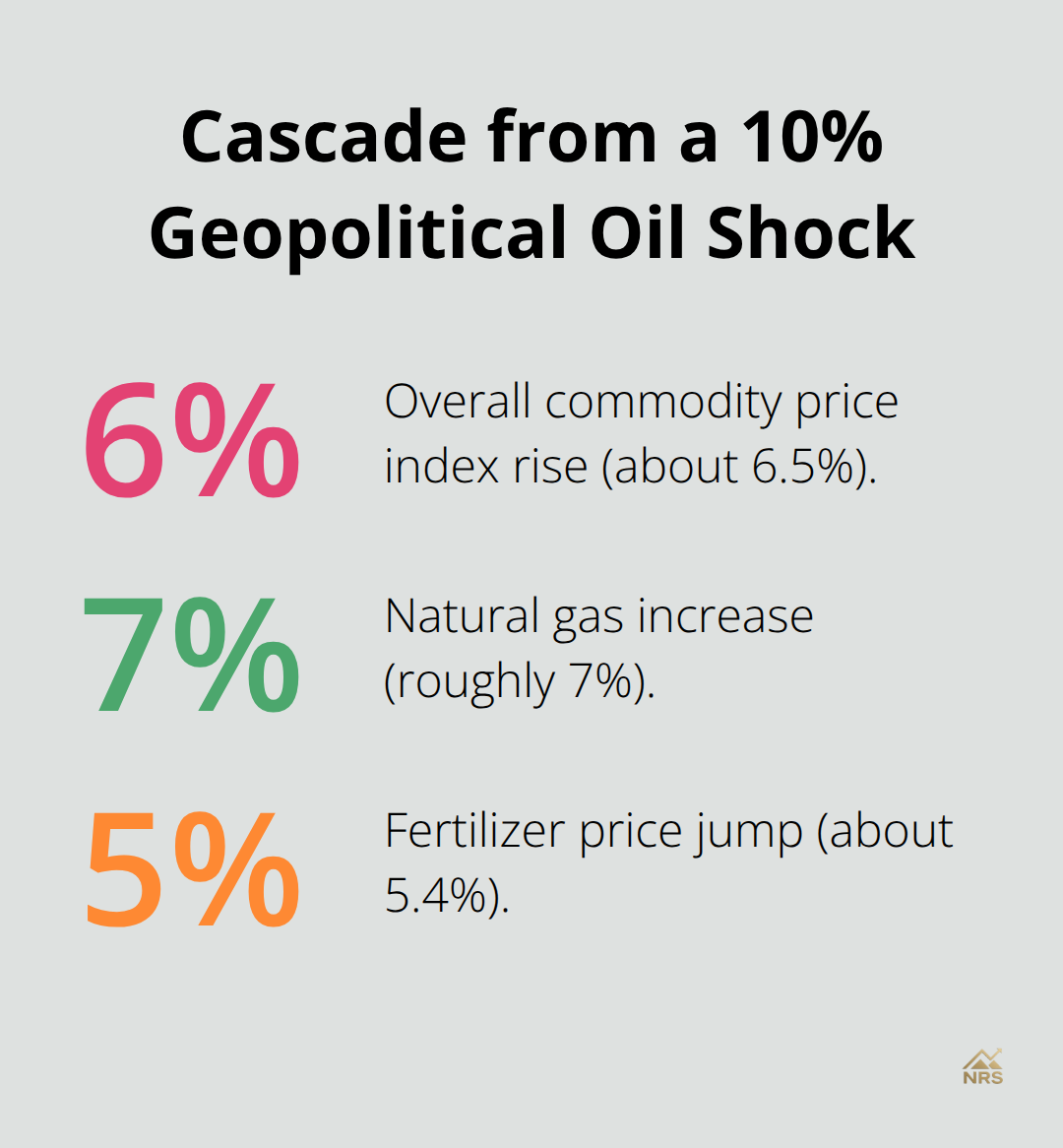
The mechanism operates in clear stages. Energy prices spike first because production and shipping routes face direct threats. Higher energy costs then ripple into transportation, manufacturing, and fertilizer production, pushing up prices across metals and agriculture. A 10% rise in oil prices driven by geopolitical shocks raises the overall commodity price index by about 6.5%, with natural gas climbing roughly 7% and fertilizer up about 5.4%, according to research by Verduzco-Bustos, Zanetti, and Richards from 2026.
The Strait of Hormuz handles around a quarter of global crude oil shipments. Any disruption there becomes a direct price lever for energy and everything downstream.
Inventory Stockpiling as Hidden Price Driver
Geopolitical risk creates a second layer of price pressure that standard supply models miss. When uncertainty spikes, companies and governments stockpile critical inputs ahead of potential disruptions. Research shows that during geopolitical oil shocks, inventory dynamics reveal an initial drawdown followed by persistent precautionary stockpiling that keeps inventories elevated far longer than typical supply disruptions would.
A 1% production decline tied to geopolitical risk corresponds to an oil price rise of about 11.5%-far sharper than conventional supply shocks. This forward-looking behavior matters because it amplifies price moves beyond what the actual supply loss justifies. Traders and businesses price in the risk of future disruptions, not just current supply. This is why geopolitical oil price shocks produce sharper, larger price increases than regular supply disruptions.
Which Commodities React Fastest
Energy dominates the transmission chain, but metals and agriculture don’t move uniformly. Research analyzing geopolitical risk spillovers from G7 and BRICS countries to 13 major commodity futures from 2002 to March 2024 found that energy futures show the strongest spillover pathways, jumping most sharply during crises like the Russia-Ukraine invasion. Metals futures appear less affected by country-specific geopolitical shocks compared with energy and food futures.
The US, Germany, India, and Russia drive much of the cross-country spillover dynamics. When geopolitical risk spikes, higher levels associate directly with stronger market integration under stress. This means you can’t treat all commodities equally during geopolitical events.
Energy reacts first and hardest. Metals follow but with less volatility. Agricultural commodities depend heavily on which regions face direct conflict or sanctions. Monitoring which commodity group transmits versus receives shocks helps you position defensively or capture dislocations before prices normalize. Understanding these transmission patterns becomes essential as you assess where real vulnerabilities lie in your portfolio and which sectors offer protection during the next crisis.
Where Geopolitical Risk Hits Hardest Across Commodity Groups
Energy markets absorb geopolitical shocks first and most violently because production, refining, and shipping infrastructure sit directly in conflict zones. The Strait of Hormuz handles roughly 20% of global crude oil shipments, making it the single most dangerous chokepoint for commodity prices worldwide. When Iran tensions escalate, traders bid up oil futures immediately without waiting for actual disruptions. Research from 2026 by Verduzco-Bustos, Zanetti, and Richards shows that a 1% production decline tied to geopolitical risk triggers an 11.5% oil price spike, compared to much smaller responses from typical supply shocks. This outsized reaction occurs because markets price forward-looking uncertainty, not just current supply loss.
Energy Shocks Cascade Through All Commodity Markets
Natural gas follows crude oil upward within days, then fertilizer and shipping costs climb as energy inputs become expensive. A 10% geopolitical oil price increase pushes the broader commodity index up 6.5%, natural gas up 7%, and fertilizer up 5.4%. This cascade means energy shocks become universal commodity shocks. If you hold metals or agricultural positions, rising energy costs erode margins across the board. Monitor energy futures and the Geopolitical Risk index-when that index spikes sharply, energy transmits shocks to everything else within one to two weeks.
Metal Markets Face Trade Restrictions Rather Than Direct Supply Loss
Metal markets respond differently because they face trade restrictions and sanctions rather than direct supply loss. Research analyzing 13 major commodity futures from 2002 to March 2024 found that metals futures show weaker spillovers from country-specific geopolitical shocks than energy or food futures do. Copper and silver act as transmission hubs, spreading volatility across the metals complex, but the initial shock originates in geopolitical risk to major producers like Russia or disruptions to shipping routes for Australian or Chilean copper. Sanctions impose the real damage-they block exports entirely rather than reducing supply gradually.
Agricultural Commodities Depend on Border Disruptions and Fertilizer Access
Agricultural commodities face a different dynamic: they depend on border disruptions, sanctions on fertilizer inputs, and which regions face direct conflict. Ukraine and Russia together supplied roughly 30% of global wheat exports before 2022, so the invasion immediately tightened supplies. Unlike energy, which recovers quickly once geopolitical tensions ease, agricultural disruptions persist because planting cycles span months and sanctions on fertilizer can persist for years.
Tailored Hedging Strategies by Commodity Type
Your practical response differs by commodity type. For energy exposure, use short-term hedges because energy shocks reverse faster than most investors expect-once actual supply stabilizes, prices fall sharply. For metals, focus on supply chain transparency and which producers face sanctions risk; avoid concentrated positions in sanctioned regions. For agriculture, build longer-dated hedges because fertilizer costs stay elevated and crop cycles create lasting supply constraints. Track which commodity group transmits versus receives shocks in real time using spillover indices-energy transmits first, metals follow with lag, agriculture lags furthest but lasts longest. These transmission patterns reveal where vulnerabilities concentrate in your portfolio and which sectors offer protection during the next crisis.
How to Build Resilience Into Commodity Positions When Geopolitics Destabilizes Markets
The transmission patterns we outlined reveal where commodity prices break first, but knowing the vulnerability does not protect your portfolio. You need concrete tactics that acknowledge geopolitical risk operates differently than normal market cycles. Research from Verduzco-Bustos, Zanetti, and Richards shows geopolitical oil shocks produce 11.5% price increases per 1% production decline, far exceeding typical supply disruptions. This asymmetry means standard risk models underestimate exposure.
Map Exposure Against Geopolitical Hotspots
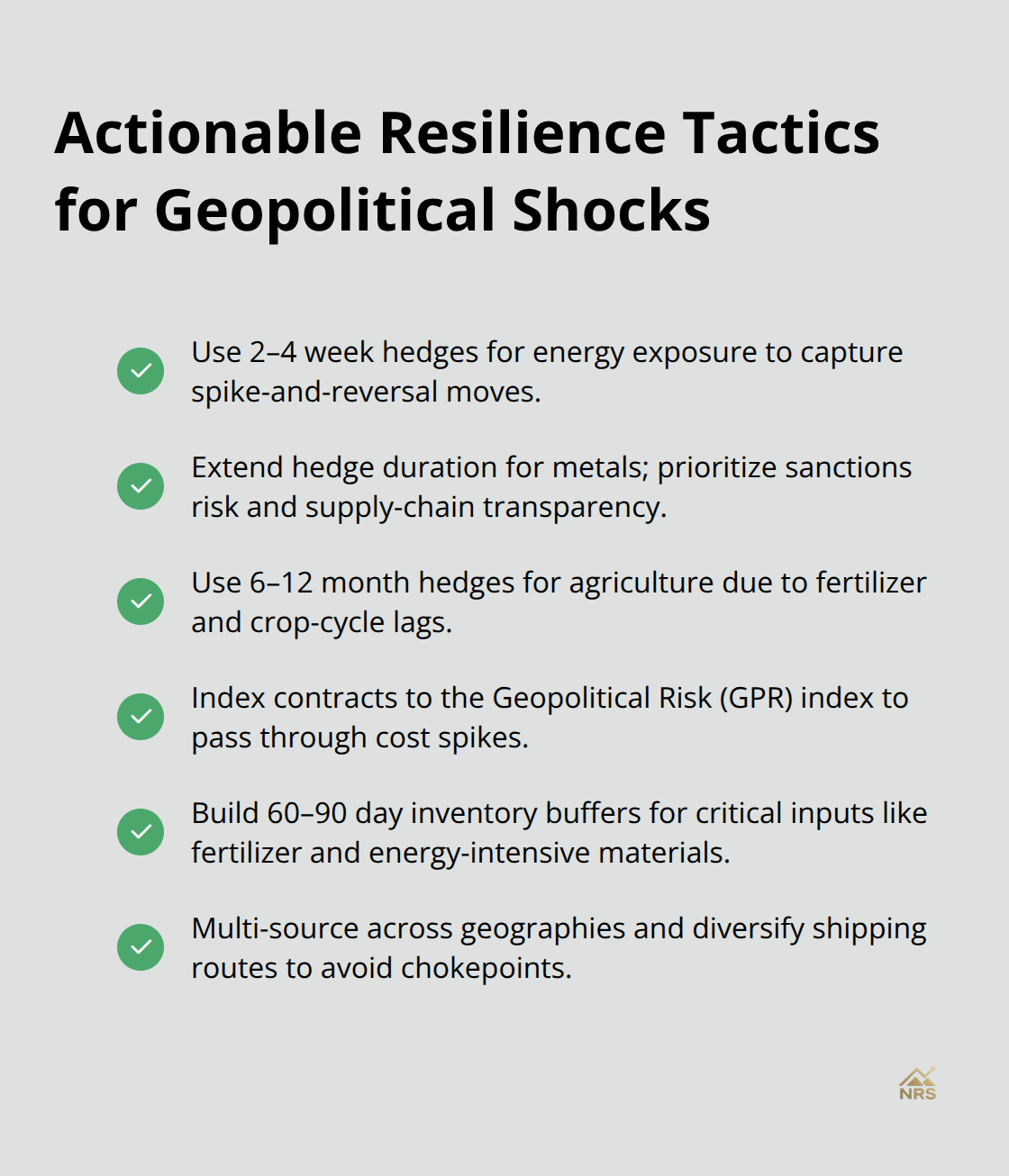
Start by mapping your commodity exposure against geopolitical hotspots rather than treating all positions equally. Energy exposure demands the shortest hedging duration because prices normalize fastest once tensions ease; a 2-4 week hedge window captures the spike and reversal. Metal exposure requires longer-dated protection focused on sanctions risk to major producers like Russia and supply chain transparency to Australian and Chilean copper operations. Agricultural positions need 6-12 month hedges because fertilizer cost elevation persists through full growing cycles.
The Geopolitical Risk index from Caldara and Iacoviello tracks daily movements and spikes two standard deviations above normal roughly nine times per decade based on major episodes including the 1990 Iraq invasion of Kuwait, 2011 Libyan civil war, 2019 Saudi Aramco attacks, and 2022 Russia-Ukraine invasion. When that index jumps sharply, energy transmits shocks within one to two weeks, metals follow with a week lag, and agriculture lags furthest. This timing cascade lets you reposition before secondary waves hit metals and agricultural positions.
Build Redundancy Into Supplier Networks
Multi-sourcing beats diversification because true diversification across commodity types still leaves you exposed when geopolitical risk spikes connectedness to 85% as happened during Ukraine. Instead, identify which countries supply each commodity you hold and build redundancy into procurement contracts. If copper represents 15% of your portfolio and you source from Chile and Peru, add Australian suppliers now before crisis forces emergency rerouting at premium prices.
Shipping route diversification matters more than most investors recognize; the Strait of Hormuz handles around a quarter of global seaborne oil trade, but alternative routes exist for metals and agriculture through different ports and trucking corridors. When tensions rise in one region, your suppliers should not face forced rerouting costs that compress margins.
Adjust Contracts to Flow Through Geopolitical Cost Spikes
Use price-adjustment clauses in contracts that index to the Geopolitical Risk index itself rather than static oil prices, so cost spikes from tensions automatically flow through and prevent margin compression surprises. Build 60-90 day inventory buffers for critical inputs like fertilizer and energy-intensive materials; this cushions price shocks and prevents stockouts during disruption windows.
Monitor country-specific geopolitical indices for your major suppliers, especially for Russia, Germany, India, and the United States which research shows drive cross-country spillover dynamics most strongly. When those indices spike, anticipate energy cost increases within 5-7 days and reposition commodity hedges accordingly rather than waiting for realized price moves. This forward-looking approach (based on how markets price uncertainty ahead of actual supply disruptions) separates portfolios that weather crises from those that suffer unexpected losses.
Final Thoughts
Geopolitical spillovers to commodity prices operate through measurable, predictable channels that reshape portfolios within days. Energy shocks transmit first and hardest, cascading into metals and agriculture with predictable timing lags. A 1% production decline tied to geopolitical risk triggers an 11.5% oil price spike, far exceeding normal supply disruptions, which means standard risk models systematically underestimate exposure when tensions escalate.
When geopolitical risk spikes, market connectedness jumps from baseline levels around 55-60 to 85% or higher during major crises. Copper and silver act as transmission hubs spreading volatility across the metals complex, while energy futures show the strongest spillover pathways. The Geopolitical Risk index spikes roughly nine times per decade during major episodes like the 1990 Iraq invasion, 2011 Libyan civil war, 2019 Saudi Aramco attacks, and 2022 Russia-Ukraine invasion, and when that index jumps, energy transmits shocks within one to two weeks.
Preparing for future geopolitical events means building redundancy into supplier networks now, not during crises. Multi-source your critical commodities across geographies that don’t share geopolitical risk, use price-adjustment clauses indexed to geopolitical risk itself rather than static prices, and build 60-90 day inventory buffers for energy-intensive inputs. We at Natural Resource Stocks track these transmission mechanisms in real time through expert analysis and macroeconomic insights to help you position portfolios that weather crises rather than suffer unexpected losses.