



























Gold bullion has outperformed most assets over the past two decades, gaining roughly 400% since 2001. At Natural Resource Stocks, we’ve seen firsthand how physical gold protects wealth when markets falter and inflation erodes purchasing power.
This guide walks you through practical gold bullion strategies that work for real investors with concrete goals. You’ll learn how to store gold safely, structure tax-efficient accounts, and build a position that matches your timeline and risk tolerance.
Why Gold Bullion Works as Long-Term Wealth Protection
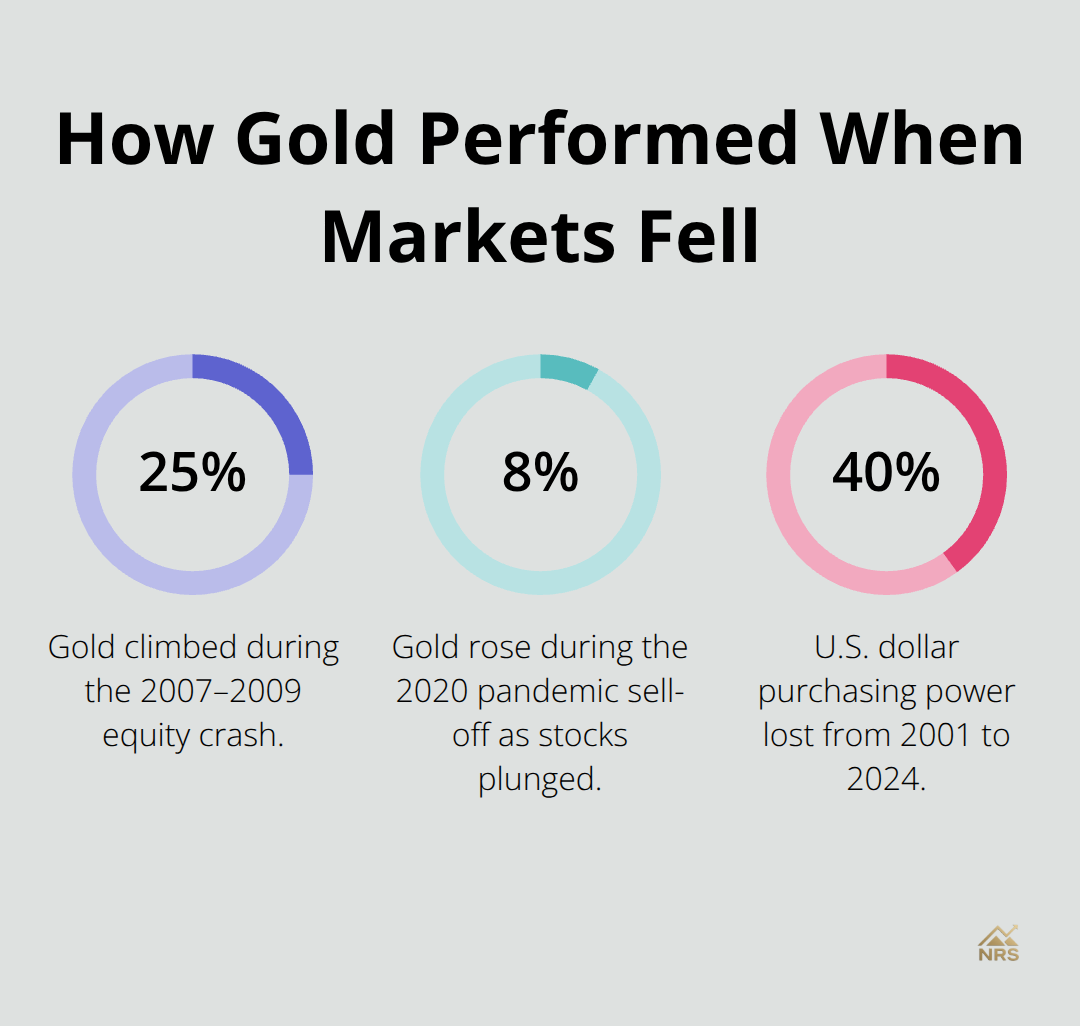
Gold bullion delivered a 400% gain since 2001, but the real story lies in what happened during the years when stocks crashed. When equities fell 57% between 2007 and 2009, gold climbed 25%. During the 2020 pandemic sell-off, while the S&P 500 dropped 34% in weeks, gold rose 8% and provided genuine portfolio stability.
JPMorgan Global Research projects gold averaging around $6,000 per ounce by the end of 2026 and potentially reaching $6,300 by end-2027, reflecting sustained institutional confidence. The strength comes from gold’s role as a debasement hedge-it holds value when central banks print money or governments devalue currencies, something that happens far more often than most investors realize.
Gold Protects Your Purchasing Power When Inflation Accelerates
Inflation erodes purchasing power at an alarming rate. A dollar saved in 2001 had roughly 40% less purchasing power by 2024 due to cumulative inflation. Gold historically moves higher as inflation accelerates because investors recognize that fixed-income investments lose ground. When inflation climbed above 8% in 2022, gold became the asset people actually wanted to own, not the one they tolerated. The mechanism is straightforward: gold has no yield, so it underperforms when real yields rise, but it outperforms dramatically when inflation expectations exceed interest-rate compensation. Central banks strategic gold purchases reflect reserve diversification by major economies amid geopolitical uncertainty in 2026.
Diversification That Actually Works During Market Stress
Adding gold to a portfolio of stocks and bonds reduces overall volatility because gold moves independently of equity prices. A portfolio split 60% stocks and 40% bonds loses roughly 20–25% during severe corrections, but that same portfolio with 5% gold and 55% stocks sees drawdowns shrink to 18–20%. The difference compounds over decades. Gold also protects against currency weakness-if the US dollar depreciates, gold denominated in dollars rises, offsetting losses for international investors. Sophisticated institutions view bullion as a structural portfolio component rather than a speculation.
Finding Your Optimal Gold Allocation
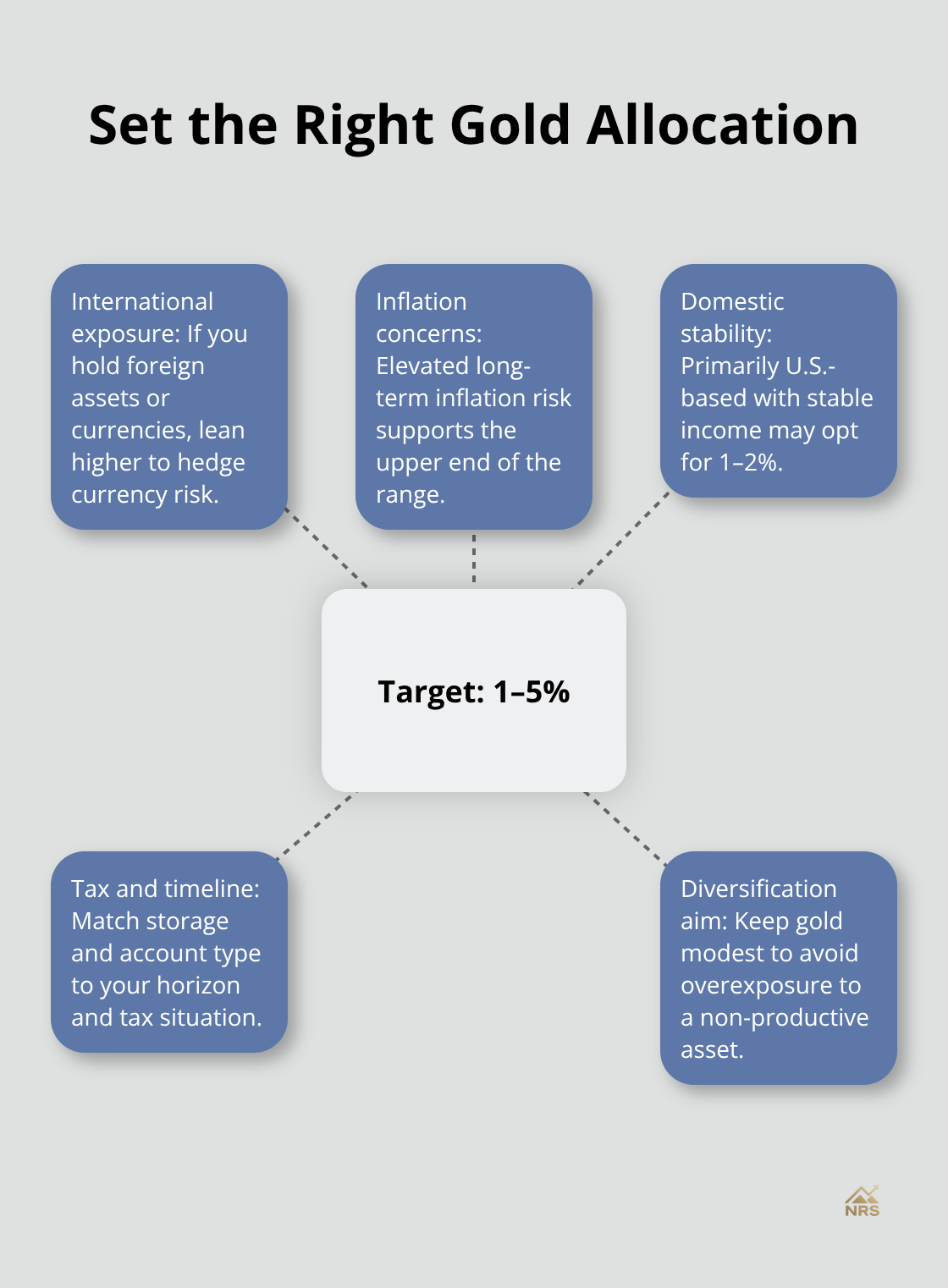
The practical allocation you should try sits between 1–5% of total portfolio value, depending on your existing international exposure and inflation concerns. This range provides meaningful downside protection without overexposure to a single non-productive asset. Your specific position depends on whether you hold foreign currency exposure, live abroad, or face heightened currency devaluation risk in your home country. Investors with significant international holdings or those concerned about long-term purchasing power erosion often lean toward the higher end of this range. Once you establish your target allocation, the next step involves selecting the right storage and ownership structure to match your timeline and tax situation.
Gold Bullion Storage and Ownership Options
Storing gold safely separates serious investors from speculators. Physical bullion requires a secure vault or allocated storage through a platform, while tax-advantaged accounts like Gold IRAs offer different benefits depending on your income and retirement timeline. The choice between these options determines your costs, liquidity, and tax efficiency over decades.
Allocated Storage Gives You Direct Ownership
Allocated storage means you own the bullion outright, verified daily through bar lists and an online register, rather than holding unallocated gold where your holdings sit in a commingled pool. BullionVault, a London-based platform with over 130,000 users across 175 countries, operates allocated vaults in Zurich, London, Toronto, Singapore, and New York. Storage and insurance costs run just 0.12% annually-for a $50,000 position, that means roughly $60 per year in total vault costs, far cheaper than physical home storage or safety deposit boxes.
The platform settles 24/7, prices gold within 0.2% of spot rates, and allows you to move holdings between vaults instantly to diversify custody risk across multiple locations. Deposits start as low as $100, though a practical minimum around $2,000 makes sense given monthly storage charges of $4 for gold. Over five years, the average user pays about 0.32% per year for gold (including dealing, storage, and insurance), dropping to roughly 0.17% per year for portfolios around $1 million.
Gold IRAs Offer Tax-Deferred or Tax-Free Growth
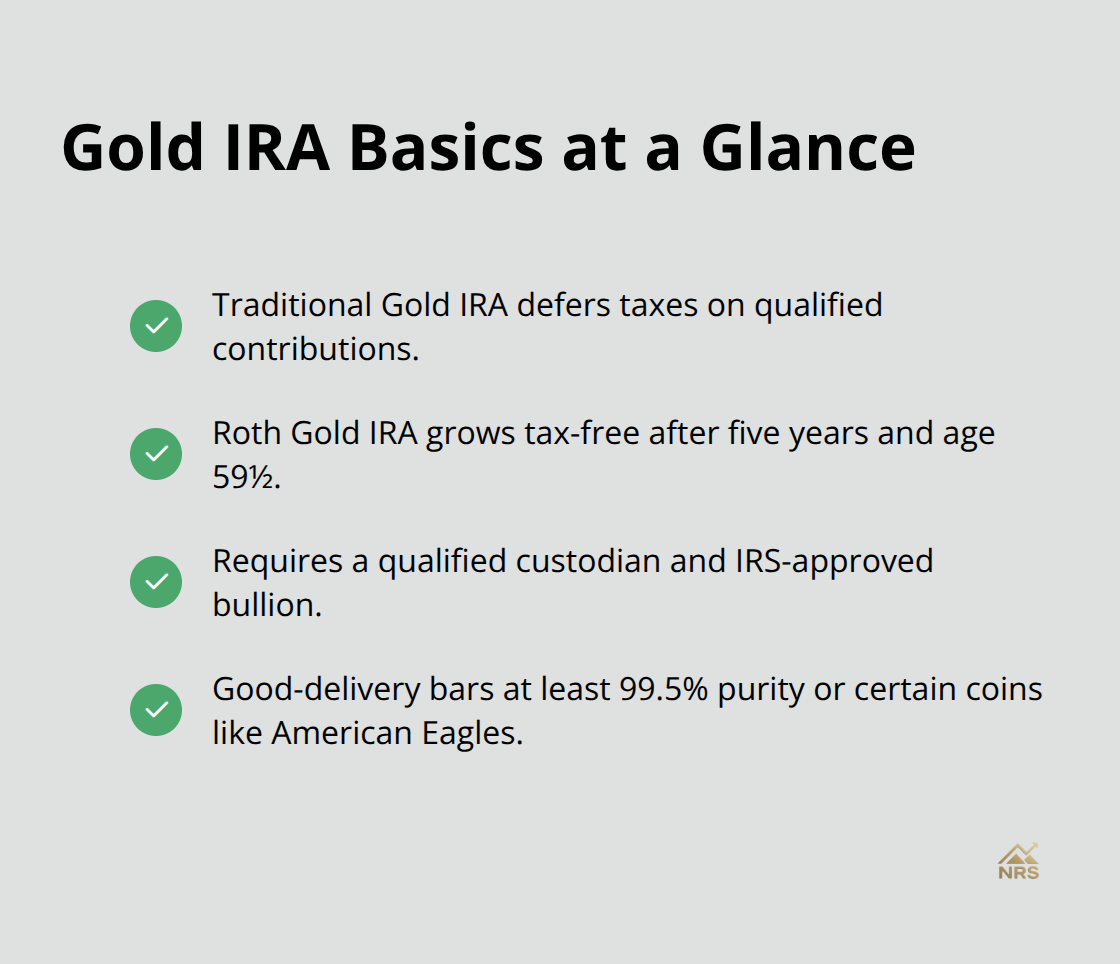
A Traditional Gold IRA lets you deduct contributions if you qualify, deferring taxes until retirement withdrawals, while a Roth Gold IRA grows tax-free if you hold it for five years and wait until age 59½ to withdraw. Gold IRAs require a qualified custodian and restrict you to IRS-approved bullion, typically good-delivery bars exceeding 99.5% purity or certain coins like American Eagles.
Coins and small bars cost roughly 7% more than spot gold due to dealer markups, so larger bars inside a Gold IRA minimize that premium. For US investors, gold held in taxable accounts faces a 28% maximum capital gains rate, meaning a $100,000 position generating $20,000 in gains triggers $5,600 in federal taxes versus $3,000 for equities. This tax drag compounds over time, so Gold IRAs or modest 1–5% allocations work better than aggressive long-term positions in taxable accounts.
International Tax Advantages Change the Equation
If you live in Germany or the EU, certain gold holdings may escape capital gains tax after holding periods, and recognized gold coins qualify for VAT exemption on purchase. This makes allocated storage platforms even more attractive than physical coins for European investors. Currency exposure also matters-gold provides a hedge when you hold non-USD assets or plan to retire abroad, depending on currency movements.
The next step involves determining how much gold fits your specific situation and establishing a disciplined entry strategy that matches your timeline and risk tolerance.
Build Your Gold Position Without Timing the Market
Most investors fail at gold because they try to catch the perfect entry price. They wait for gold to drop, miss the move entirely, or buy a lump sum at the worst possible moment. A different approach works better: systematic entry using dollar-cost averaging combined with strict rebalancing rules that remove emotion from your decisions.
Set Your Target Allocation Based on Your Situation
Start with your specific circumstances, not generic advice. If you hold significant international assets, face currency depreciation concerns, or worry about long-term inflation, try 3–5% of your portfolio in gold. If you’re primarily domestic with stable income and low inflation anxiety, 1–2% provides adequate protection without excessive non-productive assets.
Once you know your target, calculate the total dollar amount you’ll eventually own, then divide that by your entry timeline. If you want to reach a $50,000 gold position over three years, that’s roughly $1,400 per month.
Use Technical Levels and Systematic Entry
JPMorgan Global Research suggests monitoring technical levels as entry signals: add positions when gold breaks above the 200-day moving average around $4,340 per ounce, or after sustained strength above the 50-day moving average near $4,730. This rules-based approach beats trying to guess bottoms. If you can only invest $2,000 initially, use allocated storage platforms where deposits start at $100 and monthly storage costs run just $4 for gold. This makes dollar-cost averaging practical even for smaller accounts. Over five years, the average user on such platforms pays roughly 0.32% annually for gold (including dealing, storage, and insurance), dropping to 0.17% for larger portfolios around $1 million. That’s dramatically cheaper than paying 7% premiums on coins or holding unallocated gold where you lose daily transparency.
Rebalance Annually to Lock in Gains
Once your position reaches your target allocation, rebalancing becomes your wealth-building tool. Most investors ignore rebalancing because it feels counterintuitive: you sell winners and buy losers. But rebalancing forces you to sell gold after it rallies sharply, locking in gains before reversals. If your 3% gold allocation grows to 5% because gold surged while stocks lagged, rebalancing means selling some gold and buying underweight positions. This discipline prevents overexposure to any single asset while automatically implementing a sell-high, buy-low pattern.
For taxable accounts, this creates a tax drag-the 28% capital gains rate on gold versus 15% on equities means rebalancing hurts more. This is why keeping gold allocations modest and using Gold IRAs for larger positions makes sense. In tax-advantaged accounts, rebalancing costs nothing, so you can hold gold positions up to 5% without tax friction. Set rebalancing dates annually or when any position drifts more than 1–2 percentage points from target. This removes the temptation to chase momentum or panic during drawdowns.
Monitor Central Bank Activity for Structural Signals
Central bank activity offers a secondary signal for rebalancing: when major central banks like China’s PBOC increase gold purchases significantly, that signals structural demand support and justifies maintaining your full allocation. Central bank gold purchases by the PBoC extended to 17 months in March 2026, with gold imports during the first two months of 2026 rising, indicating strategic reserve building. These flows often precede price moves, so they validate staying committed to your position rather than selling into weakness.
Final Thoughts
Gold bullion strategies succeed when you treat gold as a structural portfolio component, not a speculation vehicle. Allocate 1–5% based on your circumstances, enter systematically using technical levels and dollar-cost averaging, and rebalance annually to lock in gains. This disciplined approach removes emotion and prevents the costly mistakes that derail most investors.
Over-allocation destroys the diversification benefit that makes gold valuable in the first place. Holding 20% or 30% in gold creates concentration risk, and since gold produces no cash flow, excessive positions drag long-term returns. Taxable accounts face a 28% capital gains rate on gold, so keep positions small enough that rebalancing doesn’t trigger massive tax bills-Gold IRAs let you hold larger positions without tax friction. Allocated storage platforms offer near-spot pricing at 0.12% annual costs, far cheaper than physical coins at 7% premiums or unallocated gold where you lose daily transparency.
Start immediately with a practical minimum by opening an allocated storage account with a $2,000 deposit and setting up automatic monthly contributions. Calculate your target allocation percentage, determine your total dollar goal, and divide by your timeline to remove guesswork and build wealth steadily. We at Natural Resource Stocks provide expert analysis on macroeconomic factors affecting gold prices and emerging opportunities across natural resource sectors-visit Natural Resource Stocks for in-depth market insights that support your long-term investment strategy.