
























Natural resource markets move fast, and most investors lack a clear roadmap for navigating them. Inflation spikes, geopolitical shocks, and currency swings can wipe out gains just as quickly as they appear.
At Natural Resource Stocks, we’ve built this guide to show you how a natural resource investment strategy actually works in practice. You’ll learn how to balance metals and energy, manage real volatility, and adjust your portfolio when conditions shift.
How to Split Your Money Between Gold, Energy, and Critical Minerals
Gold and silver often grab headlines, but they shouldn’t dominate a resource portfolio. Central banks bought 1,037 tonnes of gold in 2024, signaling confidence in gold as a monetary hedge, yet this alone doesn’t justify oversizing precious metals in your allocation. Target a 15–25% position in gold and silver combined, weighted toward gold for its lower correlation to equities and stronger inflation-hedging track record. Gold prices surged toward $4,000 per ounce this cycle, driven by official-sector demand and persistent inflation concerns, making it a proven ballast during market stress. Silver typically trades at 60–80 times the price of gold by weight, offering leverage to industrial demand from solar panels, electric vehicles, and data-center infrastructure. The real opportunity lies in the other 75–85% of your resource exposure.
Oil and Gas Remain Essential to the Energy Mix
Oil and natural gas aren’t relics of the past-they power AI-era data centers and remain structural to global energy systems. The International Energy Agency projects that global electricity demand will rise through 2035 under all scenarios, with natural gas remaining the dominant source in base-case forecasts while renewables and nuclear expand. This dual-track energy transition means oil and gas producers with low marginal costs and strong balance sheets can generate substantial free cash flow regardless of price movements. Allocate 30–40% of your resource portfolio to energy exposure, prioritizing integrated majors and selective midstream infrastructure plays that benefit from both traditional demand and the energy transition. Geopolitical disruptions, including refinery strikes and sanctions-related constraints, have widened crack spreads (the profit margin between crude and refined products), favoring flexible refiners and integrated operators positioned to capture volatility premiums.
Copper and Uranium Power Infrastructure Growth
Rare earth elements and critical minerals deserve 40–50% of your allocation, with copper as the anchor. Data-center capacity will rise from 77 gigawatts in 2023 to 334 gigawatts by 2030, according to the IEA, directly lifting copper and aluminum demand for transmission infrastructure and grid upgrades. The copper market faces a structural deficit, with potential shortfalls exceeding 400,000 tonnes in 2026 due to major mine disruptions at Grasberg in Indonesia and El Teniente in Chile. This supply crunch, combined with AI-driven demand, creates a multi-year tailwind for copper producers with operating mines and development projects. Uranium has regained prominence as central banks and governments embrace nuclear power for carbon-free baseload energy, with new reactor buildouts supporting longer-term supply contracts and equity valuations. Include 5–10% uranium exposure through diversified energy companies or dedicated uranium equities, as this sector remains undersupplied relative to projected demand growth through 2035.
These allocation targets form the foundation of a resource portfolio, but the real test comes when you face the macroeconomic forces that move prices in real time.
What Moves Resource Prices in Real Time
Inflation swings, interest rate decisions, and currency moves hit resource portfolios faster than most investors expect. When the Federal Reserve signals a rate hike, copper prices often fall within hours because higher borrowing costs reduce demand from construction and manufacturing. When the dollar strengthens against emerging-market currencies, miners in those regions see their revenues shrink in dollar terms, pressuring stock prices even if commodity prices hold steady. The three forces that matter most-inflation, currency dynamics, and geopolitical supply shocks-don’t operate in isolation. They collide and amplify each other, which is why static allocation targets fail. You need to monitor these drivers actively and adjust your portfolio when conditions shift, not wait for quarterly rebalancing to catch up.
Inflation and Interest Rates Shape Your Entry and Exit Points
Rising inflation typically boosts commodity prices because resources become scarcer and more valuable in nominal terms, yet higher interest rates simultaneously depress equity valuations across the resource sector. This creates a timing trap. Gold and silver benefit from inflation expectations, but gold mining stocks can underperform if real interest rates spike because the cost of capital rises faster than cash flows expand. The World Bank reported that inflation has fallen around the world over recent decades, meaning extended periods of elevated rates require careful monitoring. When inflation accelerates but rates remain below inflation, add to copper and uranium positions because real returns on capital improve for producers. When central banks aggressively tighten and real rates turn positive, trim equity exposure and rotate toward physical gold, which generates no cash flow but benefits from rate volatility and currency debasement fears. Track the 10-year breakeven inflation rate published by the U.S. Treasury; when it rises above 2.5 percent, resource equities typically outperform bonds. When it falls below 2 percent, reduce leverage and build cash reserves.
Dollar Strength Determines Who Wins and Who Loses
A strong dollar directly reduces profitability for miners and energy producers operating outside the United States because they earn revenue in local currencies but face costs in dollars. China’s recent move to settle iron ore transactions in yuan signals a broader shift toward RMB-denominated commodity trade, which reduces dollar dependency for some miners but creates currency risk for investors holding non-RMB assets. If the dollar index rises above 105, expect underperformance from companies with high international exposure; conversely, when it falls below 100, producers with operations in Canada, Australia, and emerging markets see margin expansion. Monitor the euro-to-dollar and yuan-to-dollar pairs specifically because Europe and China drive roughly 40 percent of global copper demand. A weaker dollar typically coincides with rising commodity prices, but the relationship isn’t perfect-geopolitical shocks can override currency trends within weeks. Position your portfolio to benefit from currency diversification by holding miners with revenue streams across multiple regions rather than concentrating in single-country exposure.
Geopolitical Disruptions Create Supply Premiums Worth Capturing
Refinery strikes in the United States, sanctions on Russian oil, and permit delays at major mines create temporary supply crunches that widen profit margins for flexible operators. The crack spread between crude oil and refined products widened significantly during recent geopolitical disruptions, rewarding integrated refiners and midstream companies positioned to capture volatility. The Grasberg mine closure in Indonesia and El Teniente disruptions in Chile created significant copper supply impacts through 2026. Rather than panic-selling during geopolitical headlines, use supply disruptions as a buying signal for producers with operational mines and strong balance sheets. They benefit from both the price spike and the widened margins. Conversely, development-stage companies without producing assets face extended timelines to cash flow and warrant reduced exposure during geopolitical stress. Track major mine outages and refinery maintenance schedules through industry publications; when unexpected disruptions occur, they typically create 3–6 month windows of elevated prices before new supply sources activate.
These three forces-inflation, currency moves, and geopolitical shocks-interact constantly, and your ability to respond to them separates successful resource investors from those who hold static positions. The next section shows you how to actively manage your portfolio when these conditions shift, turning volatility into opportunity rather than accepting it as a cost of ownership.
Managing Volatility Without Abandoning Your Strategy
Resource portfolios swing harder than most equity allocations, and the difference between a profitable cycle and a devastating loss often comes down to how you respond when volatility spikes. Static stop-losses fail in natural resources because a 20 percent drawdown in copper during a geopolitical shock frequently reverses within weeks once supply concerns ease. Instead, you need rules that distinguish between structural damage to your thesis and temporary price noise.
Set Stop-Losses at Company Fundamentals, Not Price Levels
Set your stop-losses at company-specific thresholds, not price levels. If a major miner reports reserve depletion or a refiner loses a key contract, sell immediately regardless of the stock price. If copper falls 15 percent because the Fed signals a rate hike but demand fundamentals remain intact, hold or add to your position. The difference matters enormously. Gold mining stocks have historically recovered after rate-hike announcements, rewarding investors who held through the volatility rather than executing mechanical stops.
Track the correlation between your holdings and the 10-year Treasury yield. When that correlation turns negative (meaning your resources rise as rates fall), your portfolio functions as a hedge. When it turns positive, you hold cyclical equities that move with the broader market, signaling a need to trim overleveraged positions or rotate toward precious metals and uranium, which maintain lower rate sensitivity.
Rebalance When Positions Drift, Not on Calendar Dates
Quarterly rebalancing based on calendar dates misses the real opportunities because resource cycles don’t follow the calendar. Instead, rebalance when your largest position drifts beyond 35 percent of your total resource allocation or when a specific sector correlation to the S&P 500 exceeds 0.7, indicating your resource exposure has become too synchronized with broader equity markets. This typically happens 4–8 weeks into a sustained equity rally.
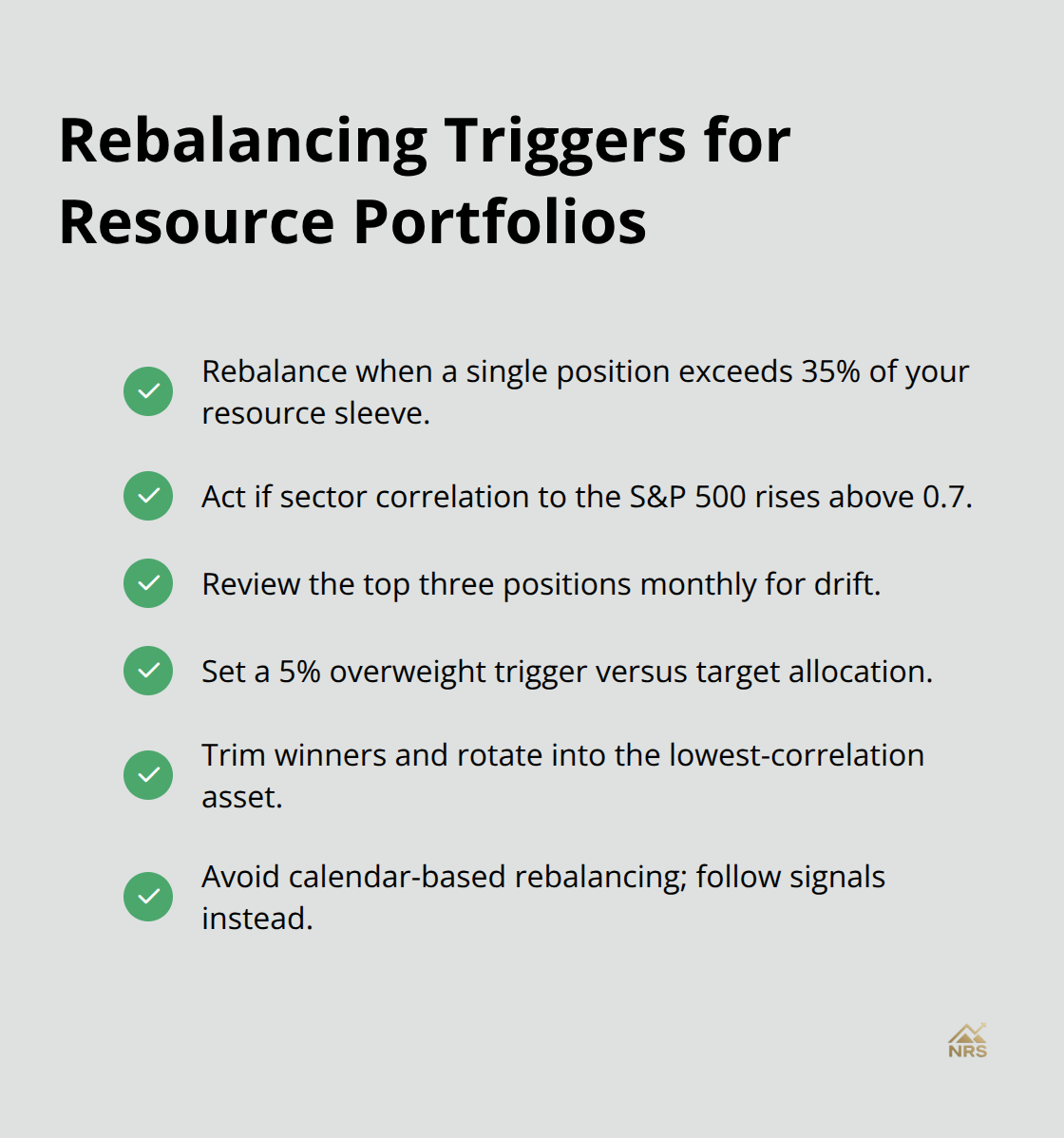
When this occurs, trim your highest-conviction position and redeploy capital into the lowest-correlation asset in your portfolio, usually physical gold or uranium equities. Track your three largest positions monthly and set rebalancing triggers at 5 percent overweight relative to your target allocation. Small, consistent adjustments during normal market conditions prevent the need for panic selling during crises.
Adjust Copper and Aluminum Based on Manufacturing Signals
Copper and aluminum show high correlation to manufacturing cycles, so reduce those positions when the PMI manufacturing index signals peak industrial demand, or when it falls below 48, those same positions become attractive again because the market has already priced in demand destruction. Understanding silver price volatility applies the same principle to precious metals during manufacturing downturns.
Overweight Energy During Rate-Cut Windows
Energy producers typically perform best when interest rates fall and inflation expectations rise simultaneously, which occurs roughly once every three to four years. When that window opens-usually signaled by central bank rate cuts combined with rising commodity prices-you can safely overweight energy to 45–50 percent of your resource sleeve. Outside that window, maintain 30–40 percent and rotate profits into gold or uranium. This approach turns cycle timing into a mechanical process rather than a guessing game.
Final Thoughts
Your natural resource investment strategy only works if you act on what you learn. Policy shifts, geopolitical headlines, and earnings reports flood financial media daily, but most commentary lacks the specificity you need to adjust positions. When the U.S. announces tariffs on Chinese metals or the EU shifts energy policy, these moves ripple through copper, uranium, and energy stocks within days. You need to understand whether a policy change strengthens or weakens the supply-demand balance for your specific holdings rather than accepting surface-level analysis.
Quarterly performance reviews separate disciplined investors from those who drift. Pull your holdings, calculate your actual returns against the S&P Global Natural Resources Index, and identify which positions drove gains or losses. If gold outperformed but your copper position lagged, ask whether copper fundamentals weakened or your entry price simply proved too aggressive. Track your three largest positions monthly and compare their performance to sector benchmarks; when a holding underperforms its peer group for two consecutive quarters despite intact fundamentals, consider whether capital would work harder elsewhere.
Adjust your allocation when conditions shift, not because you feel uncertain. If inflation expectations rise but interest rates remain stable, copper and uranium deserve overweight positioning (conversely, if the dollar strengthens and manufacturing data weakens simultaneously, trim cyclical metals and rotate toward gold). These mechanical adjustments remove emotion and keep your portfolio aligned with your thesis. Explore Natural Resource Stocks for expert video analysis, market insights, and community discussion that sharpens your decision-making across metals and energy sectors.